 Vietnamnet.vn

 Podcast



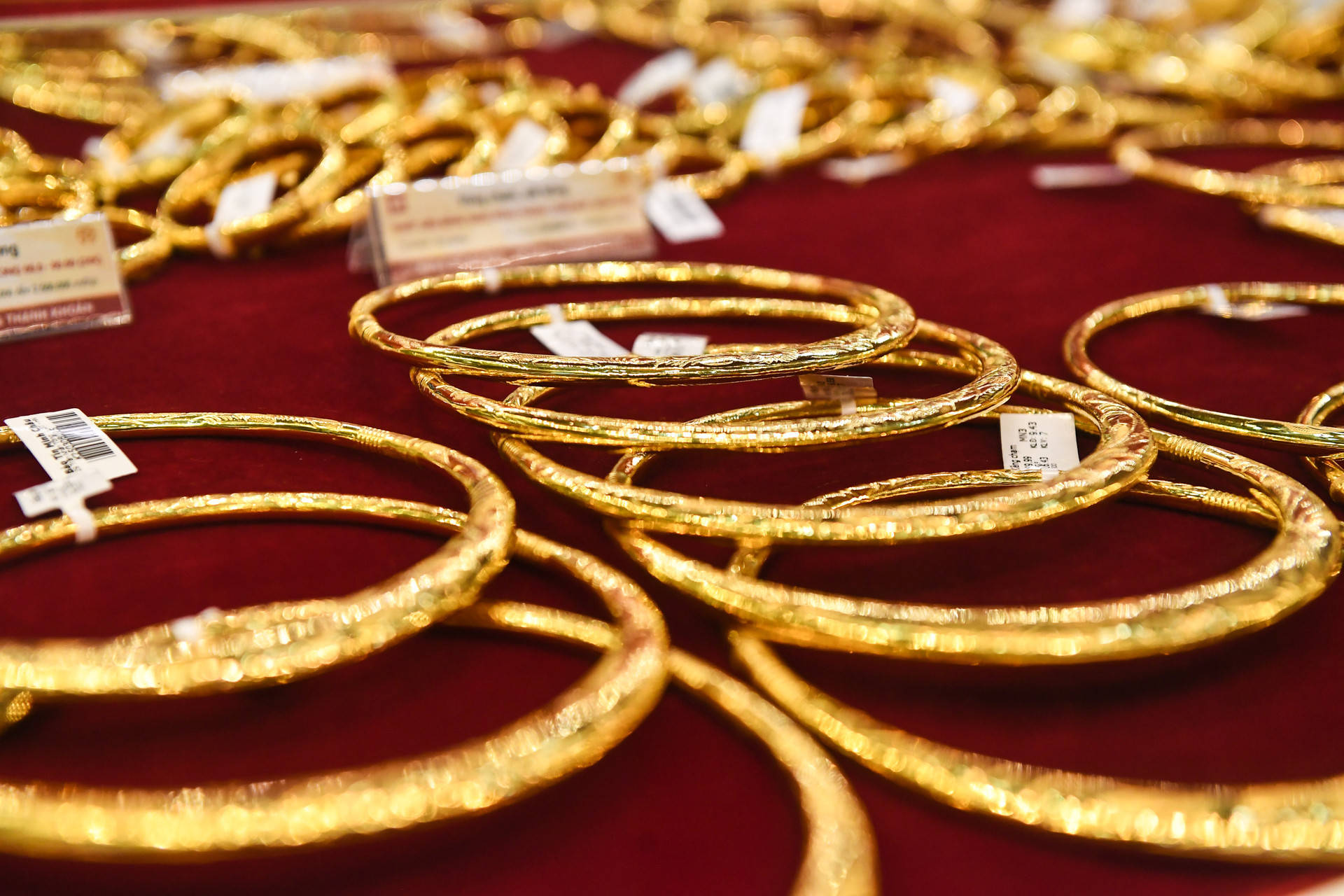
Following a prolonged hot growth cycle, the precious metal is entering a deep adjustment phase, triggering new price trend forecasts.
After nearly three years of continuous growth, the gold market entered the first four months of 2026 with high volatility. In the morning session on April 29, global gold prices continued to decrease by about $25, falling to $4,575/ounce, after breaking through the important thresholds of $4,700 and $4,600/ounce in just the two previous sessions.
Domestic developments also followed the general trend. SJC gold bars and gold rings simultaneously dropped deeply. On the morning of April 29, SJC gold bars were listed at VND163 million/tael (buying) and VND166 million/tael (selling), decreasing by another VND1.5 million/tael after losing VND1.3-1.8 million in the previous session.
Looking back, the current decline is a sharp adjustment compared to the historic peak. In late January 2026, gold prices once touched the $5,600/ounce mark. By early March, the price remained at $5,400/ounce, and by mid-month, it was about $5,200/ounce.
Thus, the decrease has exceeded 18 percent, approaching the 20 percent threshold, a level often considered a signal confirming the market has entered a downward trend.
Domestically, since the historic peak, gold has dropped by nearly VND30 million/tael.
Prior to that, gold underwent a rare growth cycle. From about $1,800/ounce in early 2023, the precious metal climbed to over $2,600 by late 2024 and continued to break out to the $4,500 range by late 2025.
The momentum of this growth cycle came from macro factors: expectations of monetary easing reducing the opportunity cost of holding gold, a weakening USD, prolonged high inflation after the pandemic, and geopolitical conflicts, along with the trend of central banks increasing gold reserves.
However, after the hot growth phase, the market began to show signs of reversal. A series of factors put strong downward pressure on gold prices. First is the expectation that central banks, especially the US Federal Reserve (Fed), will delay interest rate cuts. This has caused US bond yields to rise again, reducing the attractiveness of gold, which is a non-interest-bearing asset.
Additionally, the recovery of the USD also created significant pressure. As the greenback strengthened, gold became more expensive for investors holding other currencies. Another factor is the strong profit-taking activity after gold peaked. Investment funds and individual investors simultaneously sold off to realize profits, causing prices to drop deeply in a short time. Furthermore, as market sentiment stabilized and cash flows returned to risky assets like stocks, the safe-haven role of gold weakened.
Gold unlikely to rebound strongly
In 2026, the outlook for gold is becoming more complex as it is affected by geopolitics and monetary policy.
Tensions in the Middle East, particularly concerning Iran, are upsetting global commodity markets. The risk of the Strait of Hormuz being blocked has caused oil prices to skyrocket. WTI oil has approached the $100/barrel mark, while Brent oil exceeded $111/barrel. This has led to concerns that inflation will return on a large scale.
Normally, high inflation supports gold. However, inflationary pressure forces central banks to maintain high interest rates for longer, putting pressure on the precious metal. The market only expects one 0.25 percent interest rate cut at the end of the year by the Fed, with a probability rate of less than 40 percent.
High interest rates mean the opportunity cost of holding gold increases, causing cash flow to tend to leave the precious metal to find yield-generating assets. Not only that, this geopolitical tension has triggered a need for liquidity.
Some investment funds, and even central banks, have sold gold to supplement cash flow amid strong volatility in financial markets. This factor contributed to a deep decline in gold prices, rather than an increase as in previous crisis periods.
According to the World Bank, the precious metal market has been affected by speculative factors in recent times. The current adjustment reflects the "deflating" of part of the price bubble formed in 2025.
Nevertheless, this organization still forecasts that the average gold price in 2026 could remain high, around $4,700/ounce, before decreasing slightly in following years. This suggests that gold may be establishing a new price floor but no longer has the room for strong growth as before.
Another notable point is that demand from central banks, a factor that supported gold prices for many years, shows signs of slowing down. Amidst high input costs due to escalating energy prices, many countries must prioritize economic stability over gold accumulation.
Manh Ha
.svg)
