 Vietnamnet.vn

 Podcast



“The development of any industry requires massive investment. That’s why investing in high-speed rail must be done with a vision for long-term prosperity for future generations - not as a rushed race to fulfill a century-old dream at any cost,” said Deputy Minister of Construction Nguyen Danh Huy.
A century-long corridor of growth
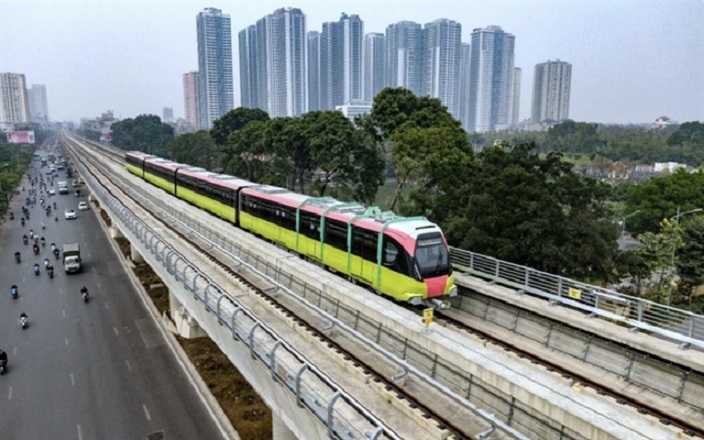
On November 30, 2024, after years of delays, Vietnam’s National Assembly approved the investment policy for the North–South high-speed railway project. The 1,540-kilometer line, with a design speed of 350 km/h, is estimated to cost over USD 67 billion.
The railway spans the entire length of the country, unlocking new economic growth hubs in every province it crosses. Each station along the North–South high-speed railway is envisioned as a gateway to a new future for local economies. The entire route is seen as a “century-long corridor,” propelling the nation into a new era.
According to experts, now is the "golden time" for Vietnam to invest in high-speed rail. The project is slated to break ground in 2027, at which point Vietnam’s GDP is projected to reach USD 564 billion. With the country targeting double-digit economic growth in the coming years, the high-speed rail will serve as a powerful economic catalyst.
It’s worth noting that the project was approved before Vietnam finalized the merger and reorganization of its provinces, which reduced the number of localities to 34. All route surveys were conducted prior to the National Assembly’s approval in November 2024. Following the mergers, several provinces requested the Ministry of Construction to add new stations along the line.
Speaking with Tien Phong, Deputy Minister Nguyen Danh Huy confirmed that during the pre-feasibility study, the ministry identified several urban areas with potential for high-speed rail stations. He emphasized, however, that any additions must be carefully timed to avoid wasteful investment.
Citing international examples, Huy noted that stations are most effective in cities with planned populations of at least 500,000 residents. “Too many stations with sparse passenger flow will squander resources,” he said.
“In our report to the National Assembly, we proposed 23 stations nationwide. The principle is simple: each province should have at least one station in its central urban area. Any city with a planned population over 500,000 should also have one,” Huy added.
An opportunity to elevate Vietnam’s industrial capacity
Deputy Minister Huy explained that the ministry studied the experiences of seven countries - three that imported technology (South Korea, China, and Spain), and four that developed it domestically (Japan, France, Germany, and Italy).
These case studies revealed the enormous cost of developing a high-speed rail industry. For example, China has spent tens of billions of USD on R&D alone. A sustainable rail sector requires a domestic market of at least 10,000 kilometers and mastery of core technologies like metallurgy and machine manufacturing.
Leading countries in the sector have vast support ecosystems. China, for instance, has over 100 top-tier auxiliary manufacturers that are part of the global supply chain.
Given Vietnam’s limited rail market, Huy acknowledged that competing with industrial giants would be unrealistic. However, he sees this project as a golden opportunity to upgrade Vietnam’s traditionally assembly-based industry.
“Under current conditions, we can focus on assembling locomotives and carriages for national and urban rail systems. For high-speed rail, we’ll master operations, maintenance, and repairs,” Huy said. He emphasized the need for a smart localization strategy, including workforce development and expanded international cooperation.
Mastering even a portion of the supply chain could enable Vietnam to leap forward in rail manufacturing and foster a new generation of auxiliary enterprises. It would also open up high-end services in logistics, operations, and maintenance - especially relevant as the country pushes private-sector development under Resolution 68.
“The development of any industry demands huge capital. So high-speed rail must be approached as a long-term investment in future prosperity, not a reckless race to complete an old dream,” Huy reiterated.
Strategic connections for future growth
While the North–South high-speed rail could transform national transportation, the Lao Cai – Hanoi – Hai Phong railway is poised to become the backbone of freight and passenger transport in the North.
Approved under Resolution No. 187 on December 19, 2025, the 420-kilometer route is estimated to cost over USD 8 billion. It begins at Lao Cai’s border gate (connecting with China’s rail network) and ends at Cai Lan station in Ha Long City, Quang Ninh. Construction is expected to begin before December 19, 2025.
Deputy Minister Huy noted that the Hanoi–Hai Phong segment has significantly higher demand for both passengers and freight than the Lao Cai–Hanoi segment. “If resources allow, we’ll consider double-tracking the Hanoi–Hai Phong section earlier,” he said.
Initially, the project will feature a single-track line with passenger trains running at 160 km/h and freight trains at 120 km/h. This configuration is expected to meet transport needs until 2040–2050. After that, the line will be upgraded to double-track where necessary, depending on demand and available resources.
“Specifically, in the Hanoi section, besides the 1,435 mm single track, we’re considering building an additional 1,000 mm gauge ring line to connect northern and southern rail lines. In the future, we can simply expand the 1,000 mm track to 1,435 mm to create a double track,” he added.
Currently, the Ministry of Construction is finalizing the feasibility report to ensure strategic alignment and optimal development for the Lao Cai – Hanoi – Hai Phong railway corridor.
Tien Phong
.svg)
