 Vietnamnet.vn

 Podcast


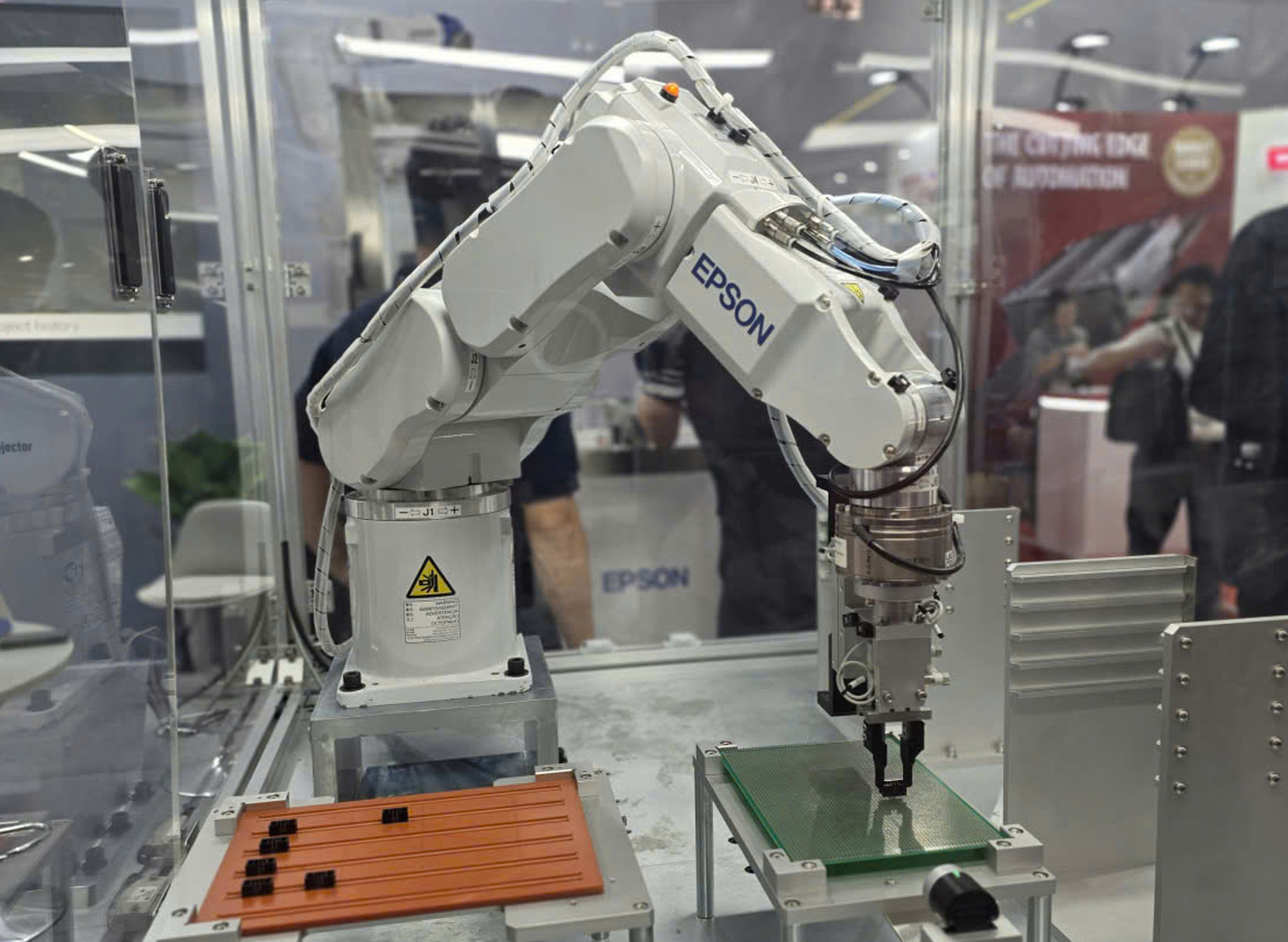
The global industrial robotics market is entering a period of rapid expansion.
Vietnam's industrial robotics market is experiencing rapid growth, driven largely by the relocation of manufacturing facilities from China and increasing demand for factory automation, according to Japanese technology company Epson.
The trend comes amid a global acceleration in industrial automation.
According to the World Robotics 2026 report released by the International Federation of Robotics (IFR) on September 24, 2026, the number of industrial robots operating worldwide reached a record five million units, up 9% in 2025.
The figure has doubled over the past seven years, reflecting the increasing adoption of automation in manufacturing.
IFR President Jane Heffner said industrial automation was expanding rapidly worldwide, with Asia recording the strongest growth, followed by the Americas, while Europe experienced a slower pace of development.
The figures highlight the growing global industrial robotics market and intensifying competition among automation equipment suppliers.
Vietnam emerges as Southeast Asia's fastest-growing robotics market
Vietnam is becoming one of Southeast Asia's most promising markets for industrial robots, benefiting particularly from manufacturers relocating production facilities from China.
At the VIAF Bac Ninh 2026 industrial automation exhibition, Epson demonstrated force-sensing technology that enables robots to perform delicate, human-like operations when handling fragile components or tasks requiring high precision.
The company also showcased its proprietary Gyroplus technology, designed to allow robots to move and stop smoothly even at high speeds.
Epson introduced updated generations of SCARA robots and six-axis robots featuring improvements in payload capacity and design.
Some newer models can handle loads of up to 50 kilograms, while their compact designs make them easier to integrate into different manufacturing environments.
Speaking at the exhibition, Ken Nyi Lau, Epson's regional product manager for Southeast Asia, said Vietnam currently has the highest sales growth rate for the company's industrial robots in the region.
He attributed the growth primarily to manufacturers moving production facilities from China to Vietnam and other Southeast Asian countries.
According to Lau, these relocating manufacturers represent a major customer segment that Epson is targeting.
A substantial proportion of Epson's robotics revenue in Vietnam currently comes from companies involved in this manufacturing relocation trend.
Most of its customers operate in electrical and electronic component assembly, while others are involved in automotive manufacturing, food processing and packaging.
These industries have strong demand for automation technologies to increase productivity, improve quality control and optimize operating costs.
Lau said the factory relocation trend was continuing, creating considerable opportunities for Vietnam's industrial robotics market in the coming years.
He identified durability, precision, compact design and operational stability as key strengths of Epson's robotics products.
Technical support and the ability to provide customized automation solutions are also central to the company's strategy for maintaining its competitive position.
Epson's customers in Vietnam include both domestic businesses and foreign-invested enterprises.
These manufacturers often have demanding automation requirements and need specialized technical assistance to meet the specific conditions of their production processes.
Epson targets automotive, healthcare and pharmaceutical industries
Although electrical and electronics manufacturing currently accounts for the largest share of Epson's industrial robot applications in Vietnam, the company is seeking to diversify its customer base.
Lau said Epson plans to expand further into automotive manufacturing, medical equipment, pharmaceuticals, healthcare, and food and beverage production.
SCARA robots, in particular, are expected to find broader applications in healthcare and pharmaceutical manufacturing because of their ability to perform repetitive tasks with high precision.
Six-axis robots, meanwhile, are being positioned for automotive applications and manufacturing processes requiring greater flexibility.
The company also sees growing interest in robotics among Vietnamese manufacturers.
While foreign-invested enterprises frequently incorporate automation when establishing new factories, more domestic companies are beginning to consider introducing robots into their existing production facilities.
However, many Vietnamese manufacturers face challenges because their factories have operated for years using older production lines.
Replacing entire manufacturing systems with automated equipment could require substantial investment and disrupt ongoing operations.
Epson believes businesses do not necessarily need to replace all their equipment at once.
Instead, manufacturers can adopt automation gradually, beginning with individual processes where robots can deliver the greatest benefits.
Integrating robots into existing production lines is not particularly complicated, according to the company, provided manufacturers identify suitable tasks and select appropriate equipment.
Nevertheless, financial resources, workforce capabilities and awareness of automation's importance remain major barriers.
Lau said one of the biggest challenges was helping Vietnamese businesses recognize the value of automation.
He also emphasized the need for cooperation among stakeholders, including financial support that would give manufacturers greater confidence to invest in automated production.
Regional automation trends offer lessons for Vietnam
Epson pointed to Thailand and Indonesia as examples of Southeast Asian manufacturing markets where factories are increasingly adopting automation to reduce labor costs and maintain consistent product quality.
Some Western Digital factories in Thailand were cited as examples of the broader transition toward highly automated manufacturing operations.
These developments suggest that automation is becoming increasingly important for manufacturers seeking to remain competitive as production costs and quality requirements evolve.
For Vietnam, the continued relocation of factories from China presents an opportunity not only to attract new manufacturing investment but also to accelerate the adoption of advanced production technologies.
However, realizing that potential will depend on domestic manufacturers' willingness and ability to invest in automation, upgrade their production processes and develop the necessary technical capabilities.
Lau said Epson's priorities in Vietnam would be to maintain the trust of existing customers while expanding into new market segments through innovative automation solutions.
The company is particularly focused on automotive manufacturing and other industries where demand for increasingly sophisticated automation technologies is expected to grow.
Thai Khang

