 Vietnamnet.vn

 Podcast



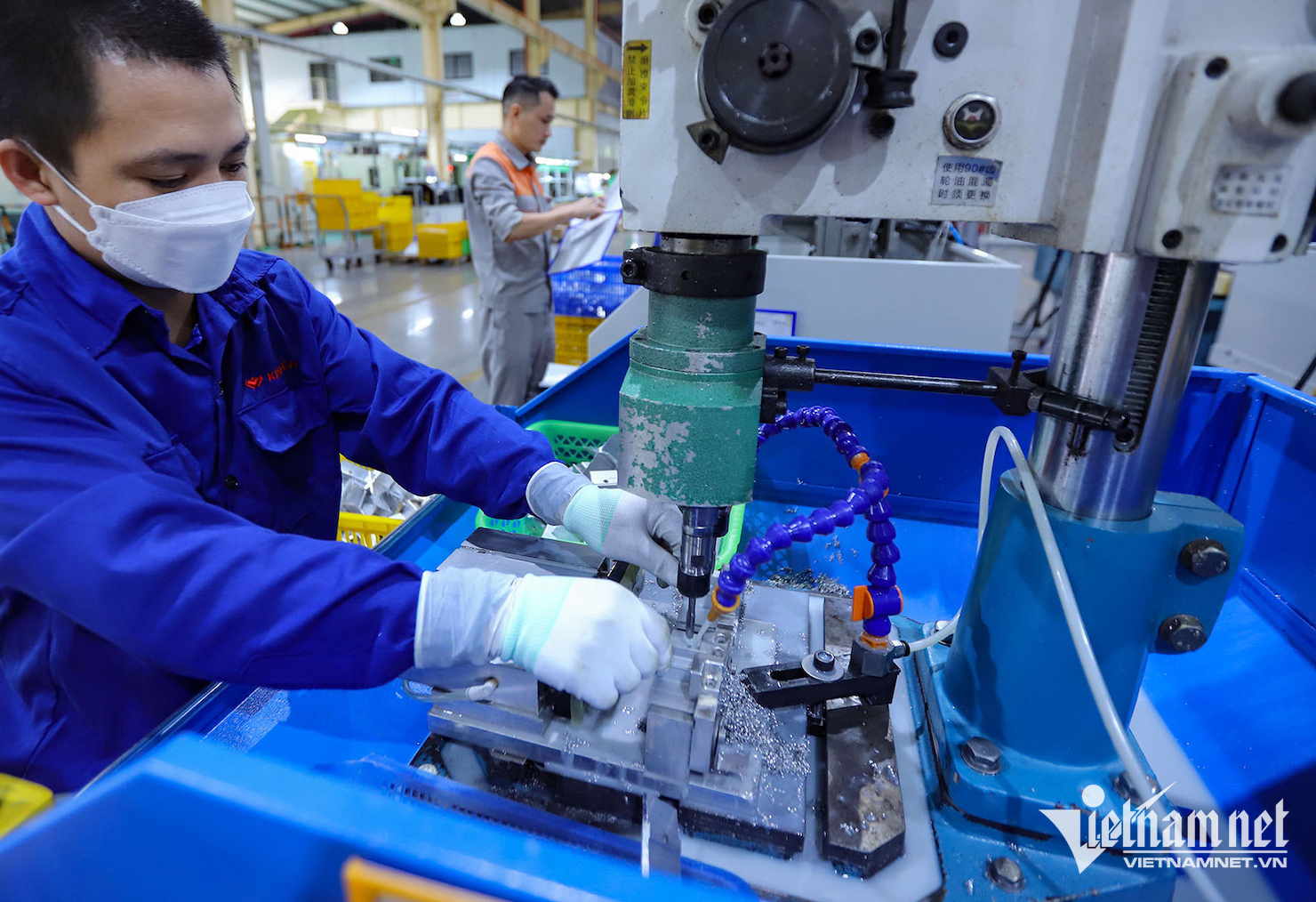
Vietnam’s industrial production grew by an impressive 9.5% in 2025, the highest rate since the Covid-19 pandemic, marking a significant shift from a traditional manufacturing base to an increasingly vital player in global supply chains.
According to the Ministry of Industry and Trade, the 2025 economic landscape was defined by global uncertainty - a complex mix of challenges and opportunities.
Global growth remained positive but still below pre-pandemic levels, while escalating trade tensions and protectionist policies negatively affected global commerce. Supply chains continued to face risks of disruption due to geopolitical conflicts and climate-related crises.
Some of Vietnam’s major export markets recovered slowly, while the United States, its largest export destination, applied countervailing tax policies, creating additional pressure on Vietnam’s highly open economy.
Domestically, 2025 was a crucial year, marking the final phase of the 2021–2025 socioeconomic development plan - a period that began amid the pandemic and global turmoil and ended with widespread natural disasters and record floods.
Despite these challenges, Vietnam’s economy demonstrated strong resilience. Thanks to close monitoring and adaptive policymaking by the government, coupled with collective efforts from the political system and the business community, macroeconomic stability was maintained. Inflation remained low, key economic balances were ensured, and social welfare was protected.
Vietnam’s GDP growth reached an estimated 8%, ranking among the highest globally.
Exports and imports continued to be the bright spot of the economy, setting a new record with total trade turnover of $920 billion, placing Vietnam in the top 15 trading powers worldwide.
The industrial production index (IIP) surged 9.5%, up from 8.2% in 2024 - the strongest growth since the pandemic. The manufacturing and processing sector grew by 10.6%, driving the shift from low-value production to deeper participation in international supply chains.
This progress was attributed to government efforts to support enterprises, resolve bottlenecks, and restructure production models, despite global supply disruptions and natural disasters.
Domestic industrial capacity has also improved significantly. Local enterprises now contribute nearly 50% of total industrial output, up from 35% in 2020.
Vietnam’s industrial rise is reflected in impressive figures: the industrial GDP reached about $200 billion in 2025, up from $136 billion in 2020. The electronics sector, once negligible in 2010, has now become Vietnam’s largest export industry, valued at around $100 billion, securing the country’s role as a key link in the global technology value chain.
Mastering new technologies in emerging industries
Despite these achievements, the Ministry of Industry and Trade emphasized the need for a strategic transformation in 2026, focusing on restructuring toward higher productivity, quality, and value-added growth.
The ministry identified science, technology, innovation, digital transformation, and green transition as the primary drivers of the next development phase. It also called for greater participation of the private sector and public-private partnerships, positioning them as essential engines of sustainable growth.
Vietnam aims to gradually master core technologies in emerging sectors such as semiconductors, artificial intelligence, biotechnology, advanced materials, and renewable energy. Investment will focus on energy, industrial infrastructure, trade, and logistics, modernized under green and digital frameworks to strengthen international connectivity.
The ministry also stressed the importance of policy innovation to foster strong domestic enterprises capable of leading smaller businesses, building an independent, self-reliant economy with global competitiveness.
Efforts will continue to upgrade and localize production and supply chains, reducing external dependencies and reinforcing Vietnam’s position in the global value network.
The ministry encouraged closer technology transfer and management collaboration between foreign-invested and domestic firms, along with the formation of industry clusters and closed-loop supply chains, integrating production from raw materials to finished goods and domestic distribution.
Ha Giang
.svg)
