 Vietnamnet.vn

 Podcast



Vietnam’s industrial sector is undergoing a dramatic transformation.
The once-dominant model of "hired labor and assembly" is giving way to technological ownership and product innovation.
Vietnamese entrepreneurs are becoming stronger, and the nation's industrial landscape is visibly changing.
“Twenty-five years ago, when clients asked for components, we didn’t have the capability,” said Tran Thi Thu Trang, Chairwoman of Hanel PT.
“Today, I’m proud that we can deliver high-quality products at competitive prices.”
Trang’s story reflects the growth of Vietnamese enterprises in the broader industrialization journey.
Yet she emphasizes that the next big challenge lies in shifting “from processing to manufacturing, from labor to mastering technology.”
Currently, the manufacturing and processing sector accounts for about 25% of Vietnam’s GDP, but most activities remain concentrated in low-value assembly.
Electronics products make up 33% of total national exports, mainly produced by foreign-invested enterprises (FDIs).
According to the General Statistics Office, from 2016 to 2024, electronics, computer, and component exports surged from $18.5 billion to $68 billion, while imports rose from $27.8 billion to over $100 billion.
Though the industry is growing fast, local value-added content remains limited.
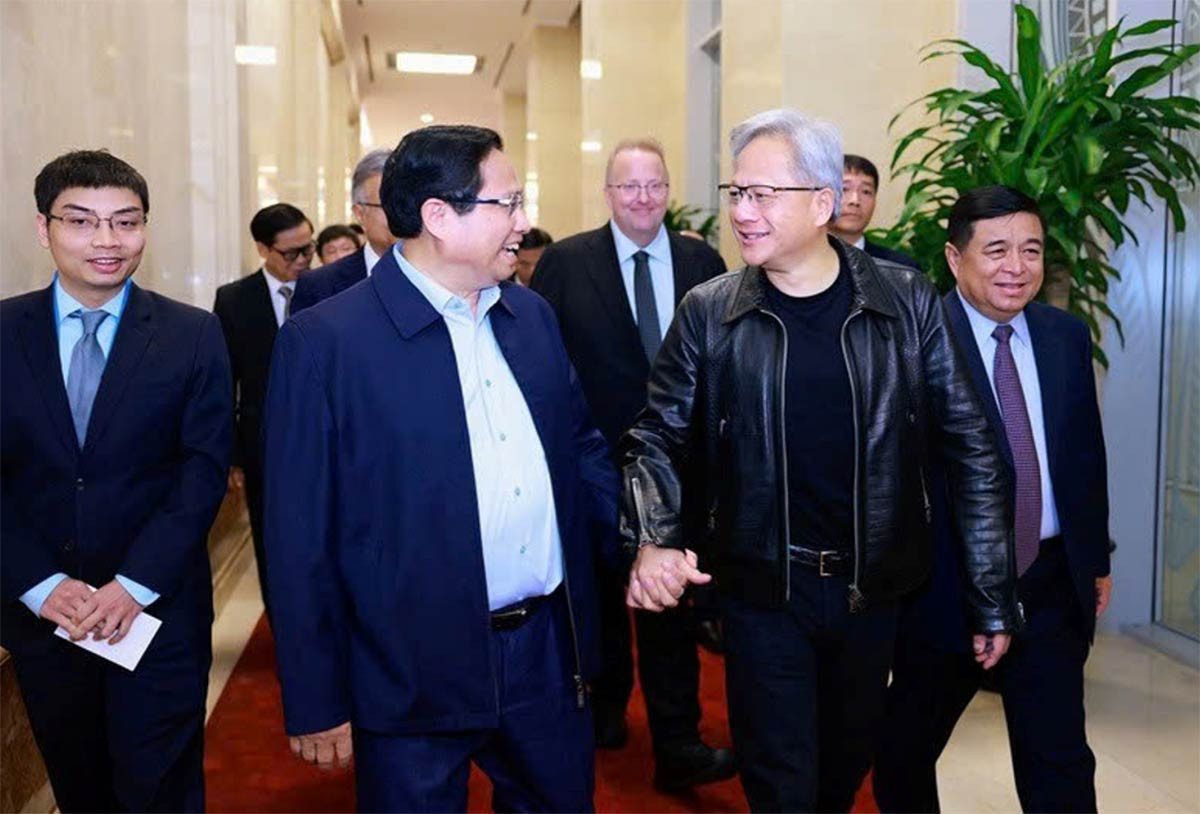
Amid the powerful wave of the Fourth Industrial Revolution - with core technologies like artificial intelligence (AI), big data, cloud computing, robotics, and semiconductors - global competitiveness is being redefined.
For a country accelerating its industrialization, this presents Vietnam with a golden opportunity to close the development gap.
Nguyen Thi Phuong Thao, Chairwoman of Sovico Group, believes the world is entering an era of AI-driven transformation.
“Vietnam has a golden opportunity to integrate deeper into the global value chain, especially in sectors like semiconductors and AI,” she said.
“Our time has come - if we dare to think big, act boldly, and move quickly.”
According to Thao, we are living in an age where AI, semiconductors, data, and digital economies are reshaping not only production but also how people live, learn, and grow.
She noted that Vietnam currently ranks among the world’s top six countries most open to artificial intelligence.
It also boasts a thriving innovation ecosystem, stretching from digital finance and smart manufacturing to clean energy.
In semiconductors, Vietnam enjoys unique advantages as global supply chains shift, offering a safe, dynamic, and attractive environment.
“For the first time, we have the chance to participate deeply in the global tech value chain,” Thao stressed.
Policy-driven breakthroughs
Recent years have seen the Party, National Assembly, and Government issue game-changing policies to boost industrial growth, moving beyond simple assembly to high-tech manufacturing and innovation.
Key examples include:
Resolution 57-NQ/TW of the Politburo on breakthroughs in science, technology, innovation, and digital transformation
Resolution 68-NQ/TW on private sector development as a key economic driver
Resolutions 193 and 198 by the National Assembly on high-tech industrial development
The Government followed with Action Program 03/NQ-CP, which implements Resolution 57 by requiring ministries and localities to remove institutional barriers and develop special mechanisms for investing in and procuring new technologies.
Vietnam is also building a network of innovation and startup centers while focusing on strategic sectors like semiconductors, AI, digital technology, and smart cities.
By 2030, the country aims to establish at least five national key programs across these strategic sectors as a foundation for sustainable high-tech industrial growth.
In semiconductors, Vietnam already hosts over 50 IC design companies with about 7,000 engineers, and 15 firms specializing in chip packaging and testing with over 10,000 technicians.
Viettel is expected to launch the country's first chip manufacturing plant - marking Vietnam’s entry into the global semiconductor map.
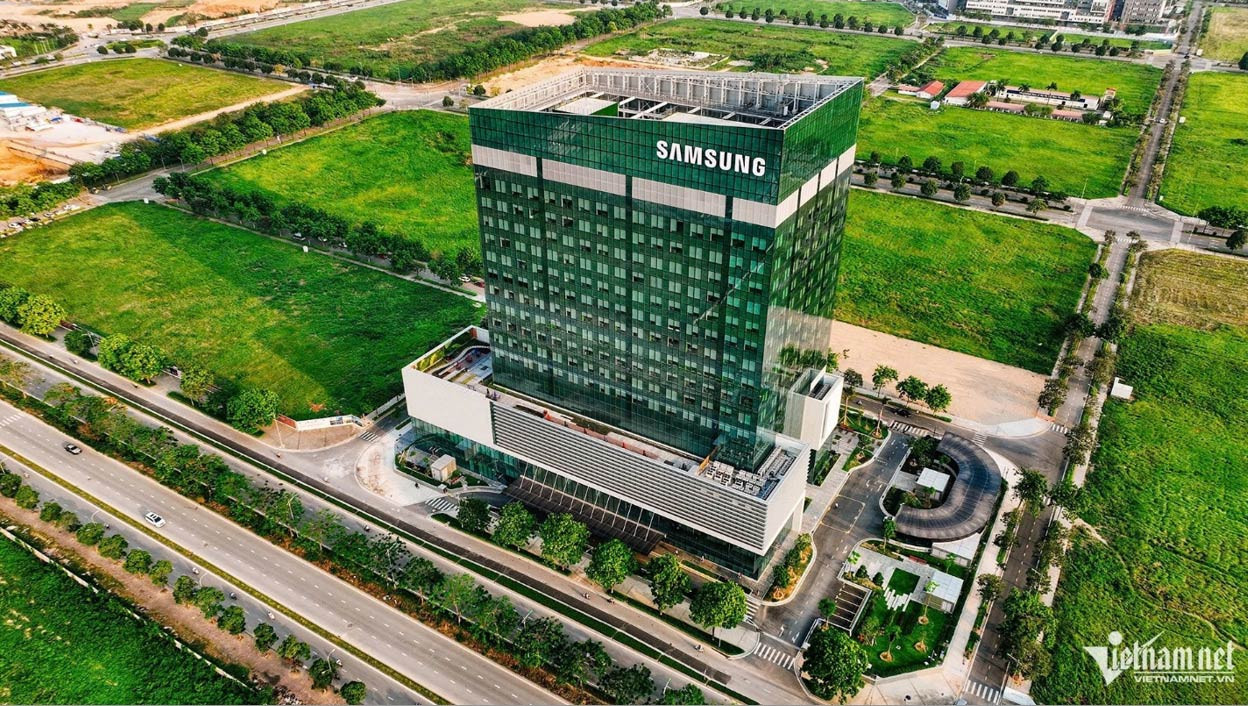
Major tech giants like NVIDIA, Qualcomm, Apple, Samsung, and Amkor have all chosen Vietnam as a production base or R&D hub.
Notably, NVIDIA and Qualcomm selecting Vietnam for AI and semiconductor research demonstrates the nation’s growing global stature.
At the same time, Vietnam has passed the Law on Digital Technology Industry and is drafting a Law on Key Industries.
It is also rolling out tax, land, infrastructure, and human capital incentives to attract high-quality FDI and encourage foreign firms to set up R&D centers locally.
Looking ahead, the Ministry of Industry and Trade notes that most of Vietnam’s key industrial exports - such as phones, computers, and machinery - are still produced by FDI firms.
Local companies remain few and face challenges in meeting global technical standards and accessing international markets.
Supporting domestic enterprises to meet international standards is essential for “Made by Vietnam” products to succeed in high-end markets like the US and EU.
The Ministry also advocates for more advanced technology transfer from abroad, linking Vietnamese firms with global partners, offering legal consulting, and providing financial support through the National Technology Innovation Fund or international science and technology aid.
This will make it easier for businesses to acquire cutting-edge equipment and know-how at lower costs, accelerating industrial modernization and competitiveness.
According to the ministry, smart industry offers a “shortcut to modernization,” enabling Vietnam to reach modern industrial status much faster than past industrial powers.
Where it took the UK hundreds of years to industrialize, Japan did it in 50, and South Korea in under 30, smart industry may allow Vietnam and other developing nations to compress the process dramatically.
FPT Chairman Truong Gia Binh remarked, “No nation can grow rich by merely doing outsourced work and depending on foreign technology.”
“We must take control, create, and build our own value.”
The journey from “processing” to “ownership” is not easy.
But with strategic vision, supportive policies, and strong political will, Vietnam is on a firm path forward.
Government efforts to improve institutions, attract high-quality FDI, develop tech talent, and support innovation have opened a new chapter for Vietnam’s industry.
From a “hired hand” of the global economy, Vietnam is edging closer to becoming a “master” of the global value chain - progressing steadily toward its goal of becoming a modern, high-income industrialized nation by 2045.
Anh Duong
.svg)
