 Vietnamnet.vn

 Podcast



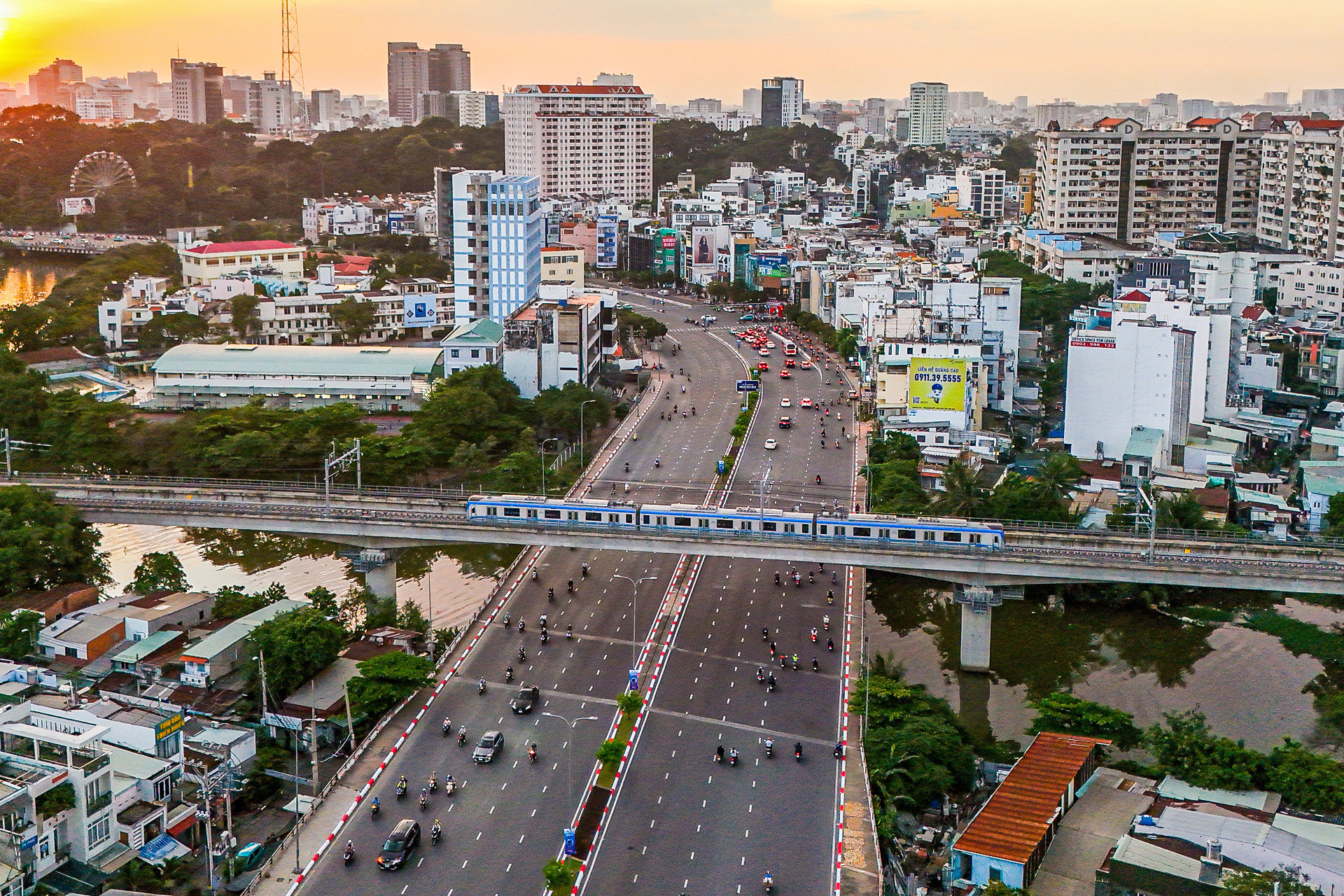
From metro lines in Hanoi and HCMC to the North-South high-speed railway, to nuclear power plants, seaports, airports and thousands of real estate projects, many strategic works will be implemented over the next decade.
These major investment programs alone scale over $700 billion. If the entire investment demand of the economy is counted, Vietnam needs to mobilize nearly $1,500 billion during the 2026 to 2030 period, equivalent to nearly $300 billion annually.
Who will fund Vietnam's infrastructure dream?
State budget revenue, currently at about $100 billion per year, obviously cannot be the primary source for this new investment program.
The rest must be sourced from businesses, the private sector, foreign investment, and the financial market. In other words, what Vietnam needs is not just more capital, but more capital-routing channels.
Meanwhile, bank credit remains the primary capital supply channel of the economy. But it is precisely here that the greatest limitation appears.
Monetary policy can support growth through managing interest rates, liquidity, and credit. However, its core function is to maintain the stability of the currency value and ensure the safety of the financial system, rather than funding projects with lifespans of decades.
According to calculations by expert Pham Xuan Hoe, about 80 percent of the mobilized capital of the banking system currently has a term of less than one year, while nearly half of the outstanding debt consists of medium and long-term loans.
The gap between long-term capital sources and the demand for medium and long-term loans has exceeded VND5.7 quadrillion. To put it simply, banks are mobilizing capital by the month but lending by the decade.
It is this mismatch that keeps liquidity risk and interest rate risk constantly present, while gradually narrowing the room for maneuvering monetary policy.
Notably, upcoming projects are no longer on the scale of a few billion USD as before, but all span decades and require capital amounting to tens, or even hundreds, of billions of USD. It is this change in scale that is forcing Vietnam to change the way it mobilizes capital.
No economy can build metro lines, high-speed railways, or nuclear power plants with deposits that carry terms of only three or six months.
The problem is that the banking system is having to do the job of the capital market and long-term financial institutions.
The issue does not lie in the banking system being too large, but in the fact that the remaining pillars of the financial market are developing too slowly.
When the corporate bond market faces difficulties, businesses turn back to banks for capital. When capital is needed for infrastructure, people also think of credit. Commercial banks have gradually become the "lender of last resort" for almost every capital need of the economy.
That is not a healthy financial structure.
Designing for long-term capital
According to expert Hoe, the solution lies in building a multi-tiered financial system where banks are just one link instead of carrying almost the entire role of routing capital.
What Vietnam is lacking is "20-year lenders". That means a more developed capital market, a more transparent and reliable corporate bond market, development banks, investment funds, pension funds, insurance companies, and financial institutions capable of providing long-term capital for infrastructure, energy, or green transition projects.
In parallel with this is the unlocking of "sleeping" resources such as green finance, the carbon market, remittances, gold resources held by the public, or capital currently congested in delayed projects. When institutionalized with appropriate mechanisms, these resources can entirely become capital for growth.
Ultimately, the goal of double-digit growth is not a task for monetary policy alone. It is a problem of redesigning the national financial structure.
If the majority of the capital supply burden continues to be placed on the shoulders of the banking system, liquidity risk and maturity risk will continue to accumulate, while the room for maneuvering monetary policy will increasingly narrow.
Conversely, when the capital market and long-term financial institutions share the role of routing capital, banks will return to their correct function, and monetary policy can focus on its core mission of maintaining currency stability and system safety.
A country cannot enter an era of double-digit growth with a financial system designed for a period with just 6-7 percent growth.
Tu Giang
.svg)
