 Vietnamnet.vn

 Podcast



General Secretary and President To Lam delivered a keynote address and responded to questions raised by delegates during the opening session of the 23rd Shangri-La Dialogue in Singapore on May 29, drawing significant attention from international media and observers.
The Vietnamese leader argued that today’s instability reflects three fundamental crises unfolding simultaneously and reinforcing one another, with their impact particularly visible across the Asia-Pacific region. From that perspective, he outlined several directions for jointly building a peaceful, stable, prosperous and resilient Asia-Pacific capable of mitigating risks early and effectively.
Lieutenant General Tran Duc Thuan, Deputy Chairman of the National Assembly’s Committee for National Defence, Security and Foreign Affairs, spoke with VietNamNet about the key messages conveyed in To Lam’s remarks.
How do you assess the significance of a Vietnamese General Secretary and President speaking at the Shangri-La Dialogue for the first time, one of the world’s leading security forums?
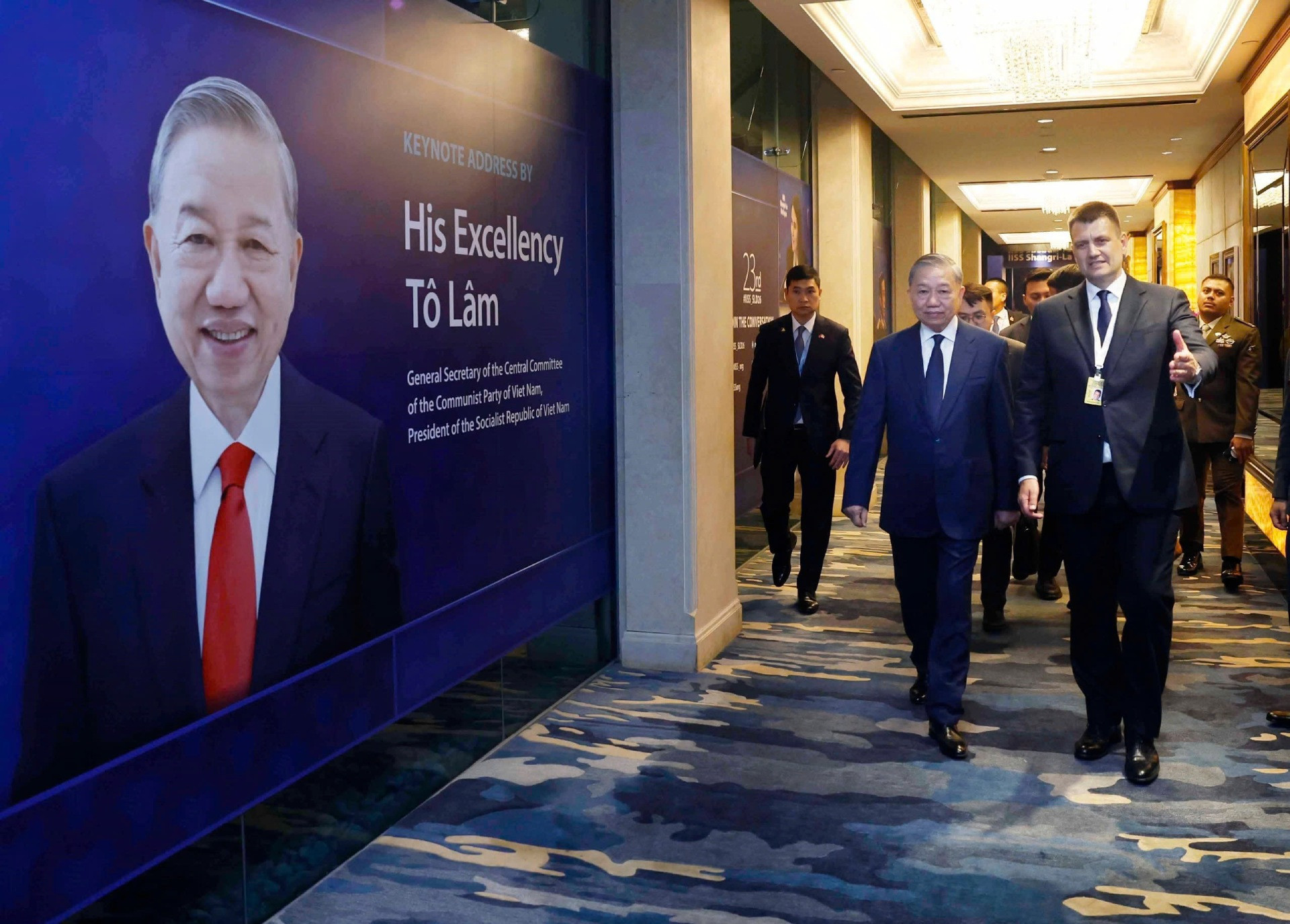
This is an event of exceptional significance in terms of foreign affairs, national defence, security and Vietnam’s international standing.
General Secretary and President To Lam’s participation at the Shangri-La Dialogue not only reflects the international community’s regard for Vietnam but also confirms the country’s growing position, credibility and influence in regional and global affairs.
What is particularly noteworthy is that Vietnam is no longer merely participating actively in multilateral cooperation mechanisms. It is now proactively contributing ideas, proposing initiatives and helping shape regional and global governance frameworks.
This represents a new stage in the Party’s foreign policy thinking, reflecting the stature of a responsible nation with both the confidence and capacity to contribute to the common challenges facing the world.
The speech did more than present Vietnam’s perspective. It also offered messages and viewpoints that may serve as valuable references for the international community at a time of profound global transformation.
The General Secretary and President referred to the “three fundamental crises” of our era: a crisis of the international order, a crisis of development models and a crisis of strategic trust. How do you view this framework?
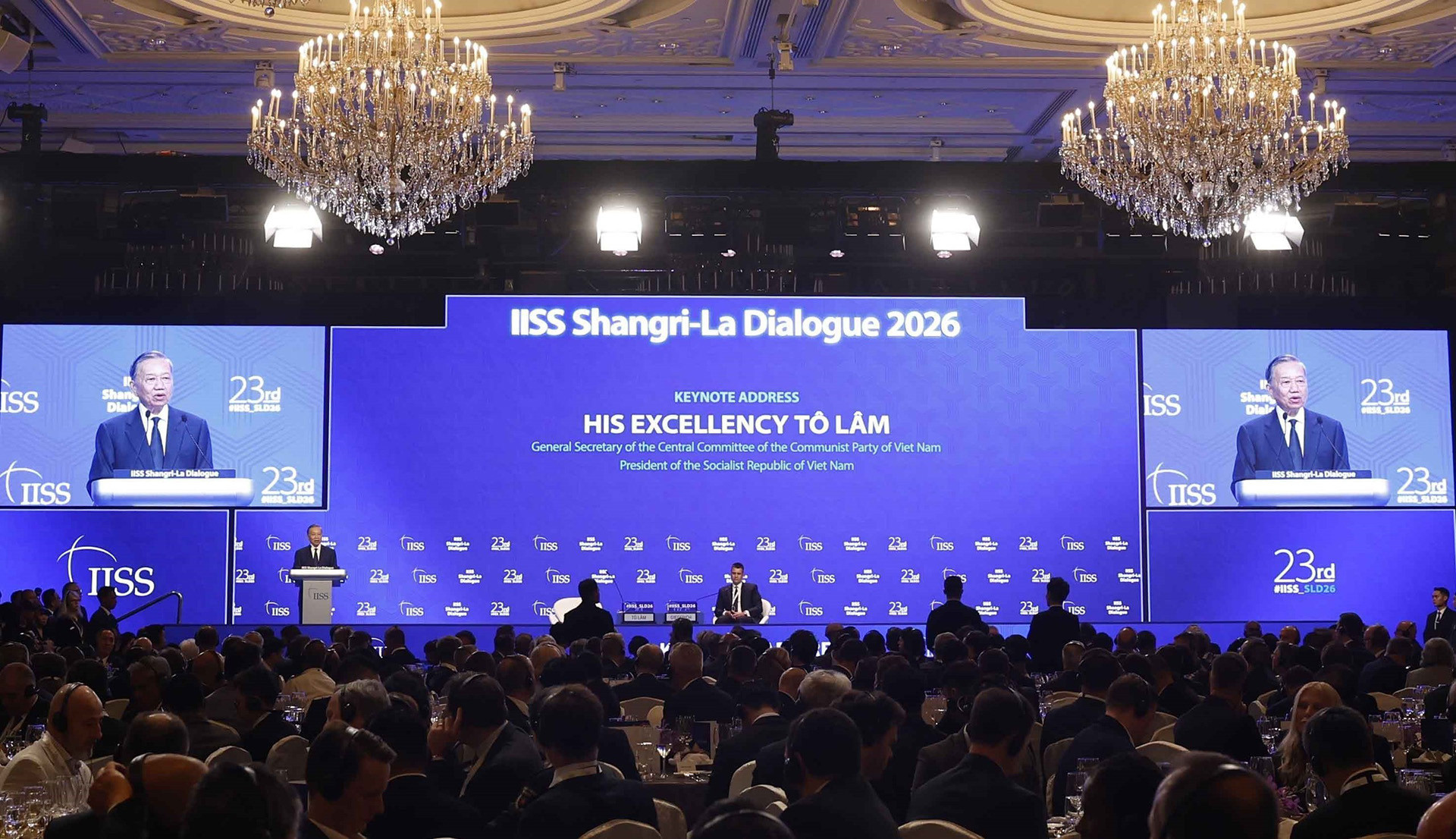
I believe it is a strategic assessment that reflects the profound theoretical and practical thinking of Vietnam’s leadership in response to the major changes taking place around the world.
First, the crisis of the international order is reflected in the declining effectiveness of many multilateral institutions, intensifying strategic competition among major powers and growing challenges to international law.
The crisis begins when rules continue to be invoked but their binding force weakens; when commitments are still declared but actions erode those very commitments; and when fundamental principles of international law are interpreted through subjective lenses, applied inconsistently or subordinated to a mindset in which might makes right.
Second, the crisis of development models stems from the limitations of traditional growth models as they confront emerging challenges such as climate change, ageing populations, social inequality, digital transformation and the Fourth Industrial Revolution.
Third, the crisis of strategic trust is perhaps the most concerning. Suspicion among nations is increasing, international commitments are being challenged and the gap between words and actions in international relations continues to widen.
These three crises do not exist independently. They interact and reinforce one another, creating complex challenges to peace, stability and development across the Asia-Pacific region and the wider world.
By identifying the underlying nature of these challenges, Vietnam’s leader demonstrated that the country is not merely responding to immediate concerns but is approaching global issues from a long-term, strategic perspective.
The solutions proposed by the General Secretary and President reflect a comprehensive vision that balances national interests with the broader interests of the international community. The most striking message was that “sustainable security cannot rely solely on military power.” This is a progressive approach that aligns closely with the realities of the modern world.
Security, in this view, must rest on multiple pillars, including sustainable economic development, social justice, stronger rule of law, enhanced international cooperation, trust-building and the peaceful resolution of disputes.
The solutions outlined by the General Secretary and President are both principled and practical. They emphasize the role of international law, the United Nations Charter, dialogue, cooperation and shared responsibility. These are not only solutions for the Asia-Pacific region but also valuable directions for addressing today’s global challenges.
What does Vietnam’s determination to work with other countries to build a safer, more resilient and more prosperous region reveal about the country?
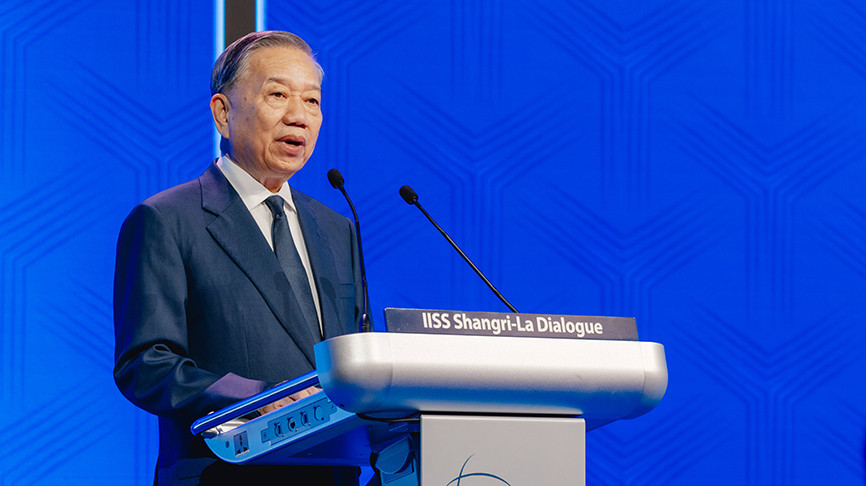
It clearly reflects the consistent nature of Vietnam’s foreign policy: independence, self-reliance, peace, friendship, cooperation and development; diversification and multilateralization of external relations; and a commitment to being a trusted partner and responsible member of the international community.
The message delivered by the General Secretary and President shows that Vietnam is concerned not only with its own interests but also with contributing positively to peace, stability and development in the region and around the world.
At a time of growing international uncertainty, Vietnam’s efforts to promote the rule of law, strengthen trust, expand dialogue and deepen cooperation demonstrate a mature, responsible and strategically minded diplomacy. This approach reflects the nation’s long-standing tradition of goodwill and peaceful engagement while also embodying its aspiration for a strong and prosperous future connected to peace and international cooperation.
“Rules and dialogue must become effective tools for genuinely reducing risks. Dialogue must help identify risks early, facilitate information sharing, maintain channels of communication during periods of tension and prevent differences from escalating into crises.”
In interviews with international media, the General Secretary and President reiterated that Vietnam maintains good relations with all countries and does not choose sides. What are your thoughts on this position?
This is one of the most profound aspects of Vietnam’s diplomacy, reflecting both its wisdom and strategic confidence.
Thousands of years of nation-building and national defence have shaped a diplomatic mindset that is flexible and adaptable while remaining firm on core principles. Vietnam consistently places national interests first while respecting the legitimate interests of other countries.
The General Secretary and President’s affirmation that Vietnam does not view relations with major powers through a security lens and does not align itself with any particular side demonstrates the consistency of Vietnam’s independent and self-reliant foreign policy.
Vietnam does not choose sides; it chooses what is right. It does not participate in military alliances, align with one country against another, permit foreign military bases on its territory or allow its territory to be used against a third country.
Experience has shown that this approach enables Vietnam to maintain constructive relations with all major powers, create a peaceful and stable environment for national development and contribute positively to regional peace, stability and cooperation.
In an era of intensifying strategic competition among major powers, Vietnam’s experience and approach are increasingly attracting international attention as a model of balanced, harmonious and responsible conduct in contemporary international relations.
Tran Thuong
.svg)
