 Vietnamnet.vn

 Podcast



As the goal of achieving double-digit economic growth becomes a non-negotiable national priority, the pressing question is: what will drive the economy forward?
Exports remain vulnerable to volatile global markets. Public investment faces slow disbursement. Private enterprises have yet to recover with enough momentum. In this complex landscape, household consumption - accounting for nearly 64% of GDP - should be the main engine of growth. Yet in reality, it's showing signs of fatigue.
When the heart of consumption weakens
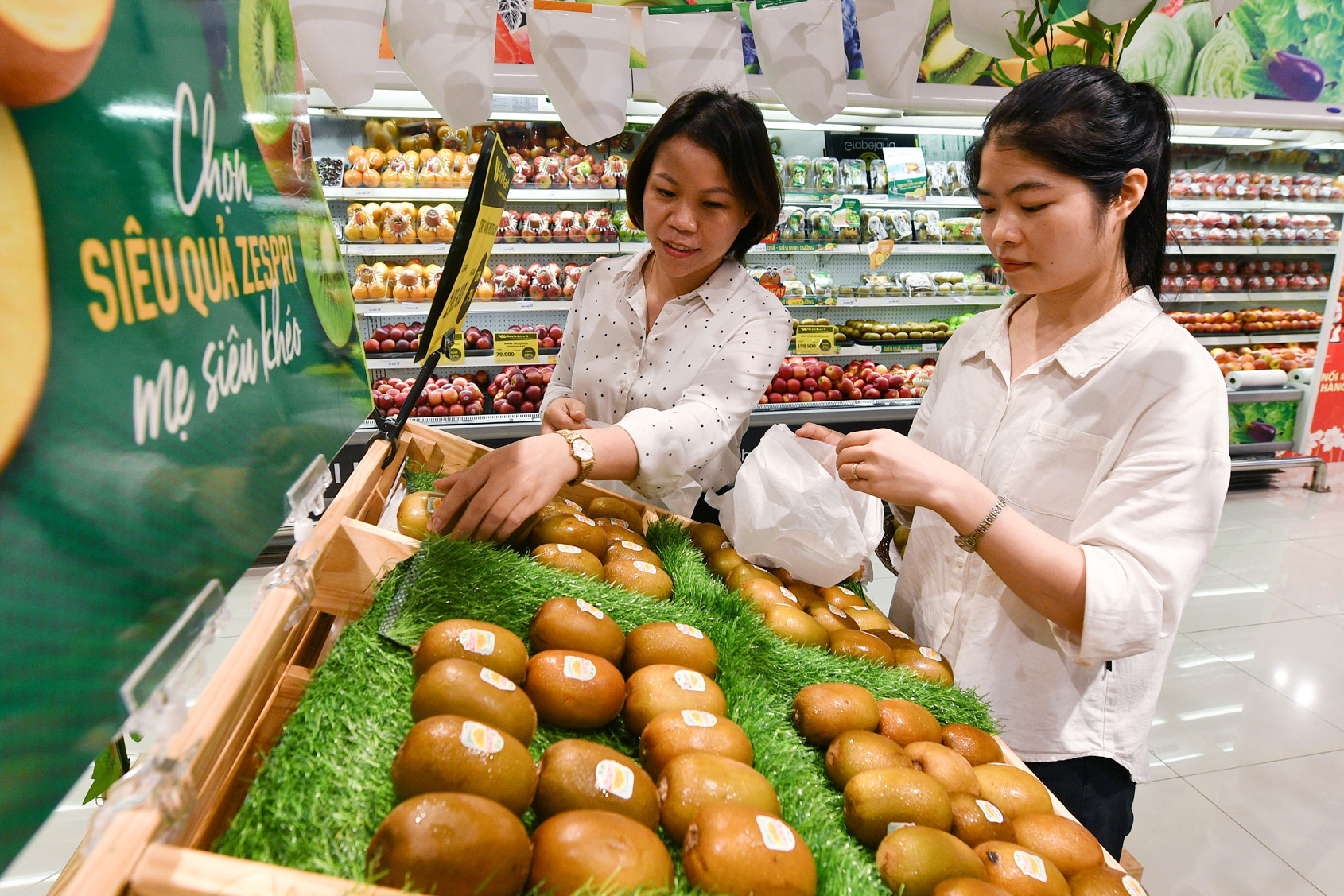
According to former Director General of the General Statistics Office, Nguyen Bich Lam, household consumption accounted for 68.1% of GDP between 2016 and 2019. However, from 2020 to 2024, that figure dropped to 54.9%, while government spending rose from 6.5% to 9.1% of GDP.
According to the General Statistics Office, in the first nine months of 2025, final consumption increased by 8.07%, contributing 73.8% to GDP growth. Yet this still falls short of the 10.5% target set by the government.
Total retail sales of goods and consumer services rose by 9.5% at current prices, but when adjusted for inflation, the growth was only 7.2%. The domestic market - long considered an economic shock absorber - has slowed.
Consumer confidence has dropped significantly. According to Worldpanel by Numerator, the second quarter of 2025 saw consumer confidence plunge to its lowest level since the COVID-19 pandemic. Households are cutting back on spending, increasing savings, and hoarding assets.
Data from the State Bank shows that household deposits reached 7.7 quadrillion VND (approximately USD 314 billion), up more than 12% year-on-year. This statistic speaks volumes: people are choosing to save rather than spend.
The September Labor and Employment Survey revealed that households with declining incomes in Q3 2025 primarily cited reasons such as job losses or temporary layoffs (34.1%), reduced business activity (27.7%), rising input costs (23.4%), and falling product prices (22.7%).
In such an environment, an economy cannot break through if its citizens are focused solely on safeguarding their finances instead of investing or spending.
A weakening consumption engine lacking support
There are still some consumer support policies in place, such as the continued 2% VAT reduction for select goods and services, free or subsidized tuition for preschool and primary students, and a symbolic USD 4 stipend per person during Independence Day celebrations.
In addition, social welfare disbursements reach tens of trillions of VND annually (billions of USD), reflecting the government’s compassionate policies.
However, many policies that directly influence purchasing power remain unchanged - or are adjusted too slowly and incrementally.
The personal income tax threshold remains at 11 million VND/month for taxpayers and 4.4 million VND/month for dependents - figures that date back to 2020. Over the past six years, housing prices, tuition fees, healthcare costs, and utility bills have all surged, yet the tax brackets have stayed the same. As a result, tens of millions of workers are being taxed on what should be considered basic living expenses.
This threshold is only set to increase in 2026 to 15.5 million VND/month for taxpayers and 6.2 million VND/month per dependent. But the long-delayed adjustment cannot make up for the erosion of real income suffered over the years.
It’s not just salaried workers who are affected. Small household businesses - critical for both employment and domestic consumption - are also facing increased pressure.
According to a proposal by the Ministry of Finance, starting in 2026, any household business earning over 200 million VND/year (around USD 8,100) will be taxed based on actual revenue. At that threshold, even a small shop or street vendor making 20–30 million VND/month is liable for taxes.
Nguyen Thi Cuc, President of the Vietnam Tax Consultants’ Association, warned that “the 200 million VND/year threshold is too low and unrealistic for household businesses. With rising input costs, many households are being taxed before they even turn a profit.”
She recommended raising the threshold to 1 billion VND/year (around USD 40,500), equivalent to a 15% profit margin or about 13–15 million VND/month - roughly the average income for an urban worker.
Taxing nominal revenue without accounting for real costs unfairly targets the smallest livelihoods in the economy. And when eateries and mom-and-pop stores raise prices to cover their tax burdens, it is ultimately consumers who pay the price.
Real estate taxation has also surged. Land-related tax revenue rose 218%, and domestic tax collection increased nearly 19% in the first nine months of 2025. Meanwhile, public investment disbursement remains sluggish.
In simple terms, money is being collected much faster than it is being spent - creating a cash flow imbalance that conflicts with the needs of an economy in recovery.
Nominal income growth no longer accurately reflects real purchasing power. In the first nine months of 2025, average monthly income reached 8.3 million VND (around USD 336), up 10% from the same period in 2024. However, most of that increase was consumed by higher living costs. Housing prices, tuition fees, healthcare, electricity, water, and fuel all continued to rise - leaving disposable income increasingly thin.
Notably, housing costs - which significantly affect consumption - are not included in the consumer price index (CPI).
Reframing policy to strengthen purchasing power
To achieve double-digit growth, the economy must first re-evaluate the role of citizens. They must be seen as the core engine of development - the vital arteries of trust, employment, and investment. Thus, when the economy needs acceleration, policymakers must be cautious about raising taxes, fees, or prices for public services.
First, unleash consumer spending.
One: increase real incomes. Adjust personal income tax thresholds in a timely manner; allow deductions for essential costs like tuition, healthcare, mortgage interest, and insurance; and reform wage policies to be tied to productivity, not just the CPI.
Two: reduce essential living costs. Make the cost structures of public services transparent; clearly separate costs, investments, and profits in sectors like electricity, water, healthcare, education, and telecommunications. Treat internet access, data, and clean energy as public infrastructure - not luxuries. Expand social housing and offer mortgage credit for the middle class to reduce the fixed expenses of the demographic that contributes most to consumption.
Three: promote smart consumption. View digital payments, e-commerce, and logistics as national consumer infrastructure. Support packages - such as clean energy, education, or preventive healthcare vouchers - should have clear objectives and timelines to convert support into actual spending behavior.
To reach double-digit growth, Vietnam cannot rely solely on exports or public investment. The real momentum must come from the purchasing power and confidence of its people.
A healthy economy is not one that extracts the most taxes, but one that enables its citizens to spend, invest, and pursue better lives.
Fiscal policy must shift from “collect more to spend more” to “nurture consumer power to grow.” Tax policy must prioritize protecting citizens' disposable income. Social policy must aim to reduce basic living costs - tuition, healthcare, housing, energy - as part of the national growth strategy.
And most importantly, macroeconomic stability and effective inflation control must be maintained.
When people are freed from unnecessary burdens, they become the most powerful force for growth and innovation. This is not just economic logic - it is a new development mindset: people at the center, with public strength as the foundation of national prosperity.
Citizens themselves will drive Vietnam’s double-digit growth miracle - when they live better, consume more, and contribute more to their future, their families, and their country.
Tu Giang
.svg)
