 Vietnamnet.vn

 Podcast



In Abyei, a dusty, sun-scorched land between Sudan and South Sudan, members of Vietnam’s Engineering Unit No. 4 are finding their own way to celebrate Tet - the most cherished holiday in Vietnamese culture.
With creativity and care, the soldiers have crafted vibrant peach blossom trees from colored paper and wrapped green rice cakes - banh chung - using local forest banana leaves in place of the traditional dong leaves.
This symbolic act is more than a morale booster. It's the beginning of what they call “banh chung diplomacy” - a heartfelt gesture that invites international colleagues to share in Vietnam’s Tet spirit.
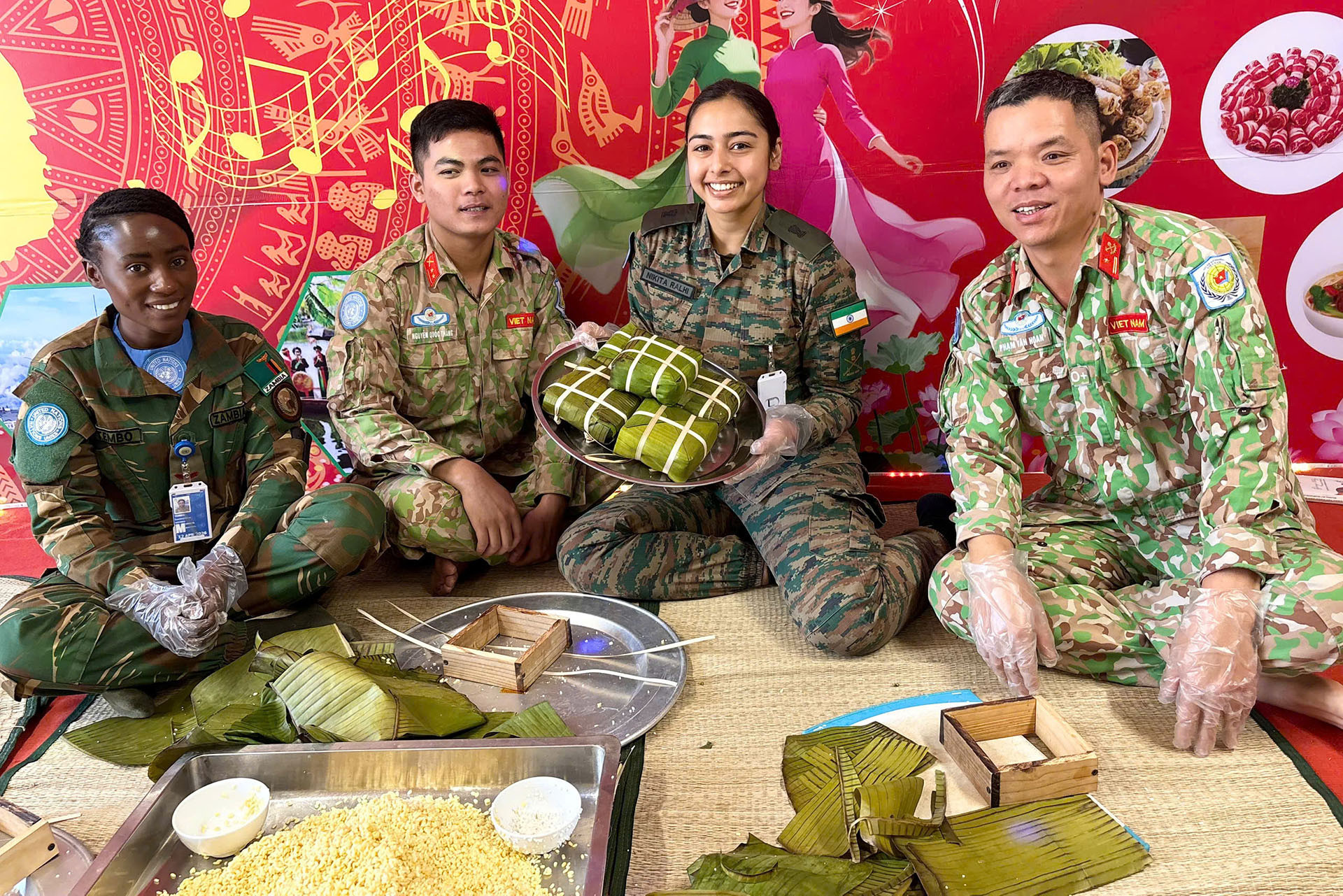
Though the banana leaves lend a lighter hue to the rice cakes, the sticky texture and rich flavor remain. For these soldiers, each bite carries the warmth of home and the message of friendship.
These small, green parcels serve as cultural messengers, carrying the image of Vietnam's “Uncle Ho’s soldiers” - friendly, generous, and devoted to peace - to comrades from across the globe.
On newly cleared roads, spring arrives with every kilometer paved and every bridge restored. The engineering unit has been spearheading major infrastructure efforts, including critical repairs to Banton Bridge - a lifeline in the region - and key local roads, just in time for the new year.
Witnessing their work, Colonel Alexander De Lima, Chief of Staff of the UNISFA military force, praised their dedication: “You are not just engineers and builders - you are ambassadors of compassion and professionalism. Your extraordinary efforts have transformed this mission and improved the daily lives of peacekeeping personnel.”
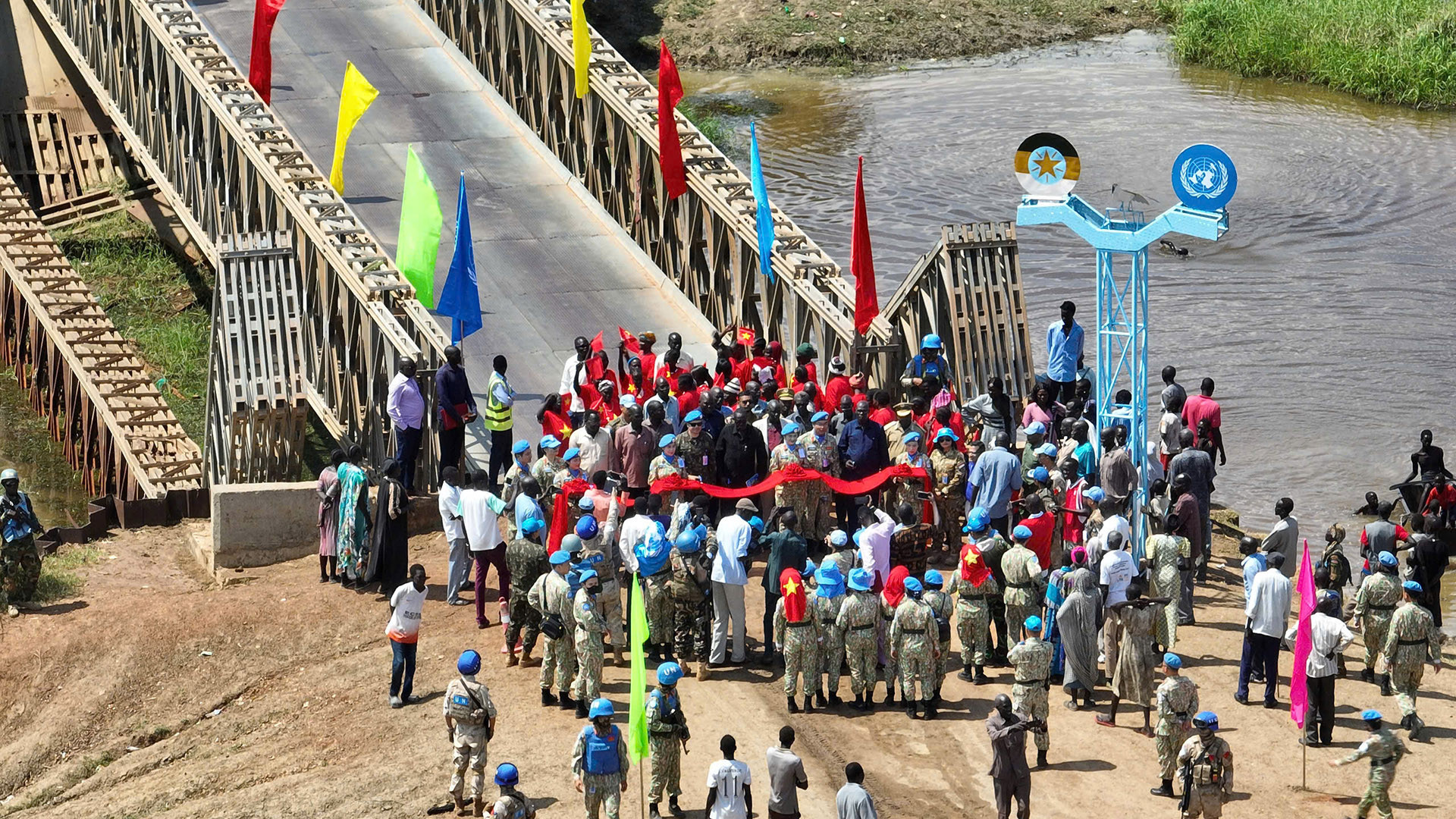
Behind this recognition lies the reality of their work - long days under 44°C heat, with faces hardened by sun and dust, and meals taken in the shade of road rollers.
Yet through it all, stories from home and the creative use of banana leaves offer moments of respite and remembrance.
Their presence is also felt beyond infrastructure. At a local secondary school in Abyei, the unit took time between operations to level the schoolyard and smooth the paths to classrooms. Machines normally used to pave strategic roads now gently flatten playgrounds - a poetic image of power used with care.
Minister Kon Maneit Matiok, head of Infrastructure and Public Services, expressed heartfelt gratitude: “You bring not just security, but the promise of a better future. Rebuilding the school is a priceless gift, reflecting the noble spirit of Vietnamese soldiers.”
For young servicemen like Lieutenant Nguyen Trung Kien of the Logistics and Support Unit, this first Tet away from home is both emotional and unforgettable.
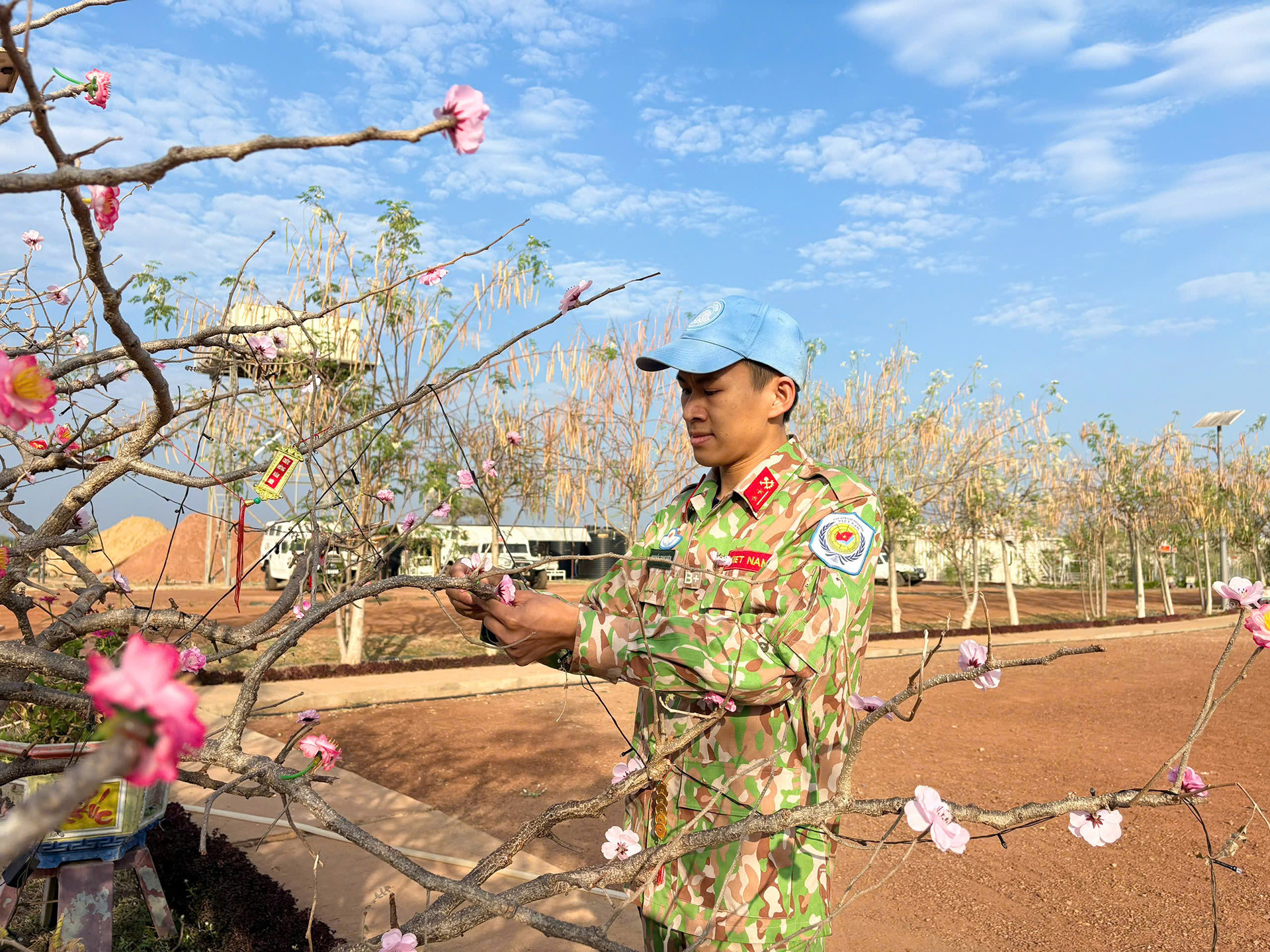
Lieutenant Nguyen Trung Kien carefully arranges paper peach blossoms, bringing the colors of Vietnamese spring to a conflict zone in Africa. Photo: Engineering Unit Rotation 4
In the blazing sun, he recalls his mother’s pickled onions and the chill of northern Vietnam. But he channels those memories into action, lovingly assembling paper blossoms and crafting peach trees that breathe life into their desert camp.
Despite the festive air, duty remains paramount. Bulldozers and steamrollers are washed and polished, ready to “dress up” for Tet alongside their human companions.
Even as they gather for a year-end meal, weapons remain close at hand. The unit maintains 100% readiness - a silent reminder that peace must be protected, even in celebration.
This is how Vietnam’s blue berets safeguard spring - with strict discipline and hearts full of hope.
Engineering Unit No. 4 consists of 184 personnel drawn from across the Vietnamese military: the Air Force, Navy, Army Regions 1 to 4, Corps 12, and specialist branches including Engineering, Special Forces, Communications, and the Vietnam Department of Peacekeeping Operations. The team departed for Abyei on September 26, 2025, taking over from Engineering Unit No. 3.
Abyei remains a disputed area between Sudan and South Sudan. Despite a 2011 agreement to demilitarize the zone, little progress has been made. The United Nations Interim Security Force for Abyei (UNISFA) was established that year to protect civilians and promote demilitarization under UN Security Council Resolution 1990.
Tran Thuong
.svg)
