 Vietnamnet.vn

 Podcast


Vietnam's proposal to impose a 0.2% tax on vacant, unused or delayed-development land has sparked debate over how authorities should distinguish deliberate land hoarding from legitimate delays and determine which areas should be subject to taxation.
During a National Assembly discussion on November 6, Minister of Finance Ngo Van Tuan said the classification of unused land must comply with land legislation. Tax authorities would coordinate with land management agencies and use information from the National Land Database to determine the status of individual properties.
However, questions remain over what constitutes abandoned land, how long a property must remain unused before becoming taxable, and whether owners facing circumstances beyond their control should be treated differently from speculators.
Unused land does not necessarily mean abandoned land
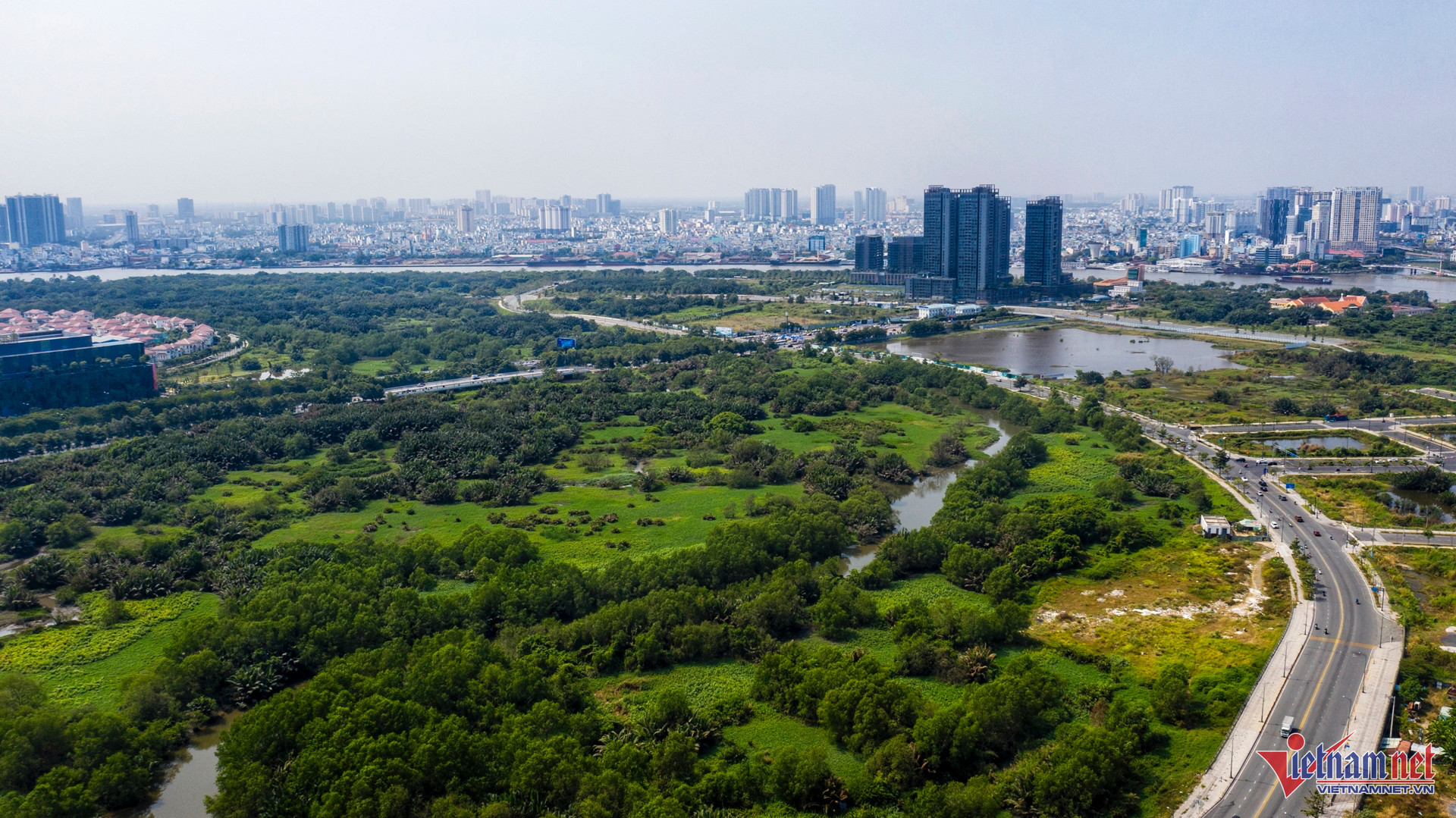
Speaking to VietNamNet, economist Dr. Le Ba Chi Nhan said authorities should not automatically classify land as abandoned simply because no construction, cultivation or commercial activity has taken place for a certain period.
Instead, assessments should consider three factors: the duration of non-use, the property's actual condition and the reasons it has not been developed or utilized.
Nhan identified three categories of unused land that require different treatment.
The first involves landowners who deliberately leave property idle for speculative purposes despite having the necessary legal approvals, financial resources and ability to proceed with development. These cases, he argued, should be the primary target of additional taxation.
The second covers land that remains unused because of planning restrictions, investment procedures, site clearance problems or delays in administrative approvals.
The third includes projects where development has partially commenced but cannot be completed because of financing constraints, market conditions or broader economic difficulties.
According to Nhan, these situations must be assessed against actual implementation progress rather than judged solely by the absence of completed buildings.
He also recommended establishing specific time thresholds while allowing different standards for different categories of land.
For residential, commercial, service and other non-agricultural business land, he suggested that authorities conduct an investigation if a landowner has met all legal requirements but fails to begin using the property for 12 consecutive months after the required commencement date.
An additional tax should be considered only if the investigation establishes deliberate hoarding or speculation.
For land allocated to investment projects, assessments should follow approved development schedules.
Agricultural land requires a different approach because production cycles, seasonal conditions and cultivation requirements vary. Nhan suggested that the assessment period could range from 12 to 24 months, depending on the type of agricultural activity.
Large investment projects should also be evaluated against approved schedules, taking account of site clearance, administrative procedures and force majeure circumstances.
He noted that Vietnam's 2024 Land Law already addresses cases involving 12 consecutive months of non-use or 24 months of delayed land utilization, along with provisions concerning force majeure.
These existing rules could provide a foundation for ensuring consistency between the proposed tax and land legislation.
Only genuinely unused portions should face the 0.2% tax
Another central issue is whether the proposed tax should apply to an entire development project or only the portions that remain deliberately unused.
Nhan argued that taxation should be calculated based on the actual area identified as being held idle for speculative purposes.
"For example, if a 100-hectare project has 10 hectares deliberately left unused, only those 10 hectares should be considered for additional taxation," he said.
Land where infrastructure has been completed, construction is underway or site clearance is pending should be assessed according to its designated use and approved development schedule.
The same applies to areas reserved for green spaces, roads and public facilities.
The absence of buildings or commercial activity alone should not automatically result in a vacant-land classification.
To ensure accurate assessments, authorities should examine cadastral records, detailed planning maps, land-use right certificates and geographic coordinate data.
On-site inspections should also be conducted, with official records prepared and the resulting taxable areas publicly disclosed.
Nhan emphasized that authorities must establish who is responsible for delays.
Investigations should determine whether developers have obtained the necessary legal approvals, secured access to land and infrastructure, and possessed sufficient financial resources to proceed.
The amount already invested and efforts made to resolve outstanding difficulties should also be considered.
He proposed a process in which land management agencies first identify potentially unused sites, conduct inspections and determine the affected areas.
Landowners should then be notified and allowed to provide explanations and supporting evidence.
Taxes should be imposed only after the legal grounds have been fully verified, with landowners retaining the right to lodge complaints or pursue legal action.
Nhan also called for an interconnected database linking tax, land management, planning, construction and investment agencies to improve the accuracy of land-use assessments.
"The objective of the tax policy is not to force businesses to sell unused land to avoid taxation, but to encourage efficient land utilization, curb speculation and increase the supply of property that can actually enter the market," he said.
He cautioned that businesses should not be made financially responsible for delays caused by unresolved administrative procedures or shortcomings in government management.
Protecting buyers trapped in stalled property projects
The proposed tax also raises concerns about homebuyers and land purchasers who have paid for properties but remain unable to use them because development projects have stalled.
Nguyen Duy Thanh, Vice Chairman of the Ho Chi Minh City Condominium Management and Operations Association (HCMO), said policymakers should consider tax exemptions, reductions or special treatment for buyers affected by project delays, legal disputes or developers' financial difficulties.
Many buyers, he explained, have already fulfilled their financial obligations but cannot begin construction, use their properties or receive completed homes on schedule.
Such circumstances are often beyond the buyers' control.
Thanh argued that responsibility should rest with developers or other parties responsible for delays rather than being transferred to individual purchasers through additional taxes.
He stressed the importance of distinguishing deliberate property accumulation for speculation from properties that cannot be used because of legal obstacles, disputes or other objective circumstances.
Such safeguards, he said, would allow the proposed policy to discourage speculation while protecting the legitimate interests of buyers who intend to use their properties.
Clear rules needed before implementation
The experts agreed that the effectiveness of the proposed 0.2% tax would depend heavily on how unused land is defined, verified and assessed.
A uniform tax imposed on all undeveloped land could affect projects that are progressing within approved schedules or have been delayed by factors outside investors' control.
By contrast, a system based on verified land-use conditions, development timelines and responsibility for delays would more precisely target speculative behavior.
For property buyers, the central concern is ensuring that people who have already paid for homes or land are not penalized for problems caused by developers or administrative authorities.
The proposal remains under discussion, with detailed criteria for identifying taxable unused land yet to be clarified.
Anh Phuong

