 Vietnamnet.vn

 Podcast



As artificial intelligence rapidly transforms how people consume information, Vietnamese media leaders are warning that journalism faces one of its biggest challenges yet: protecting original reporting in an era when AI systems can aggregate, summarize and redistribute news content at unprecedented scale.
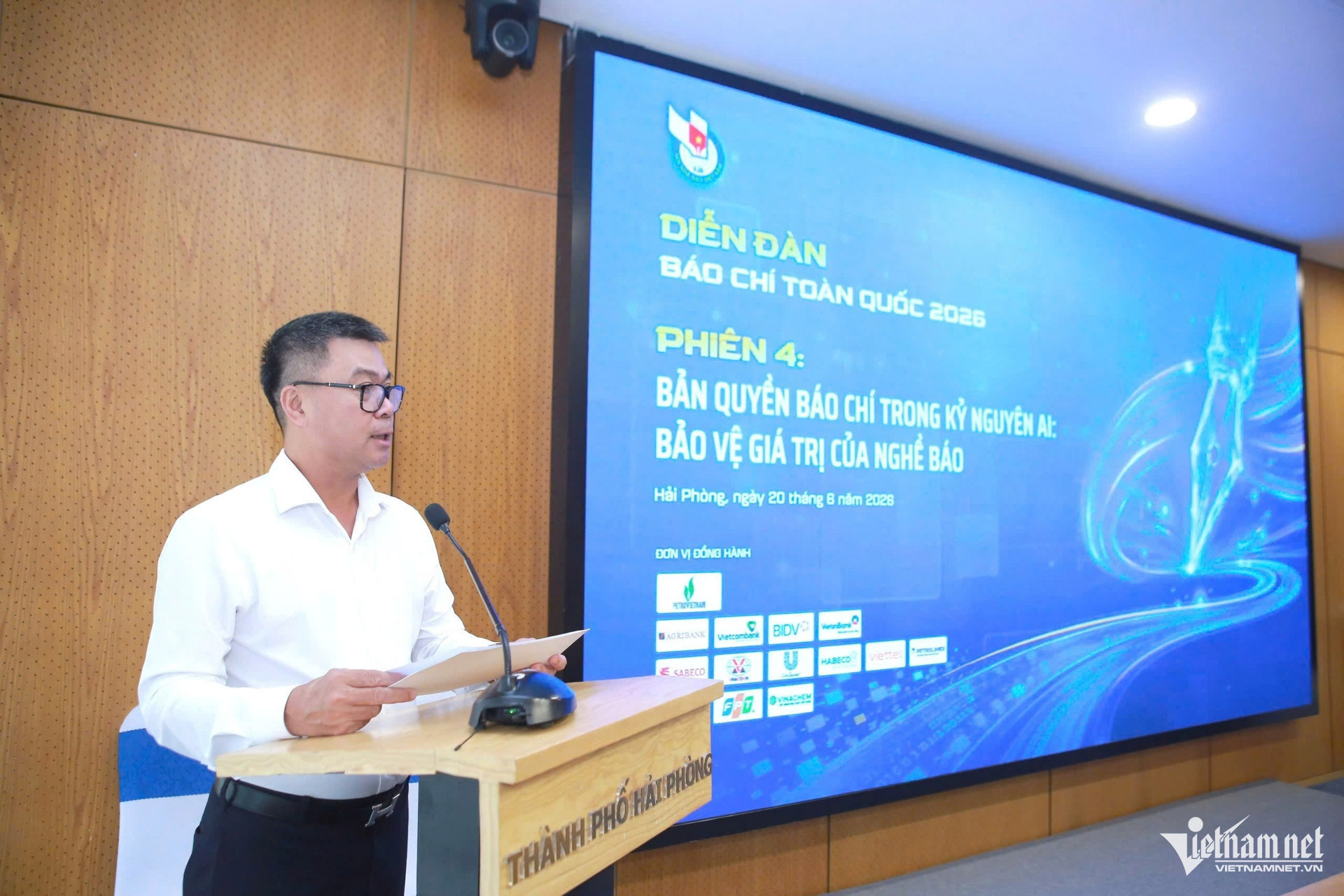
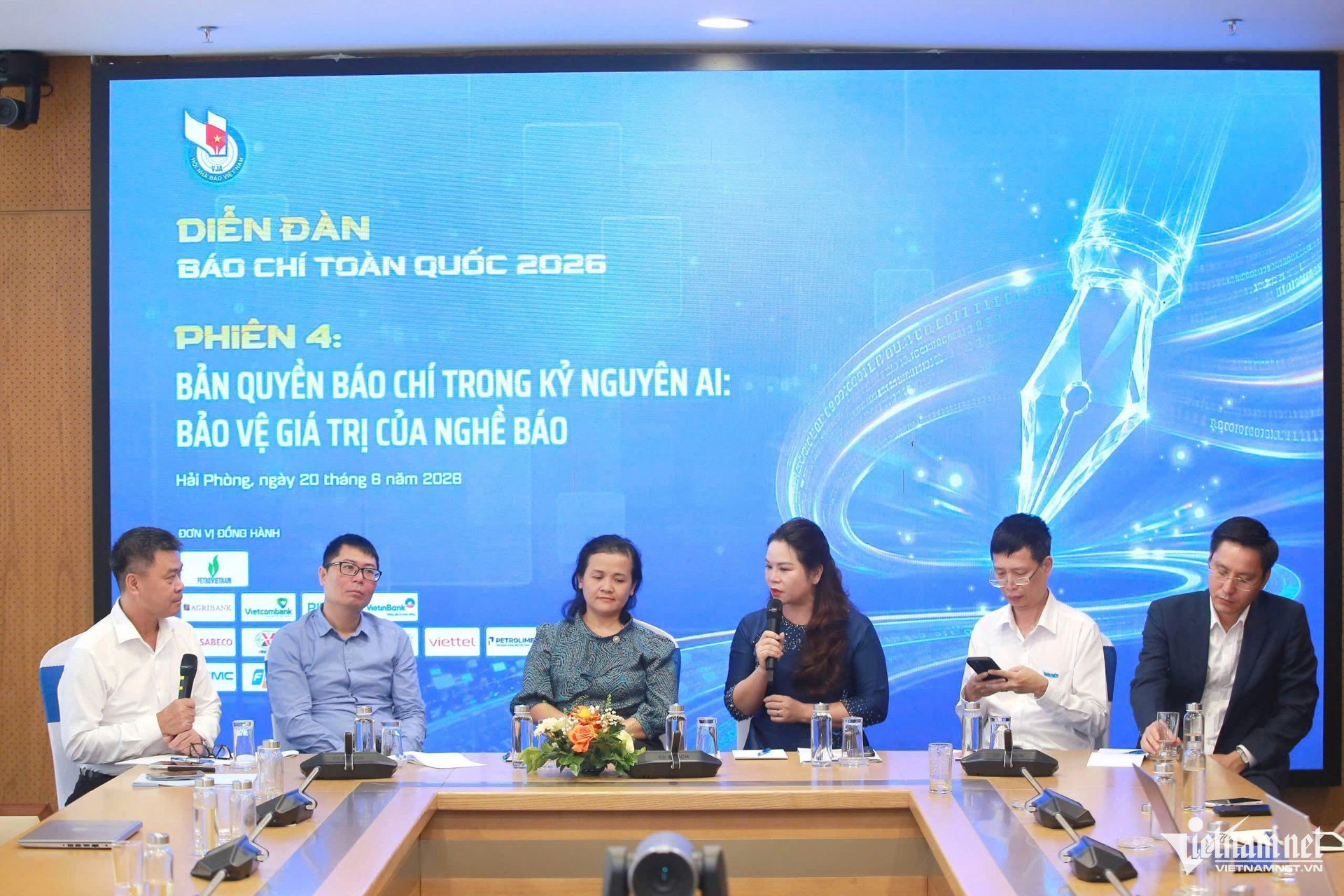
The issue took center stage during the 2026 National Press Forum in Hai Phong, one of Vietnam's largest annual gatherings of journalists, editors, technology experts and policymakers. A panel discussion titled "Journalism Copyright in the AI Era - Protecting the Value of Journalism" drew significant attention as participants debated how news organizations can safeguard their content, audiences and revenue streams.

The discussion was moderated by Nguyen Van Ba, editor-in-chief of VietNamNet, who opened the session with a question increasingly confronting publishers around the world.
What happens when AI can instantly collect information from across the internet and deliver answers directly to users through chatbots, without requiring them to visit the original news source?
According to Nguyen Van Ba, the greatest threat is not the unauthorized copying of individual articles but the gradual erosion of the economic incentives that make original reporting possible.
"If news organizations no longer have sufficient resources to produce original journalism, society risks losing access to verified and trustworthy information," he said.
The concern reflects a broader global debate over the relationship between artificial intelligence companies and news publishers. Around the world, media organizations are seeking ways to ensure they are compensated when their content is used to train or support AI systems.
Revenue pressures intensify
Dang Thi Phuong Thao, deputy director general of Vietnam's Press Authority, presented figures highlighting the scale of Vietnam's media industry.
Vietnam currently has 733 news organizations employing around 41,000 media workers, including more than 21,000 accredited journalists. Together, they produce roughly 40 million news articles annually, along with 50,000 hours of television programming and 20,000 hours of radio broadcasts.
Despite this vast output, financial pressures are mounting.
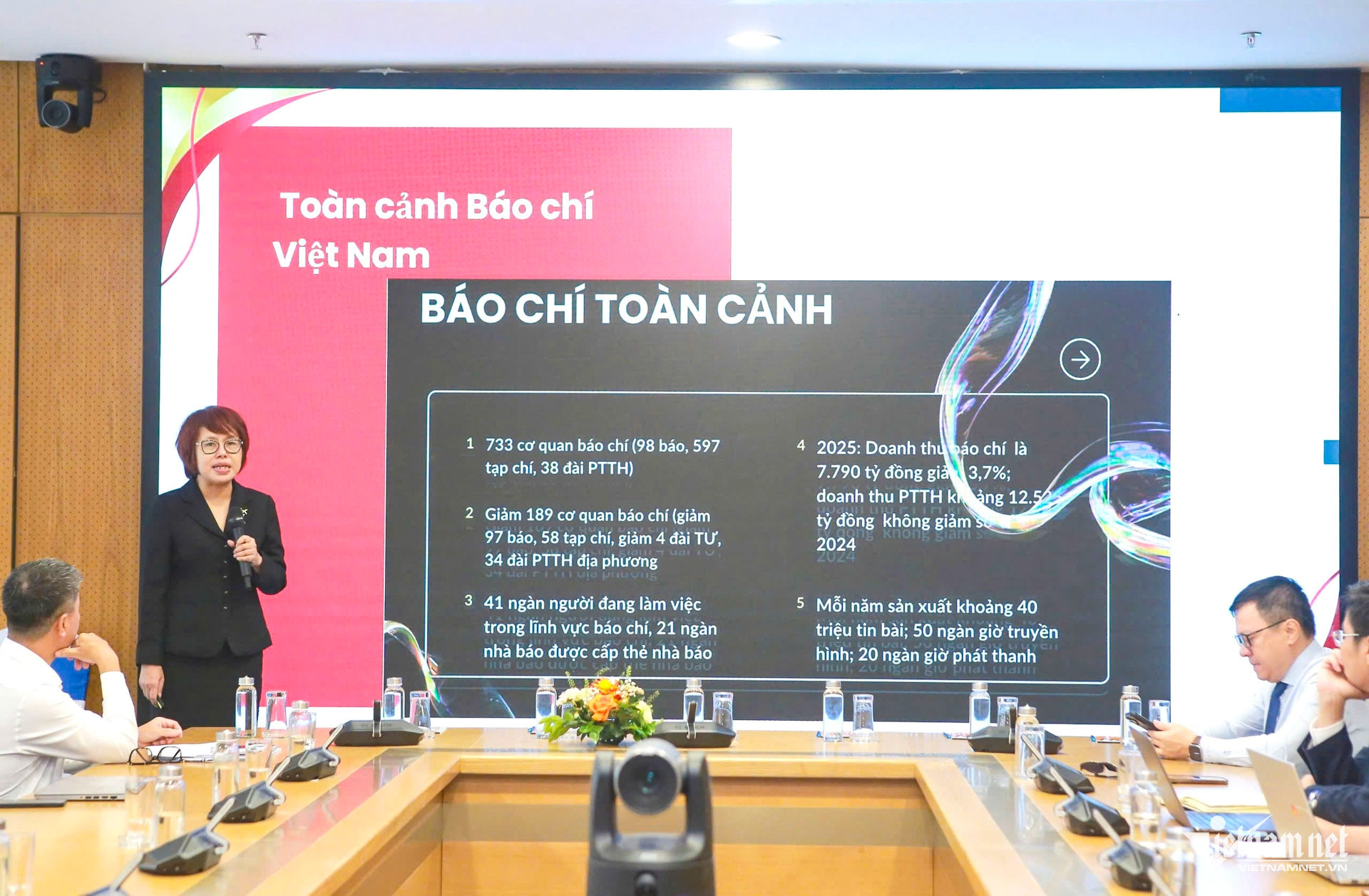
According to official data, Vietnam's press sector generated revenue of approximately VND 7.79 trillion in 2025, equivalent to about USD 300 million, a decline of 3.7% from the previous year. Broadcasting revenue remained largely stagnant at around VND 12.5 trillion, or roughly USD 480 million.
While digital technology has expanded audience reach, Thao said it has also made journalistic content more vulnerable to unauthorized use and commercial exploitation.
Previously, publishers primarily battled content copying by websites and aggregators. Today, many are concerned about large technology platforms and AI developers collecting journalistic content to train large language models without establishing clear mechanisms for revenue sharing.
Industry experts argue that publishers face a double challenge: losing advertising income while simultaneously seeing fewer users visit their own websites.
Adapting to a new media landscape

Le Quoc Minh, editor-in-chief of Nhan Dan newspaper and chairman of the Vietnam Journalists Association, said many media organizations have been slow to respond to technological disruption despite years of warnings.
He argued that traditional newsroom structures are no longer sufficient in a rapidly changing digital environment.
According to Minh, news organizations must rethink everything from staffing and editorial workflows to business models and audience engagement strategies.
At the same time, he stressed that artificial intelligence should not be viewed solely as a threat.
Used effectively, AI can help newsrooms reduce production costs, improve efficiency and unlock greater value from archives and data accumulated over decades.
He noted that smaller and more agile publishers that embraced AI early have often adapted more successfully than larger organizations that were slower to change.
Journalism as a digital asset
Nguyen Quang Dong, director of the Institute for Policy Studies and Media Development, argued that publishers must fundamentally rethink how they view their content.
He said traditional traffic-driven business models built around search engines are becoming less effective as consumers increasingly rely on AI-powered assistants and chatbots for information.
With retrieval-augmented generation, or RAG technology, AI systems can pull information from multiple sources and deliver direct answers without requiring users to click through to the original article.
As a result, publishers risk losing a significant portion of advertising revenue.
Dong suggested that media organizations should begin treating journalism as a strategic digital asset consisting of three core components: original content, newsroom brands and audience data.
This approach would allow publishers to distinguish between free public-interest content and premium information products that could support subscription, licensing or commercial partnership models.
Collective action and technology solutions

Several speakers argued that no single publisher can effectively negotiate with global technology giants on its own.
Tran Viet Hung, deputy editor-in-chief of Thanh Nien newspaper, proposed creating a journalism copyright alliance that would bring together publishers across Vietnam to coordinate advocacy efforts, share technical solutions and strengthen their bargaining position.
The proposal mirrors initiatives already being explored in several countries where publishers have sought collective arrangements with technology platforms.
Technology was also highlighted as a key part of the solution.
Hoang Dinh Chung, director of the Digital Copyright Center, introduced a monitoring platform capable of scanning online content in real time, identifying digital fingerprints and detecting unauthorized use of text, images, audio and video.
The system also incorporates AI tools for facial recognition, harmful-content detection and automated copyright enforcement.
Nguyen Thanh Hai, chairwoman of FPT Online, said publishers should accelerate digital transformation efforts, standardize their data systems and build stronger partnerships to develop new business models beyond traditional advertising.
Calls for new legal frameworks
One of the forum's most closely watched discussions focused on regulation.
Pham Kim Oanh, deputy director general of Vietnam's Copyright Office, said existing copyright laws provide a foundation for protecting creators' rights but may need updating to address challenges created by AI technologies.
Meanwhile, Dang Thi Phuong Thao called for amendments to both Vietnam's Press Law and Intellectual Property Law to establish clearer rights for publishers in the digital environment.
She also proposed legal mechanisms requiring global technology platforms and AI companies to share revenue when benefiting from journalistic content.
Under such a framework, organizations that derive value from news content would be expected to compensate the publishers responsible for producing the original reporting.
Participants also discussed the possibility of establishing a collective rights management organization that could represent publishers in licensing negotiations and royalty collection.
Closing the session, Nguyen Van Ba said that despite technological disruption, journalism's fundamental mission remains unchanged.
"The core value of journalism is still the creation of truthful, accurate and trustworthy information for society," he said.
In the AI era, he argued, copyright protection is no longer simply about safeguarding individual articles or media organizations. It is about protecting the incentives that make original reporting possible, preserving reliable sources of information and securing the future of journalism itself.
Bao Khanh
.svg)
