 Vietnamnet.vn

 Podcast



In just the first 11 months of 2025, Vietnam’s export turnover reached approximately $430.2 billion, up 16.1% year-on-year. By the end of the year, total exports are projected to exceed $470 billion - around 16% higher than in 2024.
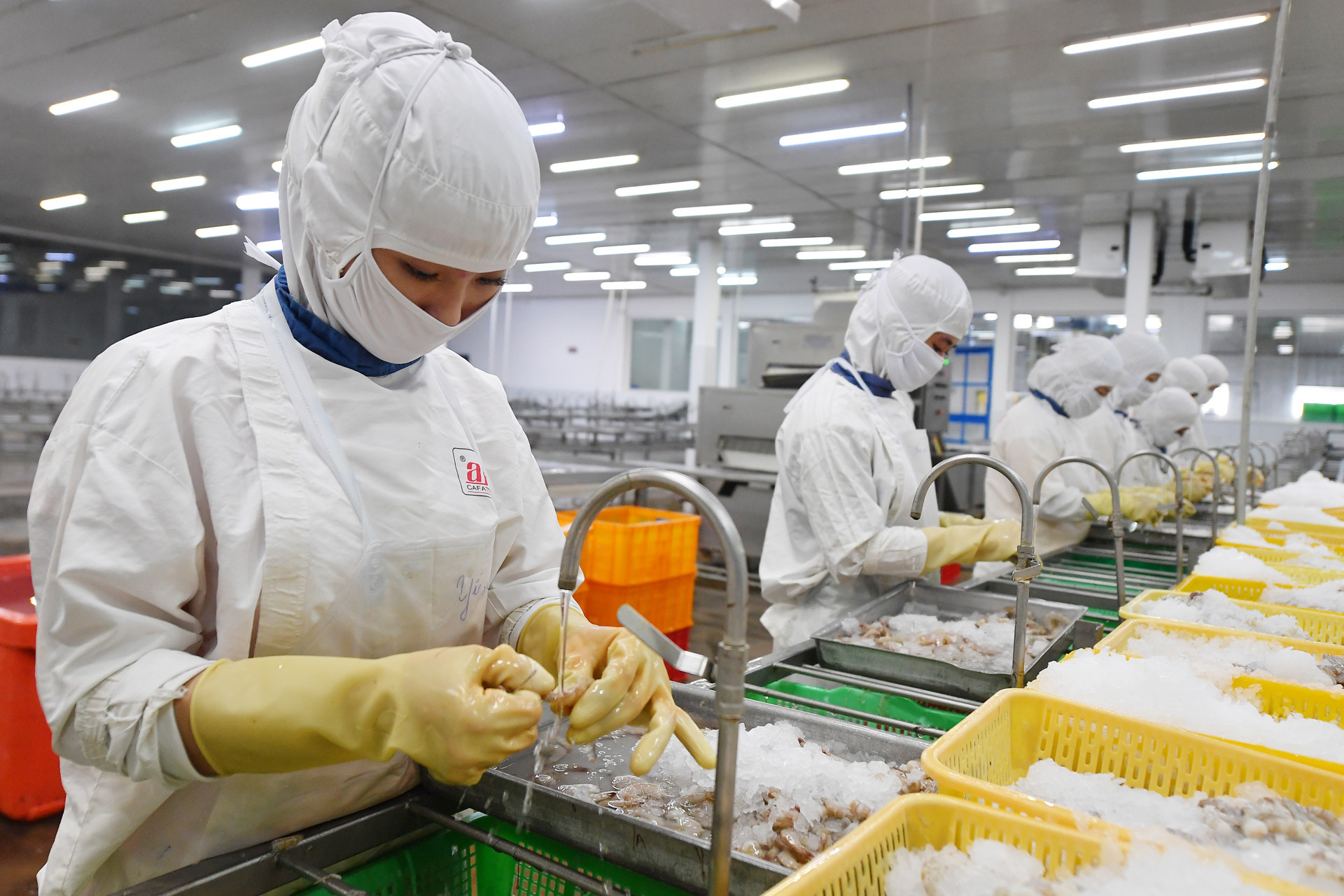
Photo: Hoang Ha
The 2020–2025 period marks a remarkable phase of growth in Vietnam's trade activity, affirming the sector’s pivotal role in the national economy. According to the Ministry of Industry and Trade, the average annual export growth rate stood at around 10%, propelling Vietnam into the ranks of the world’s top 20 exporting economies as of 2023.
Crucially, Vietnam has sustained a trade surplus for ten consecutive years, contributing to macroeconomic stability, generating foreign reserves, and strengthening the country’s forex holdings.
These impressive figures reinforce Vietnam’s position as a highly open economy and a bright spot in both regional and global trade - especially during a time when many large economies are recovering slowly and global commerce remains turbulent.
Earlier this year, when the U.S. announced new retaliatory tariffs, concerns mounted over their potential impact on Vietnamese exports. But once implemented, the actual tariffs proved significantly lower than feared, roughly aligning with the rates applied to countries with similar export profiles.
Adapting under pressure
While specific sectors like seafood were hit harder, the overall competitiveness of Vietnamese goods in the U.S. market held steady.
Rather than reflecting a disappearance of risk, the continued growth in exports signals Vietnam’s increasingly agile response to external challenges.
Still, stopping at headline numbers paints only a partial picture. Delving deeper into the structure of trade in 2025 reveals a more pressing question: who is truly driving the growth, and how much of the value stays in Vietnam?
FDI’s dominant role
The 16.1% export growth over 11 months is an impressive achievement. However, the underlying imbalance is becoming harder to ignore.
Domestic enterprises generated just over $102 billion in export revenue - down 1.7% year-on-year - representing less than 24% of total exports.
In stark contrast, foreign-invested enterprises (FDI) raked in nearly $328 billion, growing over 23% and accounting for more than 76% of exports.
This isn’t a temporary trend. FDI’s share in Vietnam’s exports has climbed from around 55% in 2010 to 70% in 2015, and has hovered around 73–74% for years. By late 2025, it surpassed 76%.
Put simply, for every four dollars Vietnam earns from exports, more than three come from FDI firms.
Trade surplus, but for whom?
Vietnam recorded a trade surplus of more than $20.5 billion in the first 11 months of 2025 - reinforcing macroeconomic stability. But how that surplus is structured is telling.
FDI firms alone posted a surplus of $46.5 billion, while domestic companies ran a deficit of nearly $26 billion.
This means the entire trade surplus came from FDI activity, while local enterprises remain heavily dependent on imported inputs and have yet to establish a balanced presence in international trade.
Moreover, with global interest rates still high, profits generated by FDI firms tend to be repatriated, limiting their contribution to Vietnam’s domestic capital accumulation.
Low rungs of the value chain
Vietnam’s current trade model continues to show clear structural patterns. Around 89% of export revenue comes from processed industrial goods, while over 93% of imports are capital goods - machinery, parts, and raw materials.
This “assembly for export” model once fueled early-stage industrial growth, but its limitations are now evident.
Exports rise quickly, but so do imports of production inputs. Domestic value-added remains low, making the economy vulnerable to external shocks.
In 2025, Vietnam’s exports faced mounting headwinds - from sluggish global recovery and geopolitical instability to rising protectionism and fragmented trade systems.
In addition, access to major markets now hinges on meeting increasingly strict standards around sustainability, emissions, traceability, social responsibility, and green supply chains.
These challenges put enormous pressure on Vietnam’s small and medium-sized enterprises, which often lack the resources, technology, and know-how to meet global benchmarks.
Domestically, export growth still relies heavily on FDI. Local firms are largely absent from high-value segments of global value chains. Their capabilities in design, international marketing, and brand building remain limited.
Many sectors are still deeply reliant on imported raw materials and components.
Quantity vs. quality
Perhaps the most striking takeaway from Vietnam’s 2025 trade picture isn’t the rate of growth, but the quality of that growth.
With FDI now responsible for the majority of exports - and the entire trade surplus - while local firms remain net importers, the gap between “growth numbers” and the real health of the economy is widening.
As economist Le Duy Binh told VietNamNet, Vietnam cannot rely solely on boosting export volumes.
In the long term, it must pivot toward increasing domestic value-added, developing supporting industries, and enabling Vietnamese firms to play deeper roles in supply chains.
At the same time, more focus is needed on service exports - a sector where Vietnam still runs a trade deficit of $10–12 billion annually, despite sizable goods surpluses.
Vietnam’s record export year in 2025 proves its resilience in a volatile world.
But it also highlights the limits of a growth model rooted in FDI and outsourced production.
The question is no longer whether exports will grow - but how much of that value will remain to nourish Vietnam’s economy over the long haul.
Without deep structural reforms, today’s records could easily become tomorrow’s burdens.
Lan Anh
.svg)
