 Vietnamnet.vn

 Podcast



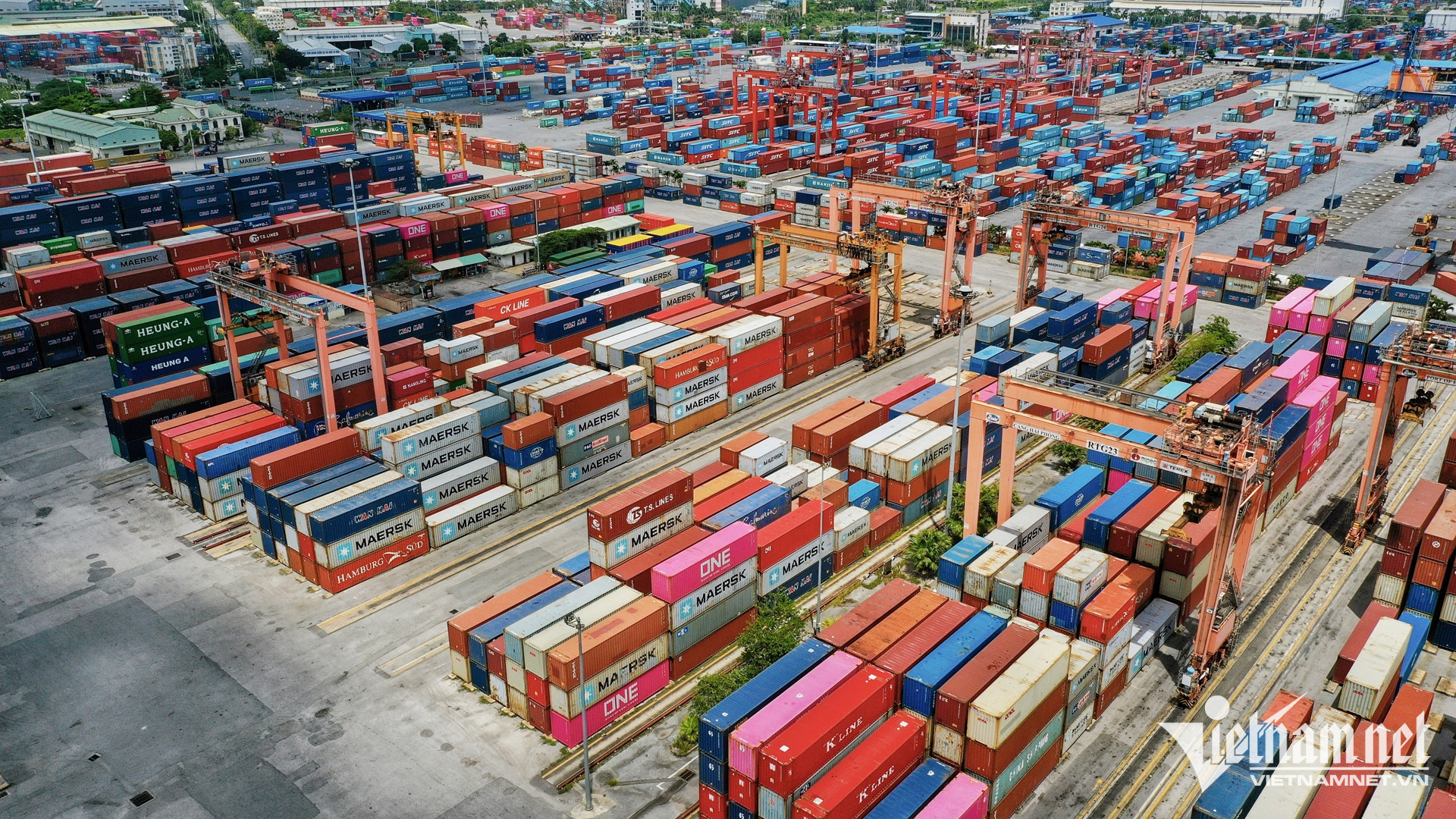
The Resolution, dated June 8, 2026, on foreign-invested economic development is not merely a resolution on investment policy but also reflects a significant innovation in the national development mindset, tightly integrating economic development with the safeguarding of national defense, security, foreign affairs, and the enhancement of national strategic autonomy.
The most notable change appears in the title itself. While previous policies focused primarily on "attracting foreign investment," the new resolution emphasizes "developing the foreign-invested sector of the economy."
FDI is no longer viewed simply as an additional source of capital for development. Instead, it is defined as an integral part of the national economy that should develop over the long term on an equal footing with other economic sectors while contributing to the goal of building an independent, modern and resilient economy capable of withstanding global shocks.
This marks a transition from a mindset of "opening the economy to attract capital" to one of "proactively building a development ecosystem," with the State playing a strategic role in guiding development and selecting investment that aligns with national interests.
Investment quality takes precedence
For many years, the success of FDI policy was measured largely by the number of projects and total registered capital. But Resolution 10 establishes a different set of criteria.
Technology quality, innovation capacity, value creation, linkages with Vietnamese businesses, technology transfer, workforce development and contributions to productivity growth are now key benchmarks for selecting investors.
Accordingly, Vietnam prioritizes investment projects in semiconductors, AI, biotechnology, advanced materials, clean energy, the digital economy, R&D centers, data centers, modern logistics and other high-tech industries.
This reflects the country's determination to move beyond its traditional advantage of low-cost labor toward competitiveness based on institutional regime, high-quality human resources and innovation.
From isolated FDI enclaves to a collaborative ecosystem
Another significant feature of the resolution is its effort to address the long-standing disconnect between foreign invested enterprises and domestic businesses.
Many FIEs possess advanced technologies but maintain relatively low localization rates and limited linkages with Vietnamese firms, restricting the spillover of technology and management expertise.
The resolution aims to build an integrated investment ecosystem in which FIEs and Vietnamese companies participate together in value chains, develop supporting industries jointly, collaborate on innovation and strengthen the country's overall competitiveness.
This represents a strategic development approach that enhances value creation across the economy while gradually reducing dependence on external supply chain links.
Placing economic security at the center of FDI policy
Unlike previous resolutions that focused primarily on economic efficiency, Resolution 10 places particular emphasis on national defense, security and economic security.
Amid intensifying geopolitical competition, foreign investment is no longer solely an economic issue. It is also closely linked to data security, cybersecurity, energy security, supply chain resilience, protection of core technologies and national sovereignty in cyberspace.
The resolution calls for improving investment screening mechanisms, strengthening oversight of mergers and acquisitions in sensitive sectors, and preventing investment activities from being used for transfer pricing, market manipulation, strategic acquisitions or activities affecting areas critical to national defense and security.
Economic diplomacy linked with enhancing national status
The Resolution also reflects a shift in thinking on external economic relations. Attracting FDI is not only aimed at mobilizing resources for development but also serves as a tool to raise the nation’s position in global value chains, expand the network of strategic partners, effectively leverage new-generation free trade agreements, and participate more deeply in international innovation networks.
Amid strong global investment shifts, Vietnam needs to proactively select partners with advanced technology, modern governance, high social responsibility, and commitments to sustainable development, on the basis of ensuring harmonized interests among the State, investors, and domestic enterprises.
To realize Resolution 10, the National Assembly plays an especially important role in improving development institutions.
The focus is to continue amending legal provisions on investment, enterprises, land, tax, science and technology, innovation, data, and digital transformation, while building legal mechanisms strong enough to screen investment, ensure economic security, and strengthen oversight of the implementation of commitments on technology transfer, environmental protection, human resource development, and linkages with domestic enterprises.
Tran Duc Thuan, Vice Chair of the National Assembly's Committee on National Defense, Security, and Foreign Affairs
.svg)
