 Vietnamnet.vn

 Podcast


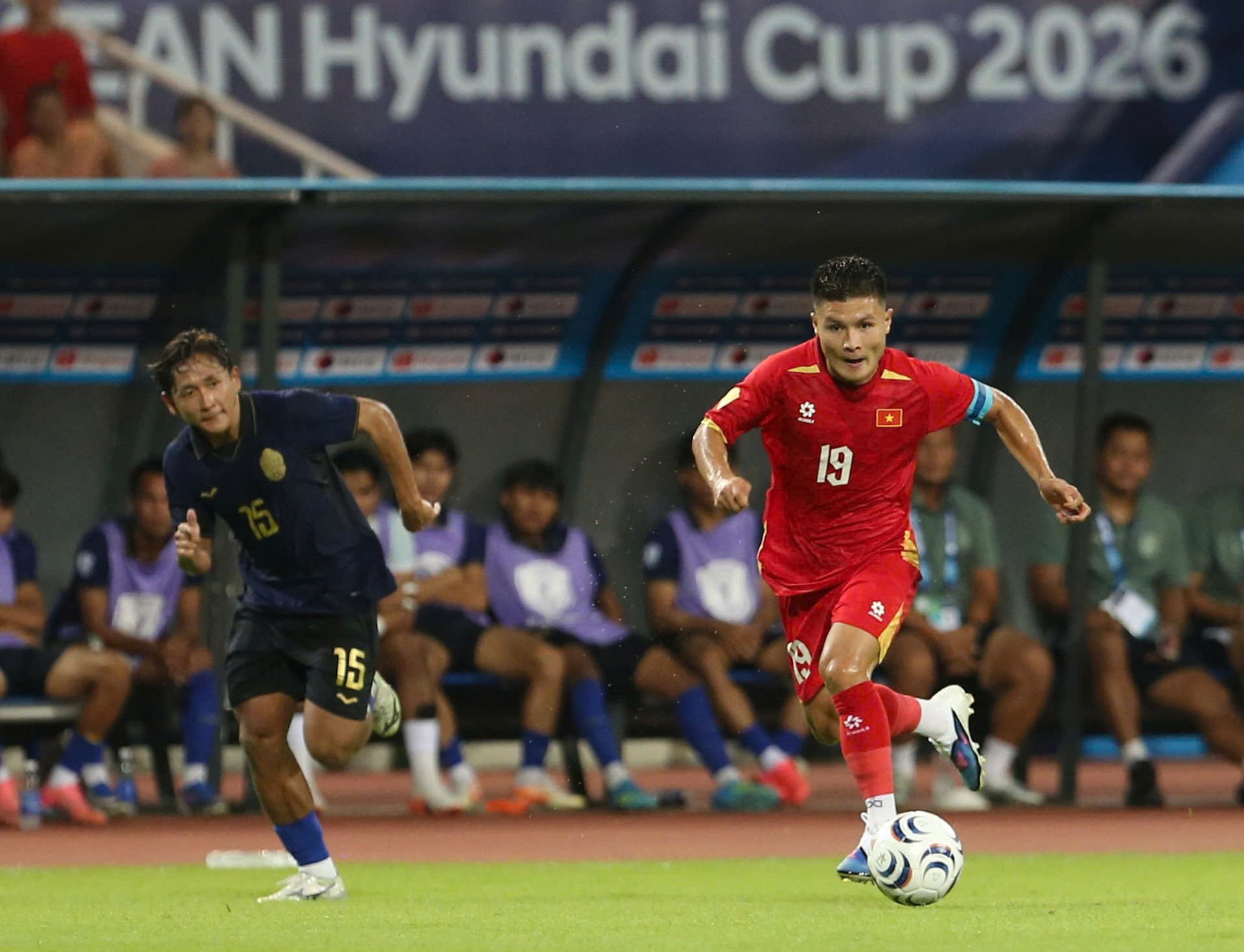
Quang Hai's difficult decision
During the most recent national team gathering, Nguyen Quang Hai decided to withdraw from Vietnam's squad ahead of the 2026 FIFA ASEAN Cup because of injury.
However, football observers understood that his decision was also influenced by his physical condition and accumulated fatigue following a prolonged period of training and competitive matches for both club and country.
For a player of Quang Hai's stature, missing the FIFA ASEAN Cup was certainly not an easy decision.
Yet the midfielder, who captained Vietnam during the ASEAN Cup, understood that forcing himself to participate while not fully fit would not necessarily benefit the team.
Vietnamese football has no shortage of stories about players battling through pain to represent their country. Such dedication deserves respect, but it should not mean that every decision to withdraw from international duty is automatically treated with suspicion.
The consequences of playing despite physical problems were evident at the 2026 FIFA ASEAN Cup, with Xuan Son, Hoang Hen and Tai Loc all sidelined by injuries and yet to return to action.
Quang Hai's withdrawal, therefore, should not be viewed simply as a player turning down the opportunity to represent his country.
When a player's physical condition is inadequate, stepping aside to recover is a decision that deserves respect.
Commitment to the national team should not mean sacrificing one's health under all circumstances.
A lesson for Vietnam's upcoming squad selection
November's FIFA international window is approaching, and Vietnam's squad announcement is expected soon.
After a demanding run of fixtures, Quang Hai's experience offers an important lesson for head coach Kim Sang Sik as he considers his selections.
Reputation, experience and club form all matter, but a player's physical condition at the time of a national team gathering must carry equal weight.
An exhausted player is not necessarily a better option than someone who is performing consistently and is fully fit.
In other words, Vietnam needs players who can make meaningful contributions on the pitch, rather than simply assembling a squad filled with recognizable names.
This requires honesty and openness from both players and the coaching staff.
Players must be truthful about their physical condition rather than conceal injuries or fatigue to protect their places in the squad.
In return, Kim Sang Sik must carefully assess their fitness, communicate with their clubs and avoid creating pressure that makes players feel compelled to accept international call-ups at any cost.
Of course, Quang Hai's example should not be used to encourage players to withdraw from national team duty too easily.
Representing one's country is an honor, and every player must take responsibility for the decisions they make.
But that responsibility does not mean disregarding physical limitations, particularly when the upcoming matches are not their final opportunity to contribute to the national team.
Quang Hai's decision demonstrates that sometimes the greatest contribution is not pushing through one more match, but knowing when to stop.
Stepping aside at the right moment, allowing a healthier player to take an opportunity and ensuring a full recovery can also be acts of service to the national team.
After all, contributing to Vietnam's success does not always require being on the pitch.
Duy Nguyen

