 Vietnamnet.vn

 Podcast


Vietnam's stock market has undergone a remarkable transformation over the past three decades, evolving from a fledgling trading platform into a vital component of the country's financial system and a major source of capital for its largest private enterprises.
The market's development has accompanied the rise of business leaders such as Vingroup Chairman Pham Nhat Vuong and Hoa Phat Chairman Tran Dinh Long, whose companies have expanded from domestic businesses into major conglomerates with substantial market valuations.
With nearly 14.4 million securities accounts and total market capitalisation approaching $407 billion by the end of October 2026, Vietnam's stock market has become an important platform for corporate expansion, investment and wealth creation.
From early stock market reports to Vingroup's rise

Vietnam's State Securities Commission was established on November 28, 1996, laying the institutional foundation for the country's stock market.
Nearly four years later, on July 28, 2000, the first official trading session took place at the Ho Chi Minh City Securities Trading Center, featuring just two stocks: Refrigeration Electrical Engineering Corporation (REE) and Sacom (SAM).
It was not until 2005-2006 that the market entered a period of rapid expansion, supported by the arrival of major companies and growing investment flows.
Among the entrepreneurs paying close attention to the emerging capital market was Pham Nhat Vuong, who would later become Vietnam's wealthiest billionaire.
During this period, Vincom began systematically preparing to access the stock market.
The company published audited financial statements, restructured its operations and worked to meet the requirements for becoming a public company and obtaining a stock exchange listing.
On September 19, 2007, Vincom listed 80 million shares on the Ho Chi Minh Stock Exchange (HoSE) under the ticker VIC, representing VND 800 billion in aggregate par value.
In early 2008, Vinpearl followed with the listing of 100 million shares under the ticker VPL.
A major turning point came in January 2012, when Vinpearl merged into Vincom.
The combined business formally adopted the name Vingroup Joint Stock Company, establishing the foundation for one of Vietnam's largest diversified private conglomerates.
The group's listed corporate ecosystem subsequently expanded with Vincom Retail (VRE) in 2017 and Vinhomes (VHM) in 2018.
Listing these subsidiaries allowed individual business segments to access capital, obtain independent market valuations and develop additional financing opportunities.
Vingroup's operations expanded beyond real estate, retail and tourism into manufacturing, electric vehicles, technology, infrastructure and energy.
In 2023, electric vehicle manufacturer VinFast made its Nasdaq debut through a business combination with special purpose acquisition company Black Spade Acquisition.
Vuong's journey illustrates how the stock market can serve not only as a fundraising platform but also as a catalyst for developing capital market strategies within major corporations.
For entrepreneurs with long-term ambitions, access to public equity markets has created opportunities to expand business operations and mobilise resources on a much larger scale.
From two stocks to trillion-dong conglomerates
Few could have imagined three decades ago that Vietnam's stock market would reach its present scale.
From the two stocks traded in its inaugural session in 2000, the market has expanded to encompass thousands of companies and millions of investors.
The market's expansion has accompanied the rapid growth of several major private enterprises.
According to market capitalisation data for the third quarter of 2026, Vingroup was valued at nearly VND 1.89 quadrillion, equivalent to approximately $72.7 billion.
Vinhomes had a market capitalisation of around VND 511 trillion, while Vinpearl was valued at approximately VND 176.5 trillion.
Outside the Vingroup ecosystem, Hoa Phat Group (HPG) reached nearly VND 178 trillion in market value, while Masan Consumer (MCH) was valued at approximately VND 162 trillion.
Technology group FPT has also transformed from a domestic technology company into an international enterprise operating in more than 30 countries, with a workforce exceeding 80,000 employees.
Although these companies have different origins and business strategies, their expansion demonstrates the role capital markets can play in supporting corporate growth.
Through share issuances, charter capital increases, private placements and initial public offerings, businesses can raise funds to build factories, expand production, develop technology and pursue mergers and acquisitions.
Beyond fundraising, the stock market provides a mechanism for continuous corporate valuation, creates liquidity for shareholders and offers companies additional tools to attract strategic investors.
Businesses that meet transparency and corporate governance standards can also improve their access to international capital.
Stock market growth creates a new generation of billionaires
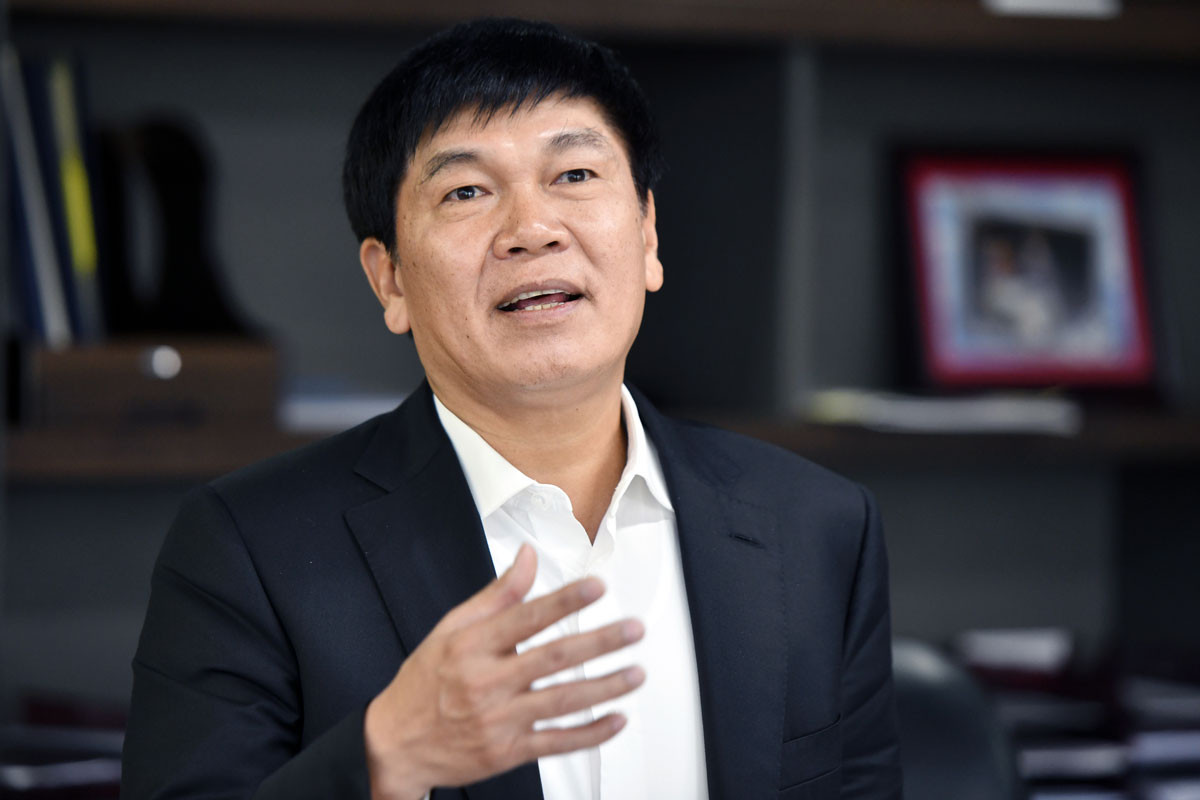
Alongside the expansion of listed companies, Vietnam's stock market has helped propel several domestic entrepreneurs onto global wealth rankings.
The most prominent example is Vingroup Chairman Pham Nhat Vuong.
According to Forbes, Vuong's estimated net worth reached approximately $38 billion on November 13, 2026, placing him 58th globally and making him Southeast Asia's wealthiest individual at that time.
His wealth is closely linked to the value of his shareholdings in Vingroup and related companies.
Consequently, fluctuations in the share prices of VIC, VHM and other companies within the ecosystem can significantly affect Forbes' estimates of his fortune.
Vuong is not the only Vietnamese billionaire whose wealth is associated with publicly traded businesses.
Other prominent names include Tran Dinh Long of Hoa Phat, Nguyen Dang Quang of Masan, Ho Hung Anh of Techcombank, Nguyen Thi Phuong Thao of Vietjet and Ngo Chi Dung of VPBank.
Two other Vingroup executives also appeared on Forbes' 2026 billionaire list: Vice Chairwoman Pham Thu Huong, Vuong's wife, and Vice Chairwoman Pham Thuy Hang, Huong's younger sister.
Their inclusion reflects the substantial wealth accumulated through ownership stakes in major Vietnamese enterprises.
However, the success of these conglomerates cannot be attributed entirely to the stock market.
Corporate governance, business strategies, operational capabilities and the ability to identify new opportunities remain fundamental drivers of enterprise value.
Capital markets have nevertheless provided the financial resources, valuation mechanisms and investment environment through which that value can be recognised and expanded.
Three decades of capital market development
Thirty years after the establishment of the State Securities Commission, Vietnam's stock market has become an important pillar of the country's financial system.
Its journey from two stocks in 2000 to millions of investors and companies worth hundreds of trillions or even quadrillions of dong reflects a broader transformation in Vietnam's private sector.
The development of Vingroup, Hoa Phat, FPT and Masan demonstrates how access to capital markets can expand the growth potential of domestic businesses.
For these companies, stock market participation has provided opportunities to finance industrial facilities, diversify operations, attract investors and pursue long-term expansion.
At the same time, the emergence of Vietnamese billionaires on global wealth rankings highlights the increasing scale of domestic corporate ownership and enterprise valuations.
Ultimately, the significance of Vietnam's 30-year stock market journey extends beyond trading volumes, investor accounts or market capitalisation figures.
Its lasting contribution lies in helping build major private conglomerates and fostering a generation of entrepreneurs capable of using capital markets to turn ambitious business plans into reality.
Manh Ha

