 Vietnamnet.vn

 Podcast



At a recent national conference reviewing the 2025 performance of the Central Steering Committee on Science, Technology, Innovation, and Digital Transformation, Party Chief To Lam, who also heads the Committee, issued a call for “breakthrough action with measurable results.”
From planning to product
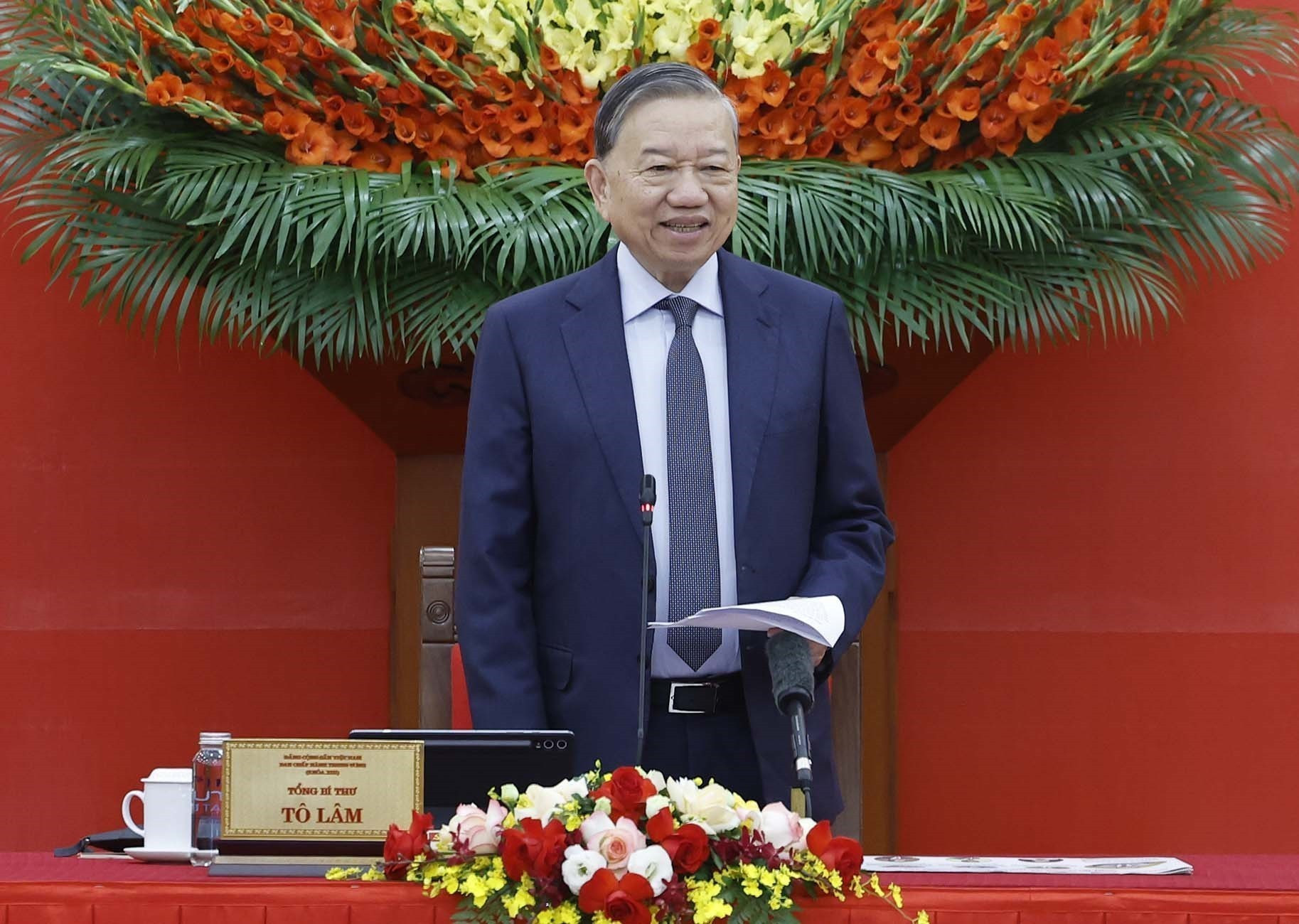
According to Mr. To Lam, 2025 marked the “kickoff and acceleration phase,” but 2026 must shift to “full-speed implementation.”
The key to success, he stressed, lies in organizational capacity, discipline in action, and the quality of results.
Each ministry, locality, and agency must shift from plan-based approaches to goal-based, product-driven methods; from tracking progress to demonstrating effectiveness; from mere compliance to complete delivery.
Mr. To Lam called on all sectors to proactively propose and define their own tasks - not wait for the Steering Committee’s directives - and to assign clear responsibilities for implementation.
He emphasized timely allocation of resources for strategic infrastructure, data systems, critical technologies, and high-quality human capital, paired with mechanisms to ensure investment efficiency.
Leaders at all levels must understand their personal responsibility for progress and outcomes, and these outcomes must become core criteria for performance evaluation, commendation, or accountability.
The three key questions
Party Chief To Lam posed three fundamental questions that must be answered in 2026:
First:
How should ministries, sectors, localities, and enterprises establish and manage their data systems?
By Q1 2026, a full data inventory must be completed, with systems that are accurate, complete, clean, and live - meaning continuously updated.
Second:
Which ministries and sectors are responsible for which strategic technologies?
For 2026 and the 2026–2031 period, what are the expected outcomes, and what is the rollout timeline?
Third:
How can digital and innovation literacy be raised across the entire population?
How many high-quality graduates and engineers will be trained for strategic technologies?
What will the Ministry of Education and Training, the Ministry of Science and Technology, the two National Academies, and the Union of Science and Technology Associations do?
“These issues,” Mr. To Lam said, “must be defined with utmost clarity and a detailed implementation roadmap.”
Real impact over formality
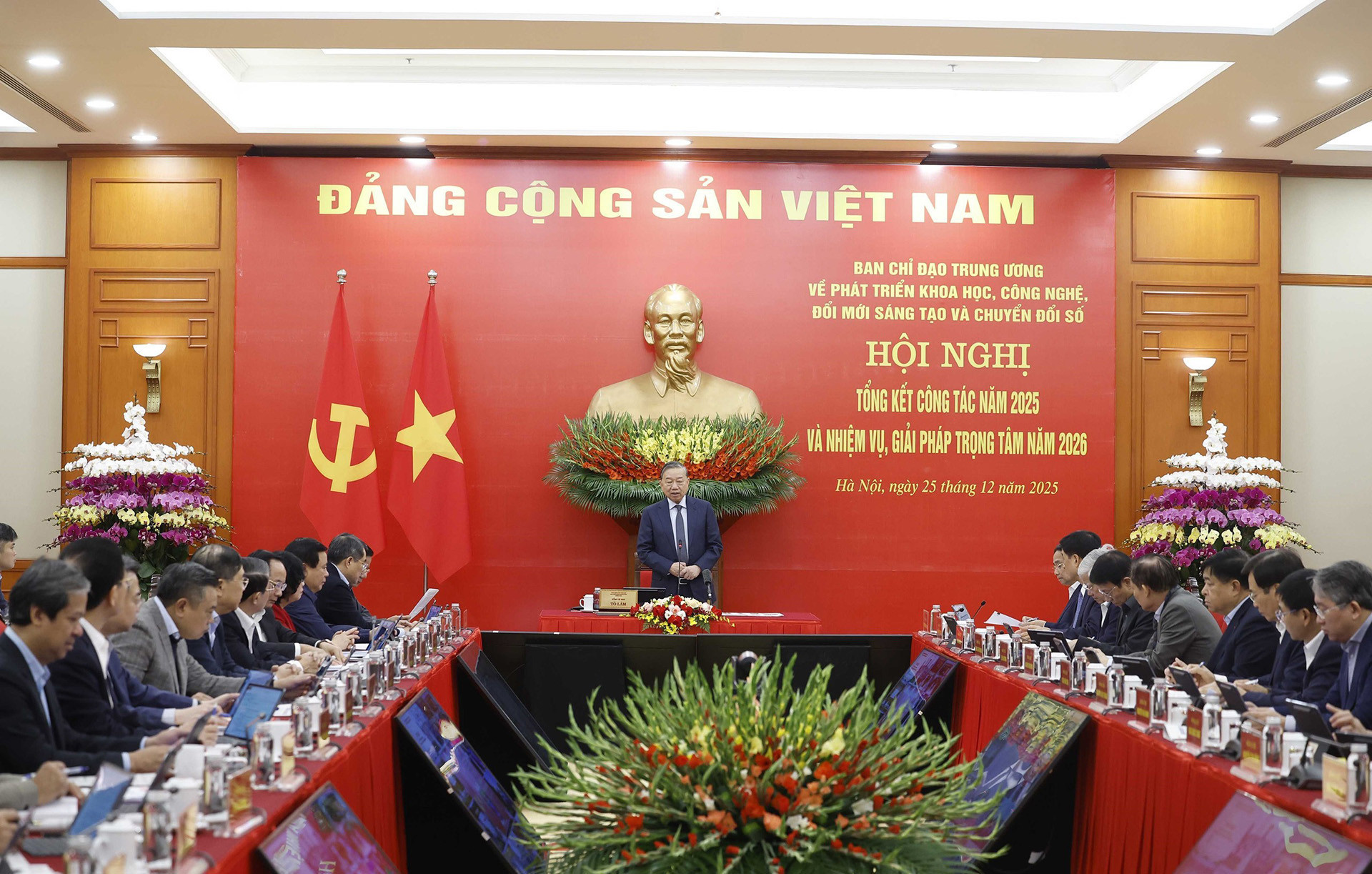
Mr. To Lam also emphasized the need to develop concrete applications and products that serve socio-economic development and citizen needs.
“All policies, platforms, services, and utilities must meet the expectations of people and businesses,” he said.
Satisfaction is the ultimate metric.
Implementation must be genuine, not formalistic, and results must be tangible.
Digital transformation must go hand-in-hand with administrative reform and streamlined governance, including efficient two-tier local administration, reduced bureaucratic procedures, and expanded online public services.
He also stressed investment in strategic technologies and product commercialization, underpinned by strong collaboration among government, academia, and industry - the pillars of an innovation ecosystem.
Leading by demand and example
High-tech zones, innovation hubs, and smart cities must be prioritized as testing grounds for emerging solutions.
The state must play both facilitator and first customer, ordering and funding innovative products and services to create initial markets for new research and technologies.
Large enterprises, Mr. To Lam said, must “think big and do big things” - opening space and opportunities for others in the value chain.
Small and medium-sized businesses should focus on areas aligned with their strengths, gradually improving their position and contributing meaningfully to national development.
No tolerance for waste
Party Chief To Lam closed with a strong warning: “waste must be combated decisively.”
Potential waste must be identified early - starting from the investment approval stage.
Major investments must deliver high efficiency.
There must be zero tolerance for waste in finance, resources, time, or missed opportunities.
Tran Thuong
.svg)
