 Vietnamnet.vn

 Podcast



A transport company recently shared that after each fuel price adjustment, it has to recalculate its entire business plan, as fuel costs now account for 30-40% of total operating expenses. The more it operates, the thinner its profit margins become.
Elsewhere, a small manufacturing firm has just paused its expansion plans as borrowing costs have shifted. With higher interest rates, it no longer feels confident enough to take on additional loans.
Placed alongside positive growth figures, these two stories point to a notable reality: Vietnam’s economy appears to be moving at two different speeds - stable at the macro level, yet more cautious at the micro level.
A picture shaped by strong growth indicators
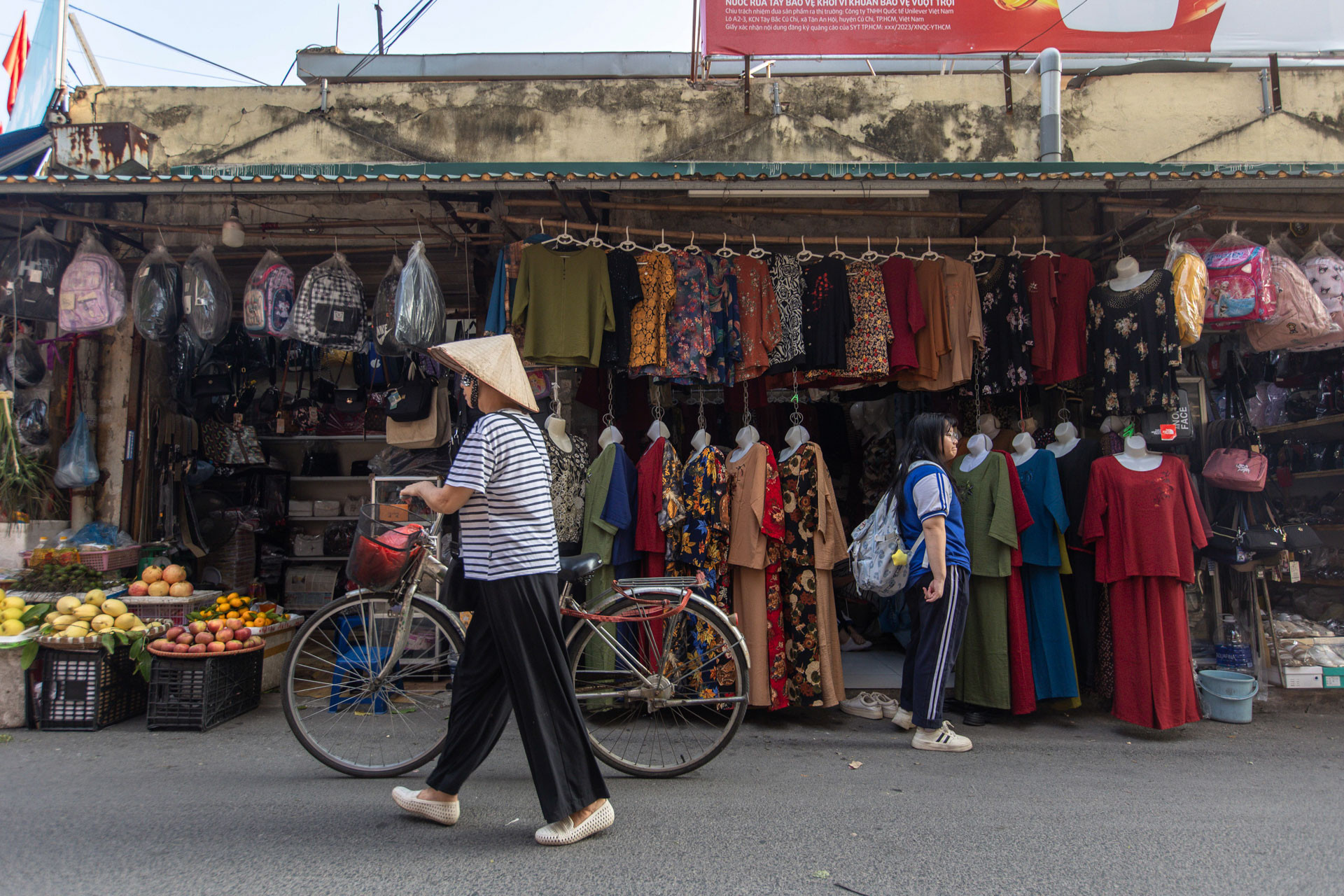
Growth only truly becomes meaningful when businesses are willing to invest and people are confident enough to spend. Photo: Thach Thao
Recent economic data show that key growth drivers remain active. In the first two months of the year, industrial production rose by 10.4%, with manufacturing and processing alone increasing by 11.5%. Total import-export turnover reached US$155.7 billion, up 22.2% year-on-year. State budget revenue grew by more than 13%, while public investment disbursement reached 9.4% of the annual plan - higher than the same period last year.
To better understand the current trajectory, it is necessary to look back at 2025 - a year of strong expansion. GDP grew by 8.02%, manufacturing and processing nearly 10%, and exports by more than 16%. This provided a solid foundation for entering 2026 on a positive trajectory.
On the surface, the economy continues to grow. But not all sectors are moving at the same pace.
Micro-level recovery still incomplete
From the perspective of businesses and households, the picture looks different.
In the first two months of the year, 64,500 enterprises entered or re-entered the market, but as many as 77,000 exited. The number of firms leaving even exceeded those joining - not a minor detail.
Looking back at 2025, the scale of exits was even larger, with around 227,200 businesses withdrawing from the market. Meanwhile, the number of dissolved enterprises rose by more than 66%, indicating that pressures had been building over time.
On the consumer side, total retail sales of goods and services increased by 7.9%, but after adjusting for price factors, real growth was only about 4.5%. People are still spending, but clearly with greater caution.
Notably, this caution does not entirely stem from declining income. Surveys show that 95.5% of households reported income as stable or higher than the previous period. Yet actual consumption growth remains modest, suggesting that sentiment - rather than income - is the key factor.
When confidence is not strong enough, capital tends to flow into safer assets instead of consumption or productive investment.
These signals are interconnected. Together, they reflect a broader condition: the microeconomic layer has yet to fully “warm up,” even as macro indicators continue to improve.
FDI carries the weight
The issue lies partly in the structure of growth.
In the first two months of 2026, the foreign-invested sector accounted for 79.1% of total exports, while exports from domestic enterprises declined. Conversely, the domestic sector recorded a significant trade deficit, whereas the FDI sector maintained a trade surplus.
From a supply chain perspective, 94.1% of imports were production inputs, while 89.8% of exports consisted of processed industrial goods.
This suggests that the economy is heavily driven by export-oriented manufacturing, with considerable reliance on imported inputs. Meanwhile, domestic demand has not kept pace - a key bottleneck.
Growth pillars and their limitations
Public investment is emerging as a clear pillar supporting growth. Faster and higher disbursement compared to the same period last year indicates that the government is actively filling part of the gap left by weak domestic demand and private investment.
At the same time, across major localities such as Hanoi, Ho Chi Minh City, Quang Ninh and Khanh Hoa, a wave of large-scale urban developments - spanning hundreds to thousands of hectares - is unfolding rapidly.
According to a market research organization, around 27 mega-urban projects are currently underway or in preparation, with total investment reaching US$115 billion.
Meanwhile, the Ministry of Construction reports approximately 3,297 real estate projects nationwide, with total estimated investment of VND7.42 quadrillion (US$300 billion), equivalent to nearly 65% of GDP.
These figures point to a striking reality: a vast amount of capital is tied up in long-term assets with high latency, while the production and consumption sectors require more flexible capital flows.
Even so, like public investment, real estate remains an important growth driver - albeit one with inherent delays and strong dependence on capital cycles.
A necessary phase of adjustment
One key factor behind the cautious sentiment at the micro level is rising costs. Higher fuel prices have significantly increased transport and logistics expenses. Lending rates at many banks also rose in February 2026. As input and financing costs climb, businesses find their room to maneuver increasingly constrained.
At the macro level, growth drivers remain stable. But at the micro level, adjustment is slower and more visible. This suggests the economy is entering a phase where quality and resilience matter as much as speed.
The challenge, therefore, is not only to maintain growth but to ensure that its benefits are more widely shared among businesses and households.
As input costs such as energy and capital continue to rise, maintaining a stable, predictable, and low-risk business environment becomes increasingly important - particularly for domestic enterprises. More broadly, this is also a moment to push for deeper institutional reforms aimed at reducing operational costs and strengthening market confidence.
Growth only truly matters when businesses are willing to invest and people are willing to spend. As long as those decisions remain cautious, the economy will struggle to move at a truly sustainable pace.
Tu Giang
.svg)
