 Vietnamnet.vn

 Podcast



Trading lasts for only a few hours each market day, but U Market in Bach Ha Commune, Nghe An Province, attracts livestock traders from across the country. Here, cattle worth tens of millions of Vietnamese dong are bought and sold, with every successful transaction confirmed by a simple spray-painted mark identifying the new owner.
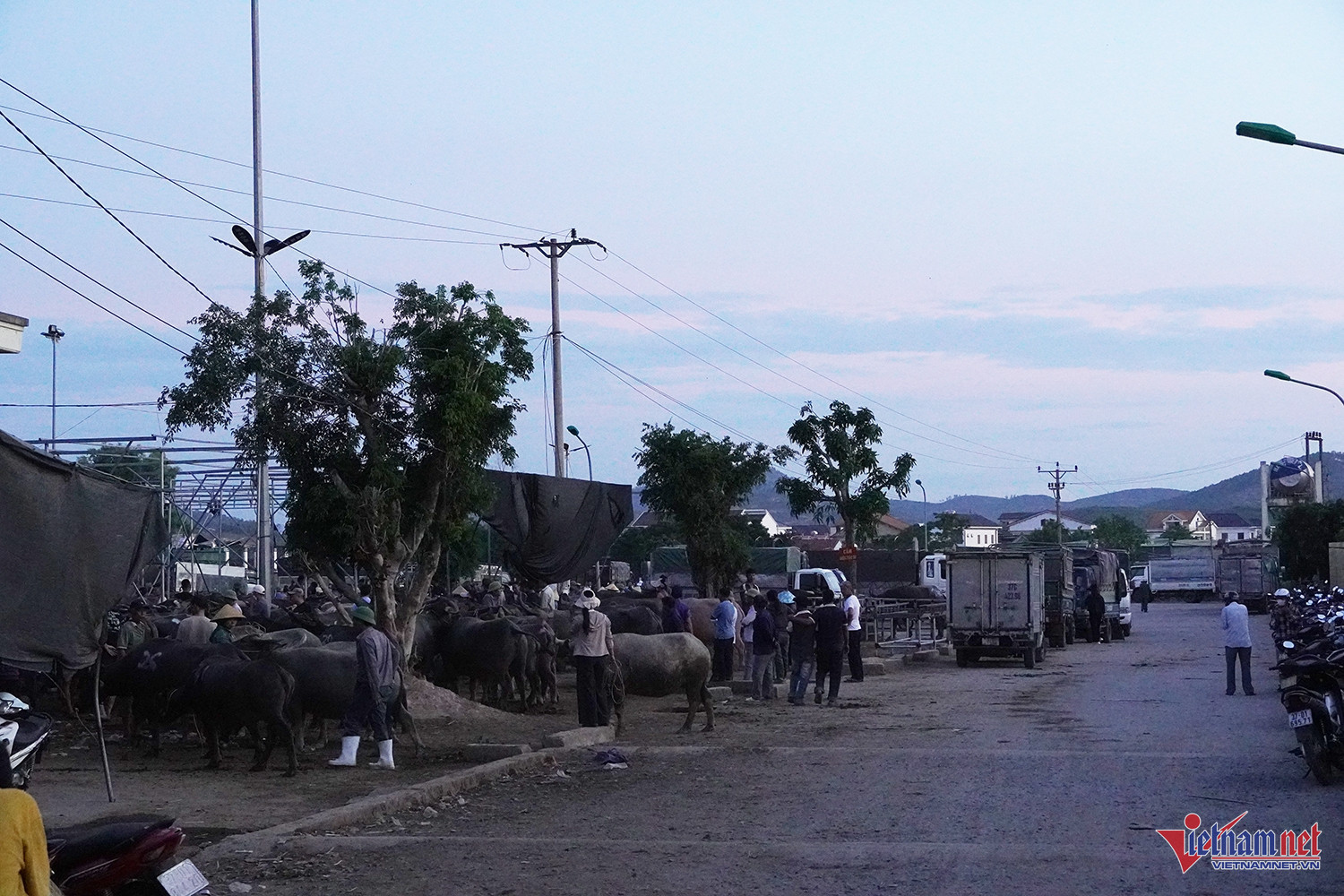
By 4 a.m., while darkness still blankets the area, the road leading to U Market is already packed with people and trucks transporting buffaloes and cattle from across Vietnam. The sound of engines mixes with the calls of livestock, creating a lively atmosphere that signals the start of another market session.
As dawn breaks, hundreds of animals fill the market grounds. Buyers weave through the herds, carefully inspecting each animal and negotiating prices. Within just a few hours, hundreds of buffaloes and cattle will find new owners.
According to local residents, U Market has existed for decades. It began as an informal gathering on an open field where villagers traded livestock before being officially established in 1967. Since then, it has remained one of the country's best-known livestock markets.
Today, the market is located next to the Bach Ha Commune Police headquarters, near the N5 road linking National Highway 1A with National Highway 7.
It operates six times each lunar month, on the first, sixth, 11th, 16th, 21st and 26th days.
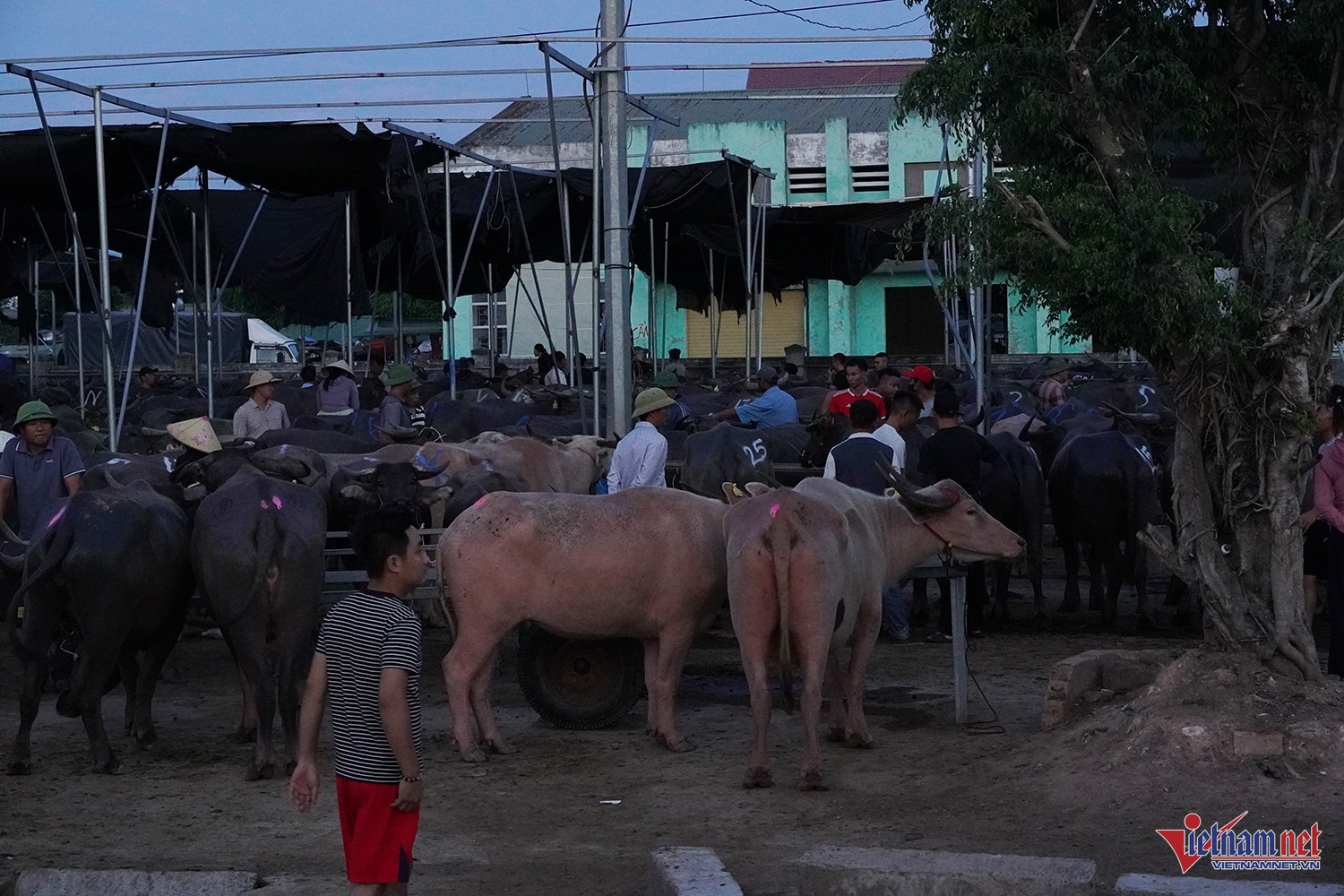
Widely regarded as the largest buffalo and cattle market in Vietnam's North Central region, U Market draws livestock not only from Nghe An and neighboring provinces but also from southern Vietnam, with some animals imported from Laos and Cambodia.
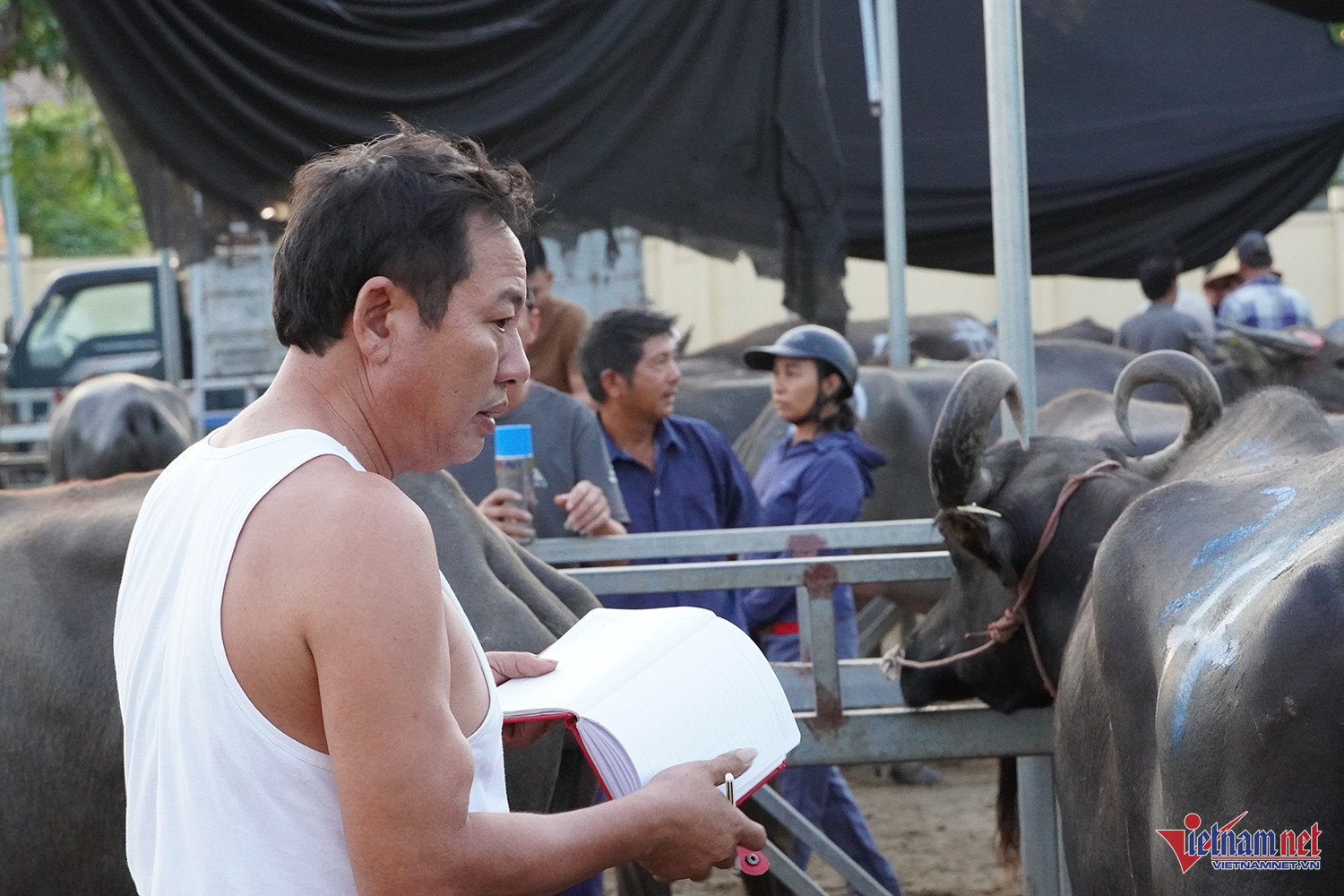
Hoan, a livestock trader who has worked at the market for many years, said the wide variety of livestock gives buyers plenty of choices.
"Whenever the market opens, traders come here from all over. The abundant supply means buyers can easily find suitable animals," he said.
Hoan's family business employs seven full-time workers who travel to purchase livestock, in addition to seasonal workers responsible for feeding and fattening the animals before resale.
Drawing on years of experience, he said choosing a quality buffalo or cow depends not only on its appearance but also on its intended purpose. Buyers looking for beef cattle focus on physical condition and weight gain potential, while those purchasing breeding or draft animals apply different criteria.
A splash of paint confirms the deal
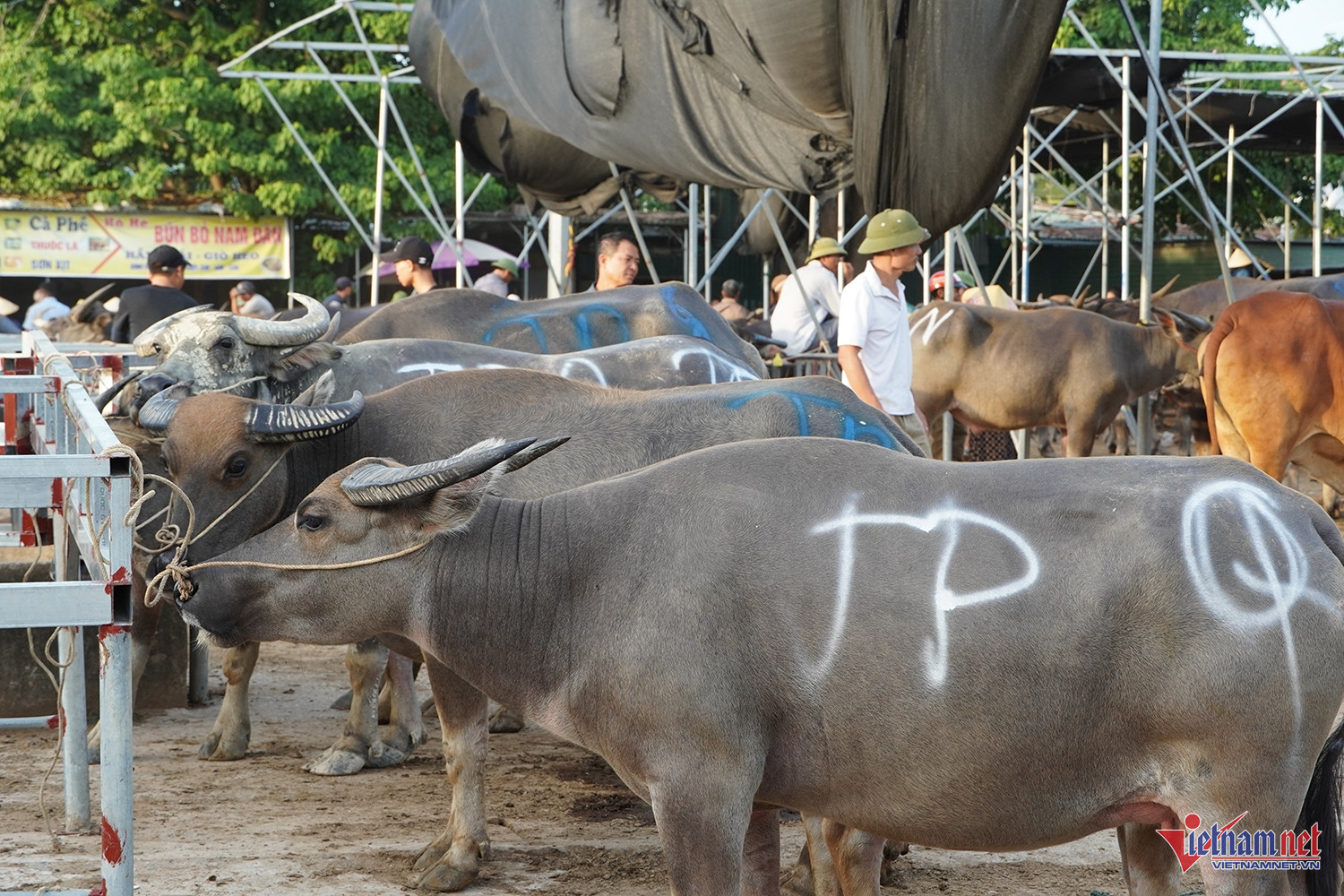
One tradition unique to U Market is the way livestock are marked after a successful sale.
Once a price has been agreed, the buyer uses a handheld spray paint can to mark the animal with a symbol or their name, confirming ownership and preventing confusion among the hundreds of buffaloes and cattle gathered at the market.
Once marked, the animals are quickly loaded onto trucks for transport to northern provinces and other destinations across Vietnam.
Nguyen Van Chau, 53, deputy head of the U Market Management Board, said every buffalo and cow entering the market must carry an animal health inspection tag.
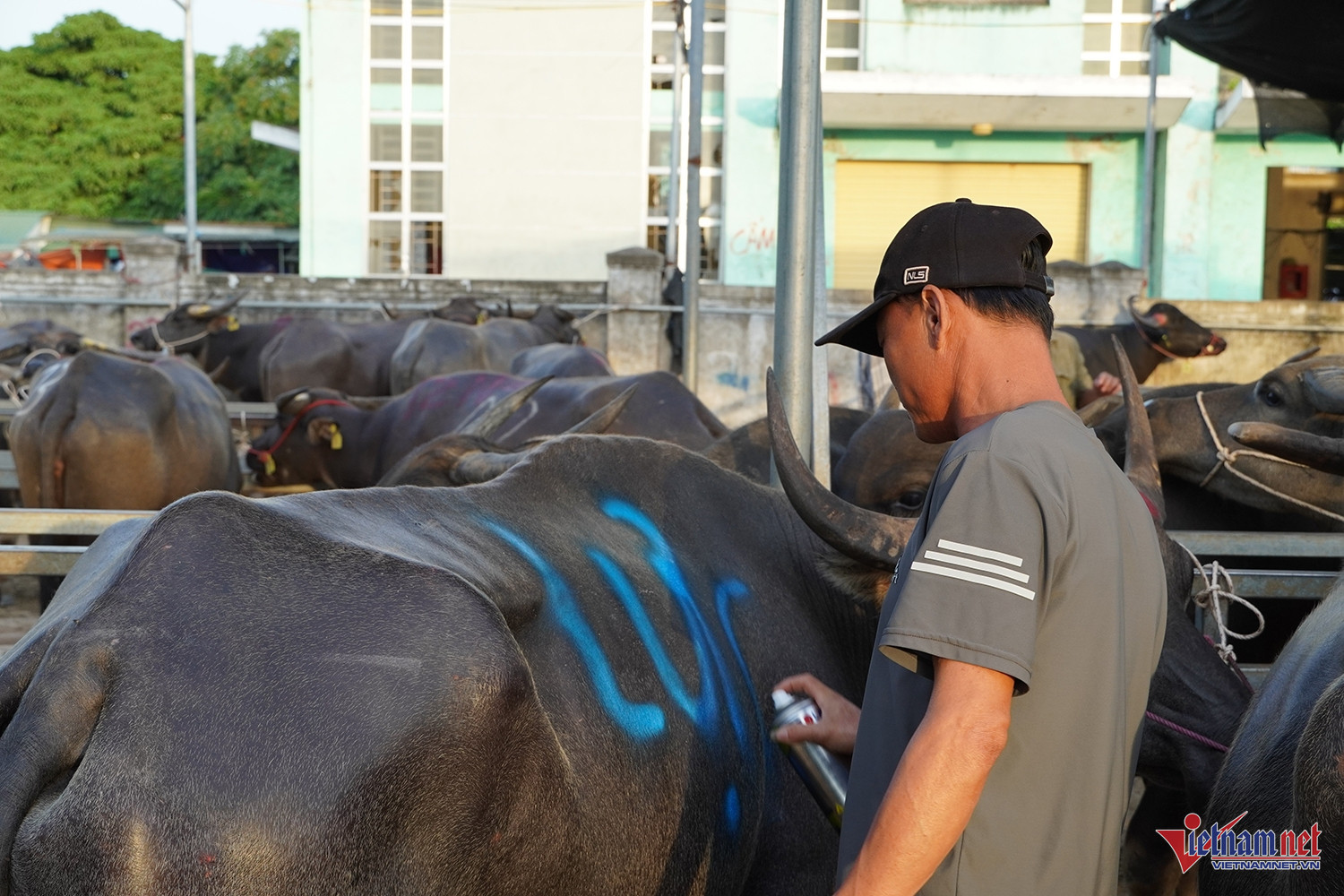
Livestock brought from outside the province are fitted with yellow tags, while animals raised within Nghe An use green tags, making disease control and market management easier.
Prices generally range from about VND10 million (USD380) to VND40 million (USD1,520), depending on the animal's size and quality.
Exceptional animals with outstanding physical characteristics may fetch more than VND100 million (USD3,800) after being selected for traditional buffalo fighting festivals, although such cases are relatively rare.
"Transactions happen very quickly here. Some deals take only a few minutes. Once both sides are satisfied with the price, the sale is completed immediately," Chau said.
According to the market management board, around 300 buffaloes and cattle are traded during each market session.
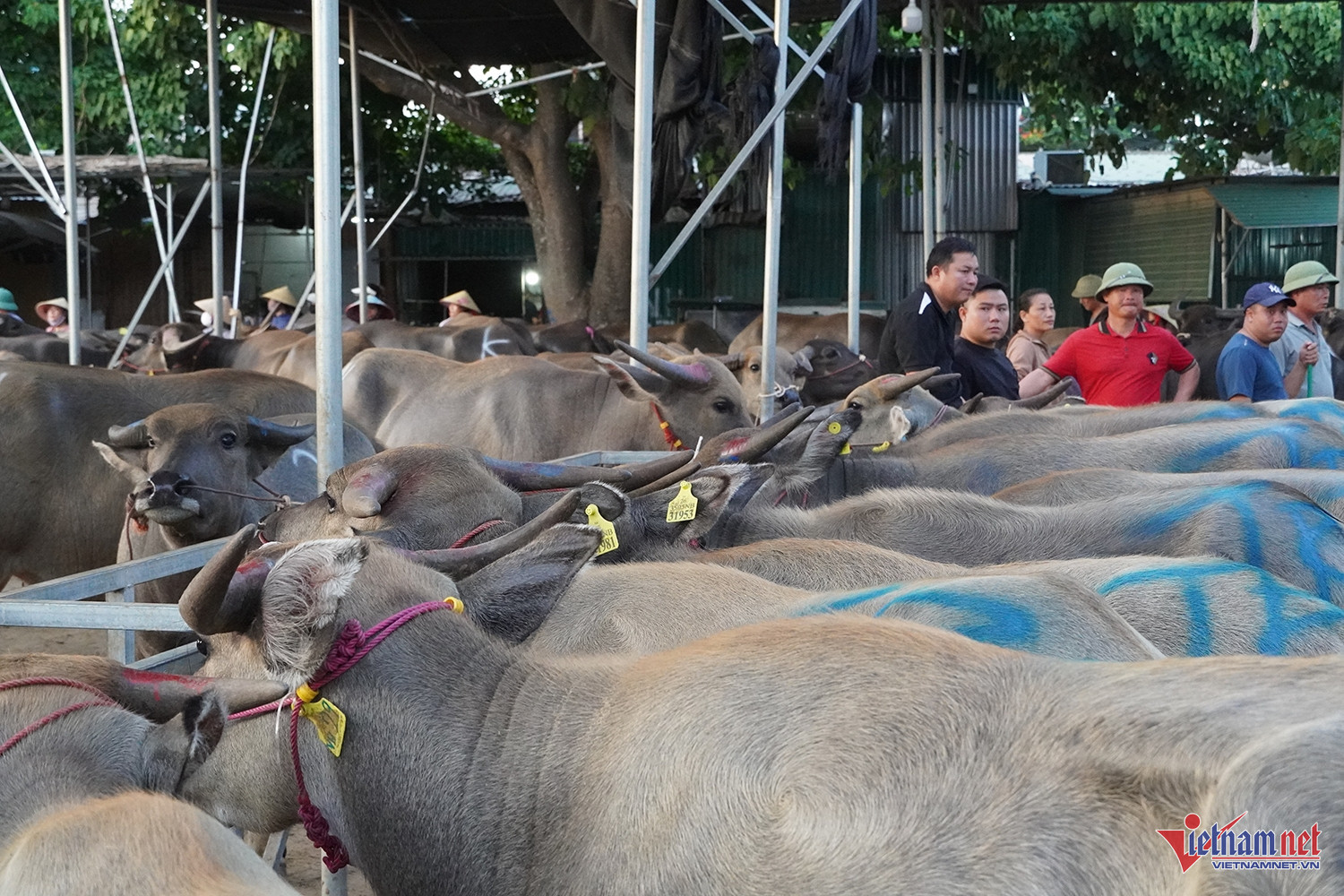
The market operates only from 4 a.m. until about 8 a.m., as hotter weather later in the morning can easily exhaust the animals.
Each buffalo or cow entering the market is subject to a VND15,000 (USD0.60) fee, which is mainly used to maintain security and environmental sanitation. Most of the revenue is transferred to the local budget, with the management board retaining only a portion to cover electricity and operating expenses.
A market that supports an entire community
Beyond serving as a major livestock trading hub, U Market has helped create stable livelihoods for many residents of Bach Ha Commune.
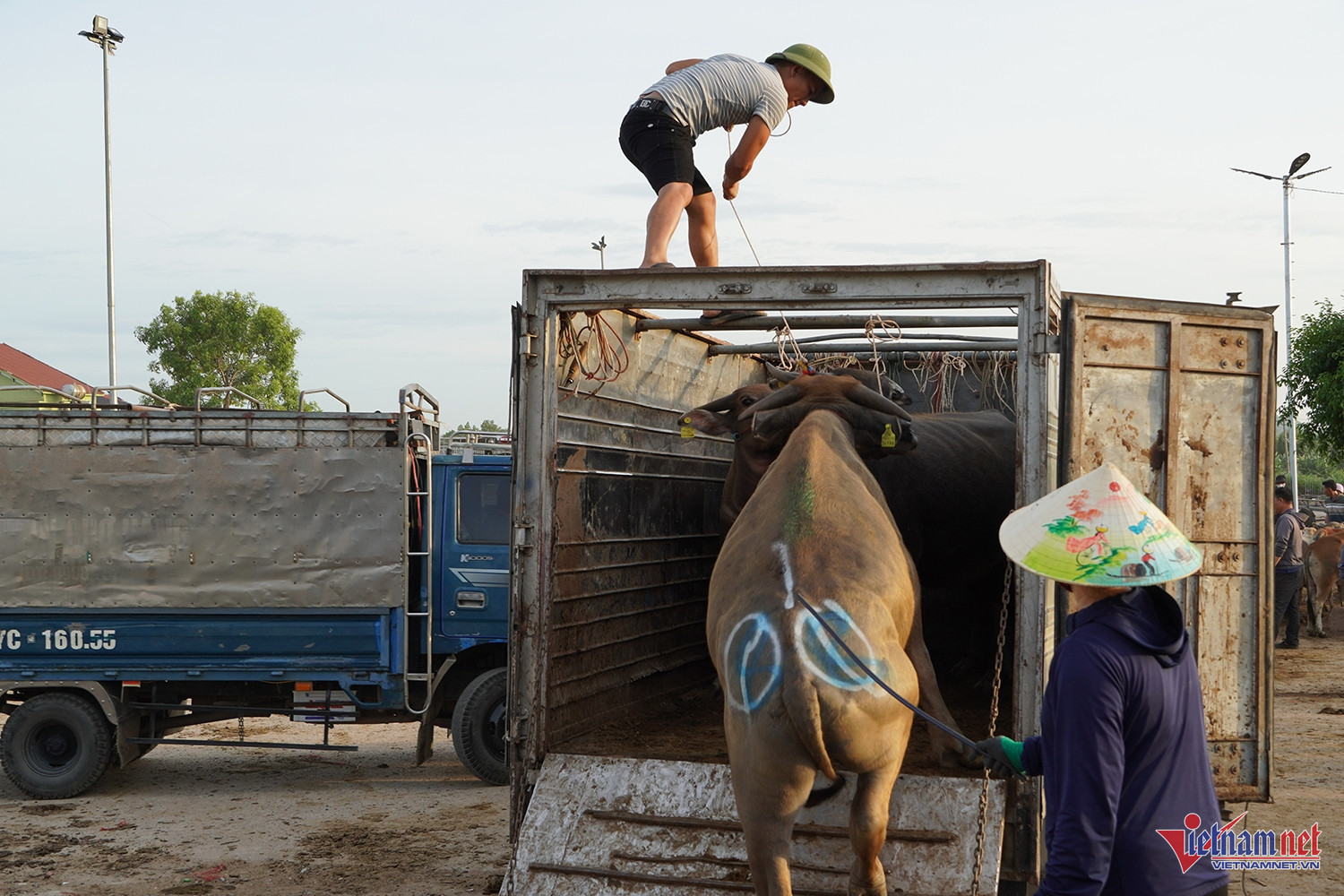
Temporary cattle handlers, straw sellers, livestock washing services and eateries catering to traders all become busy whenever the market opens.
Many local households also provide grazing services for livestock traders. Animals that are not immediately resold are kept in nearby fields to be fattened before the next market session.
As a result, large herds of buffaloes and cattle grazing along the N5 road and across the fields of Bach Ha Commune have become a familiar sight. Each herd is watched over by its own handler, creating a distinctive landscape rarely found elsewhere.
Tran Tuyen
.svg)
