 Vietnamnet.vn

 Podcast



Vietnam's Ministry of Industry and Trade says any quality issue involving E10 gasoline can be traced throughout the entire supply chain, from import and blending to storage depots and retail fuel stations, as authorities seek to reassure motorists following the nationwide rollout of the biofuel.
The ministry said the comprehensive traceability system would enable regulators to identify the source of any quality-related incident and verify whether fuel complies with national standards.
Public concerns continue to ease
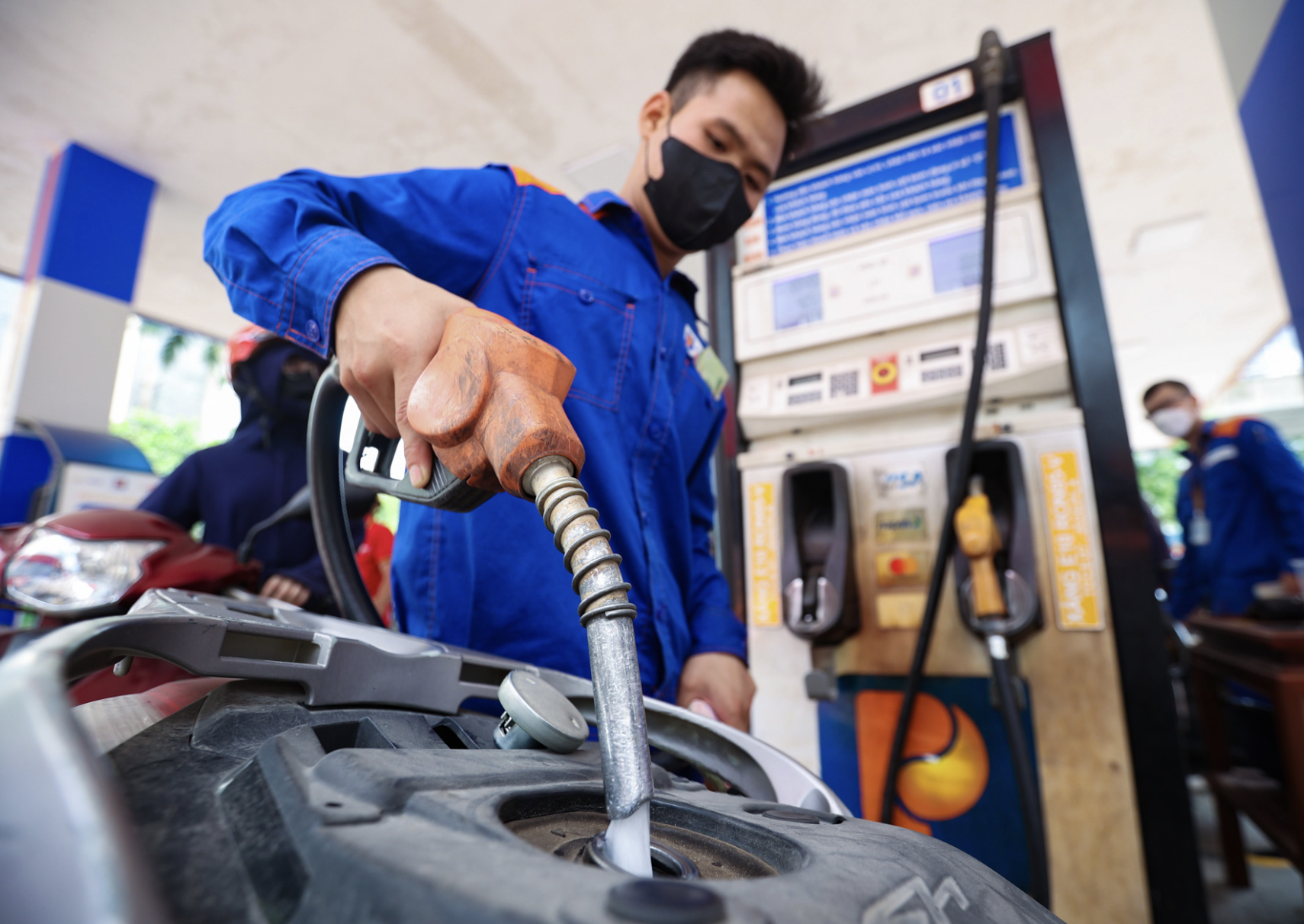
Speaking at a seminar on the sustainable development of Vietnam's biofuel market on July 13, Dang Tat Thanh of the Department of Innovation, Green Transition and Industrial Promotion under the Ministry of Industry and Trade said E10 gasoline has now been blended and sold nationwide for more than a month.
During the rollout, the ministry received a number of complaints and inquiries from motorists regarding the use of E10 fuel and responded by conducting inspections and technical assessments.
These investigations included tracing the origin of fuel, testing fuel quality and evaluating the technical condition of affected vehicles.
Thanh said the ministry will publish the findings transparently after reviewing scientific evidence and domestic and international research, with the aim of giving consumers greater confidence in using E10 gasoline.
While the review is ongoing, he noted that complaints have become increasingly rare, suggesting motorists have become more comfortable using the fuel.
Sample retention supports nationwide traceability
Thanh said Vietnam's Ministry of Science and Technology has issued regulations specifying quality standards and testing methods for E10 gasoline.
He added that fuel samples are retained at every stage of the distribution process - from central storage terminals to retail filling stations - for comparison and quality verification.
If a quality issue arises, authorities can analyse the stored samples, compare them with national standards and determine whether the fuel met specifications at both wholesale and retail stages.
The system also allows investigators to trace the product back through imports, blending operations and distribution channels to retail stations across the country.
"This management process helps ensure fuel quality throughout the market. If any issue occurs, we can evaluate it and trace it back through the supply chain," Thanh said.
Industry urges motorists to buy fuel from reputable stations
Dao Cong Quyet, head of the Communications Subcommittee at the Vietnam Automobile Manufacturers' Association (VAMA), said quality control throughout blending, storage and distribution has been a priority for both regulators and fuel suppliers.
He advised motorists to purchase fuel only from reputable filling stations to ensure it meets quality standards.
Owners of older vehicles should also seek technical advice from authorised service centres before switching to biofuel, he said.
Quyet noted that ethanol naturally absorbs moisture. Vehicles left unused for more than a month should therefore be inspected periodically to prevent potential issues affecting the fuel system.
He also recommended replacing fuel filters according to manufacturers' maintenance schedules to keep fuel systems clean and ensure reliable performance when using biofuels.
Echoing those comments, Do Van Tuan, chairman of the Vietnam Biofuels Association, said consumers should not be overly concerned about E10 fuel quality because it is subject to strict regulatory oversight.
Industry proposes tax changes
The seminar also discussed possible adjustments to tax policies for biofuels.
Tuan called on the Ministry of Finance to review the special consumption tax applied to E10 gasoline, arguing that the tax structure should better reflect the product's composition and reduce financial pressure on importers.
He said companies importing conventional gasoline currently pay a 10% special consumption tax but sell E10 at a lower 7% rate, creating cash flow constraints while waiting for tax credits.
Regarding the environmental protection tax, Tuan proposed a fixed-rate system that would simplify tax declarations and reduce administrative errors.
Responding to the proposals, Tran Thi Bich Ngoc of the Ministry of Finance said the ministry will continue working with relevant agencies to evaluate and adjust tax policies.
She added that the government plans to amend Decree No. 67/2011 to clarify environmental protection tax rates for biofuels based on the actual proportion of ethanol blended into the fuel, in line with national technical standards.
Tam An
.svg)
