 Vietnamnet.vn

 Podcast



On May 22, Vietnam Security Summit 2026 officially opened under the theme “Protecting the digital future in the post-quantum and AI world,” bringing together regulators, technology experts and cybersecurity companies from Vietnam and abroad.
The event was jointly organized by the National Cybersecurity Association, IEC Group and related partners at a time when artificial intelligence and quantum computing are fundamentally reshaping the global cybersecurity landscape.

Vietnam Security Summit 2026 officially opened under the theme “Protecting the digital future in the post-quantum and AI world.”
AI becomes a double-edged sword for cybersecurity
According to organizers, artificial intelligence is creating a dual impact on information security.
On one hand, AI helps businesses detect cyber threats earlier, automate operations and optimize data analysis.
On the other hand, the same technology is increasingly being exploited by cybercriminals to launch phishing attacks, ransomware campaigns and identity fraud with unprecedented sophistication.
At the same time, advances in quantum computing are widely expected to threaten today’s encryption standards, forcing governments and businesses to quickly develop new defense strategies for the era of post-quantum cryptography.
Against that backdrop, Vietnam Security Summit 2026 was designed as a platform connecting regulators, organizations, enterprises and technology experts to discuss data protection strategies, digital infrastructure security and cyber resilience in the AI and post-quantum era.
The summit also aims to strengthen cooperation, encourage knowledge sharing and update businesses on advanced cybersecurity trends and solutions to help safeguard the digital economy and build sustainable digital trust.
Gathering leading cybersecurity and AI experts
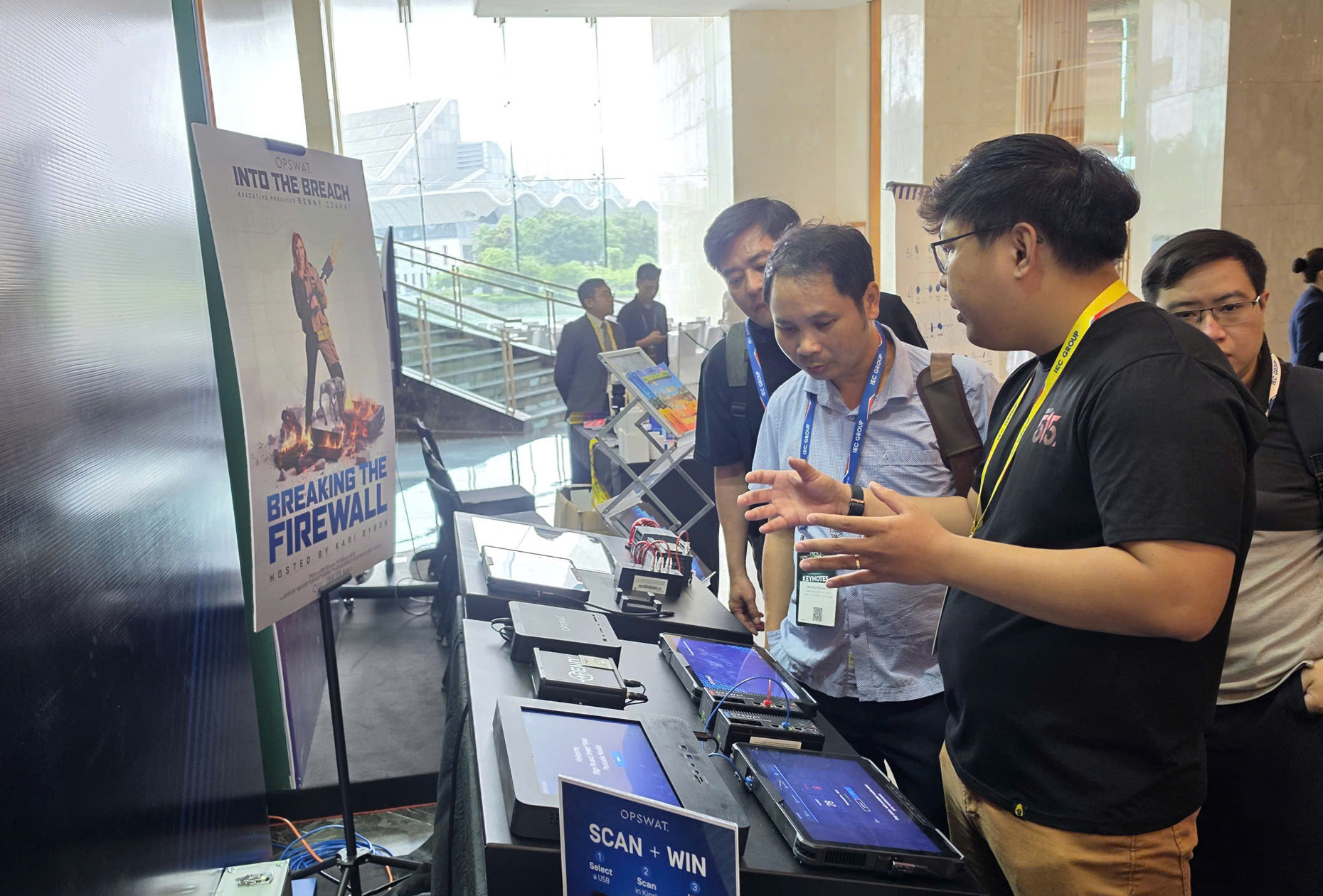
Vietnam Security Summit 2026 was organized as a platform connecting regulators, businesses and technology experts to discuss strategies for protecting data and securing digital infrastructure.
A key highlight of the summit was the plenary session titled “Protecting the digital future in the post-quantum and AI world.”
The program opened with strategic policy speeches from senior leaders, including Colonel Nguyen Hong Quan, Deputy Director of the Department of Cybersecurity and High-Tech Crime Prevention under the Ministry of Public Security.
Quan emphasized that digital transformation is accelerating rapidly, with digital technology increasingly becoming the foundation of modern society.
However, cyberattacks are becoming more sophisticated alongside that transformation.
Current trends show cyber threats increasing not only in scale and complexity but also in cross-border operations.
Most notably, cybercriminals have already begun using AI to conduct fraud, impersonation, malware distribution and targeted attacks against government agencies, organizations, businesses and individuals.
New attack methods such as deepfakes, AI-generated voice impersonation, data theft, account hijacking and online financial scams are causing serious damage, directly impacting assets, business operations and public trust in the digital environment.
According to Quan, rapid advances in quantum technology are also creating entirely new challenges for traditional security systems.
Many existing encryption methods may no longer remain secure against the processing power of future quantum computers.
That means organizations must not only respond to immediate threats but also proactively prepare cybersecurity capabilities for the next technological era.
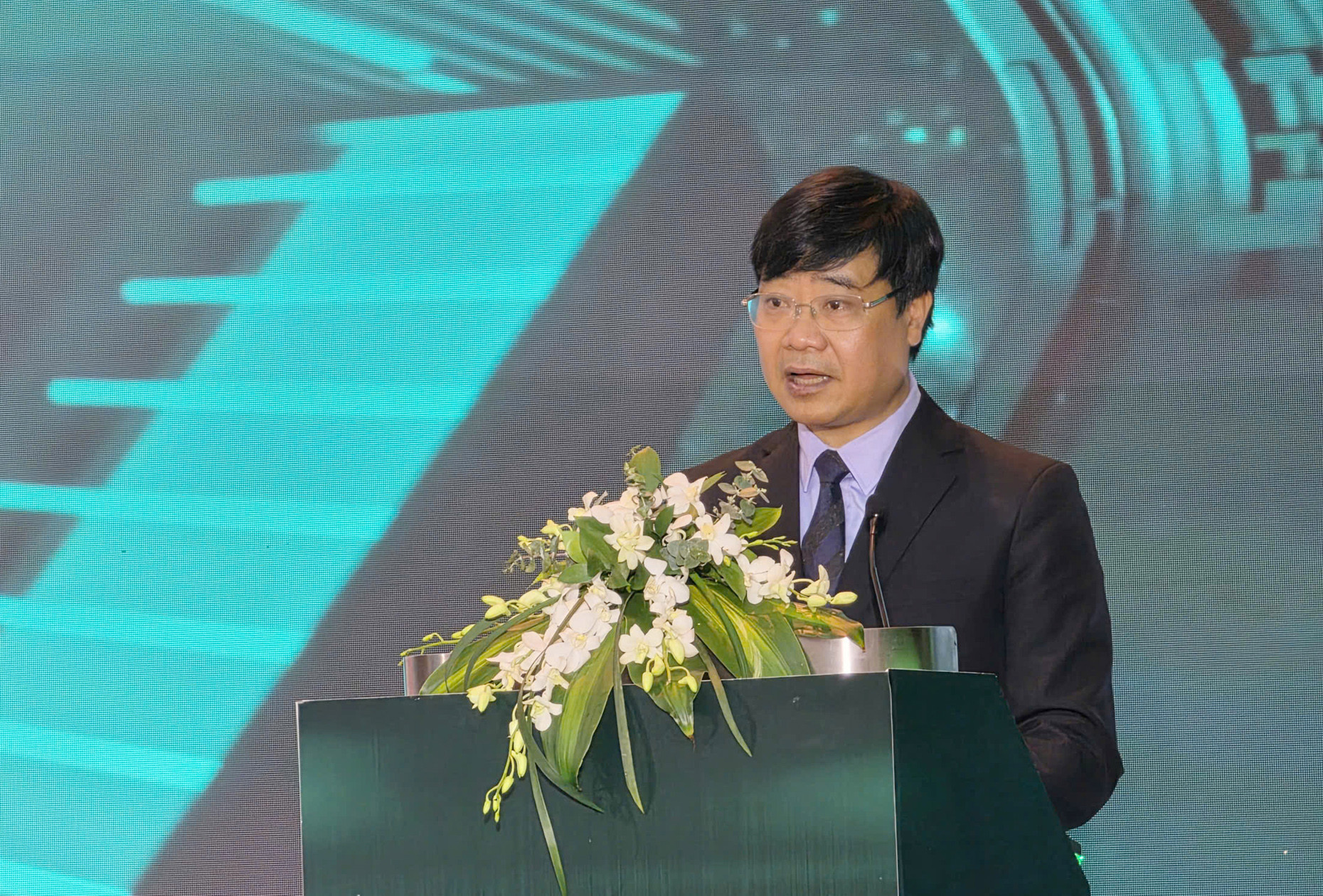
Colonel Nguyen Hong Quan, Deputy Director of the Department of Cybersecurity and High-Tech Crime Prevention under the Ministry of Public Security, speaks at the conference.
The plenary session continued with major presentations from regulators and international technology companies.
Major Tran Trung Hieu, Deputy Director of the National Cybersecurity Center and Director of VNCERT under the Ministry of Public Security, presented a report titled “Shaping cybersecurity priorities: Key trends for 2026 and beyond.”
Philip Dimitriu, Senior Director for Asia-Pacific and Japan at Sophos, delivered a presentation titled “Mastering every cybersecurity threat,” focusing on how organizations can strengthen monitoring, control and response capabilities amid increasingly complex digital threats.
Lee Sang Yoon, Head of Global Business at PIOLINK INC, presented a report titled “AI on cloud platforms: The new battlefield between cyberattacks and cybersecurity defense,” highlighting emerging risks in hybrid and multi-cloud environments as AI-driven attacks continue to rise.
One of the summit’s most notable discussions focused on securing AI agents in enterprise environments.
Mai Xuan Cuong, representing Viettel, said businesses would face entirely new security challenges as AI agents become more deeply integrated into system operations, particularly in areas such as data access, model monitoring and risk management.
From the perspective of AI governance, Nguyen Tuan Khang, Head of Data and AI for IBM Southeast Asia, discussed the importance of building trustworthy AI systems and emphasized the critical role of data governance and AI model supervision in modern enterprises.
A high-level panel discussion moderated by Do Ngoc Duy Trac, CEO and founder of VinCSS, also attracted representatives from major companies including Masan, Ford Vietnam and VietinBank.
Focus on data protection and digital identity

As organizations and businesses accelerate digital transformation while facing growing risks related to data leaks, identity fraud and targeted cyberattacks, the summit’s first specialized workshop focused on “Securing data and digital identity: Building trust in the digital ecosystem.”
The session offered strategic insights, practical experiences and technology solutions aimed at protecting data, digital identities and strengthening cyber resilience in modern digital environments.
Key topics included data security governance, digital identity protection, organizational and user responsibility, building trust in automated payment systems, preventing data leaks and improving digital adaptability and recovery capabilities.
Dao Thu Thao, CEO of WEEDS VINA, introduced the Blackbox Series solution, designed to help businesses identify and manage risks throughout the entire data lifecycle - from collection and processing to final disposal.
Meanwhile, Ivo Gajdica, Head of Cybersecurity Services at EmbedIT, shared new perspectives on external organizational risks such as shadow IT, brand impersonation and data leakage - threats that often remain outside the visibility of internal security teams.
He also discussed approaches for real-time external vulnerability detection and rapid incident response.
From the enterprise perspective, Nguyen Dinh Toan, Head of Information Security at Maritime Bank (MSB), addressed the challenges of protecting data within organizations undergoing rapid growth and digital transformation.
He also proposed policy directions aimed at balancing security, compliance and operational innovation.
The summit concluded with a panel discussion featuring representatives from the State Bank of Vietnam, Vietcombank, Visa, Thales and Imperva, focusing on solutions for building digital trust and protecting data ecosystems in the AI and post-quantum era.
Thai Khang
.svg)
