 Vietnamnet.vn

 Podcast



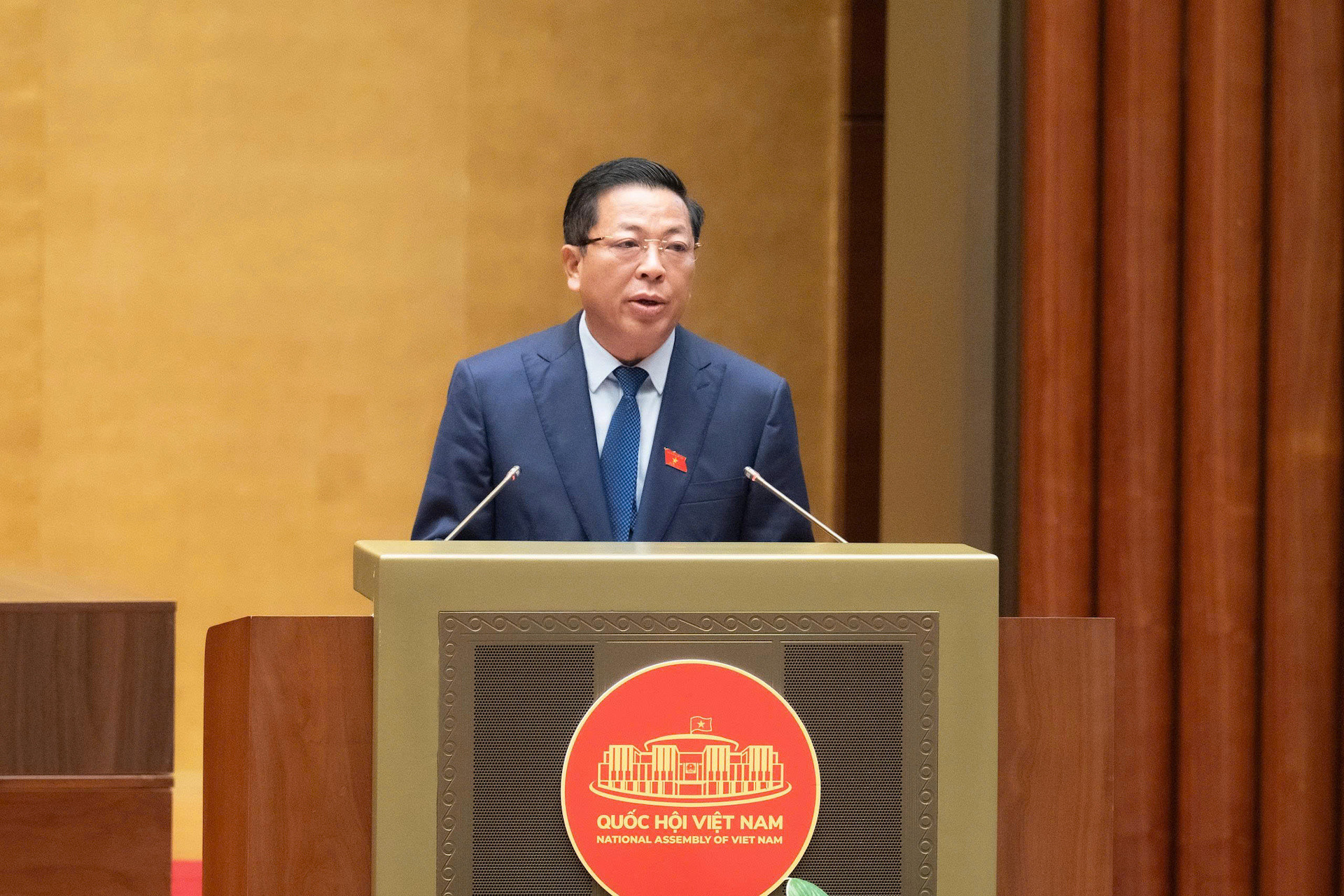
According to the government, the project requires adjustment following Vietnam's provincial administrative restructuring, revised national growth targets aiming for double-digit economic expansion, and commitments made in the Vietnam–China Joint Statement issued in April 2026, which called for stronger cross-border rail connectivity.
Officials also cited the addition of several major development projects along the railway corridor that require corresponding changes to the investment plan.
The government proposes adding an 8.4-kilometer Yen Vien–Gia Lam section, together with two connecting branches linking existing railway lines to stations on the new Lao Cai–Hanoi–Hai Phong route.
Under the revised proposal, the railway's starting point would remain at the cross-border rail connection in Lao Cai Province, while the line would terminate at Nam Hai Phong Station.
The main route would extend approximately 362.9 kilometers, with another 62.9 kilometers of branch lines crossing Lao Cai, Phu Tho, Hanoi, Bac Ninh, Hung Yen and Hai Phong.
Double-track expansion and higher capacity
The revised plan proposes a single-track railway between Lao Cai Station and Bac Hong Station, with double-track sections from Bac Hong to Nam Hai Phong and along the Yen Vien–Gia Lam segment.
The railway would use the international standard 1,435-millimeter gauge for both passenger and freight services, with a maximum design speed of 160 kilometers per hour.
Design speeds on the main line would reach 120 km/h through the Hanoi metropolitan area and 80 km/h on other sections.
The main route and the Yen Vien–Gia Lam branch would be electrified, while branch lines serving seaports would initially use diesel locomotives before transitioning to cleaner energy in the future.
The project is expected to require approximately 2,075 hectares of land.
The government also proposes accelerating implementation by preparing the feasibility study in 2025 and targeting project completion by 2030.
A branch connecting Nam Hai Phong Station with Nam Do Son Station would be developed alongside the construction of the Nam Do Son port complex, with Hai Phong authorities responsible for mobilizing funding while the Ministry of Construction oversees implementation.
Lawmakers seek explanation for cost increase
Reviewing the proposal, Phan Van Mai, Chairman of the National Assembly's Committee for Economic and Financial Affairs, expressed broad support for revising the project's investment policy but called for further review of technical plans, investment estimates, funding sources and land requirements.
The committee noted that building double-track infrastructure during the 2026–2030 period would significantly increase both project costs and demand for public investment funding at a time when Vietnam is financing multiple nationally significant infrastructure projects.
It recommended assessing the project's impact on the country's public investment capacity to help lawmakers determine the most efficient investment approach.
The committee also asked the government to further explain the basis for the VND86 trillion (US$3.3 billion) increase by comparing construction costs with similar railway projects elsewhere in Asia and internationally, while developing an appropriate financing strategy.
Thanh Hue
.svg)
