 Vietnamnet.vn

 Podcast



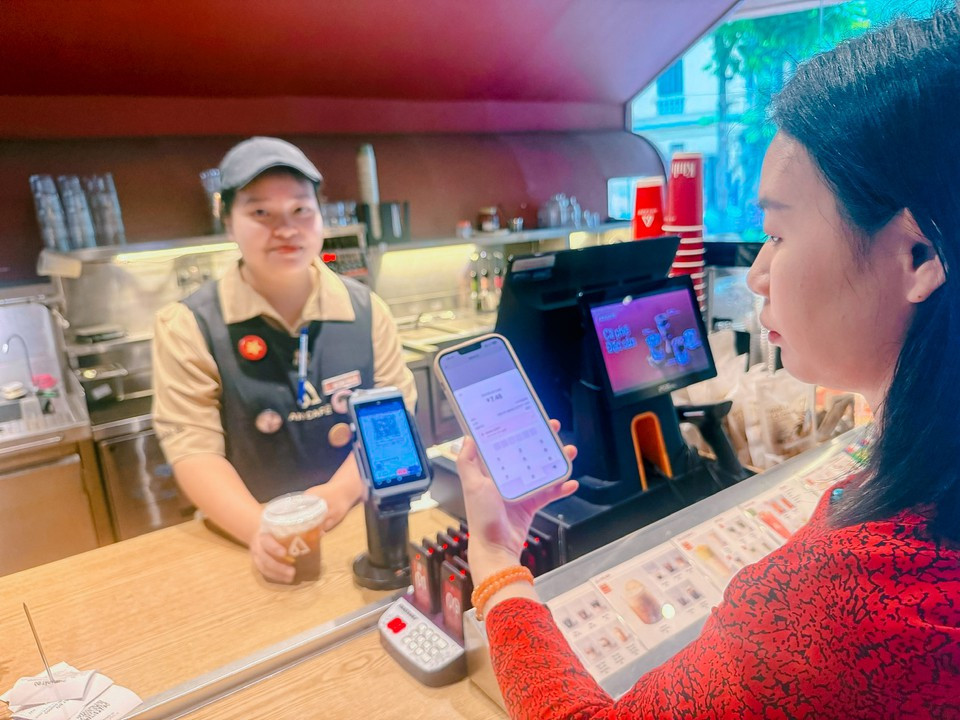
Cross-border QR payments surge
As Vietnam expands cross-border QR payments, international visitors can use their familiar payment apps at hotels, restaurants, shops and household businesses. Vietnamese travelers abroad can likewise pay conveniently through their own banking apps and digital wallets.
Behind those seemingly simple transactions are connections linking payment infrastructure, banks, payment switching organizations and other participants in the two economies.
Figures released by the National Payment Corporation of Vietnam (NAPAS) at a September 25 afternoon seminar, “Promoting cross-border QR payments: A new driver for retail and tourism,” showed that payments by visitors from Thailand, Laos and Cambodia in Vietnam rose eightfold in volume and sixfold in value in the first eight months of this year compared with the same period in 2025.
In the other direction, payments by Vietnamese visitors in those three markets increased fivefold in volume and fourfold in value over the same period.
Transactions involving Chinese visitors have also recorded strong growth. NAPAS officially announced its payment connection with UnionPay International (UPI) in December 2025 and with Alipay in April 2026.
In August 2026, payments by Chinese visitors using UPI and Alipay apps to scan VietQR Global codes in Vietnam were three times the volume and four times the value recorded in April 2026.
With connections to Chinese payment platforms UPI, Alipay and, most recently, Weixin Pay now completed, cross-border QR transactions with China are expected to continue growing strongly.
NAPAS has also completed a two-way QR payment connection with Singapore, allowing Singaporean customers to pay in Vietnam and Vietnamese customers to pay in Singapore.
A connection enabling South Korean customers to pay in Vietnam has been completed, while payment access for Vietnamese customers in South Korea will be expanded further.
From counting connections to measuring results
The State Bank of Vietnam has been promoting bilateral cooperation on retail QR payments with several countries in the region and other key partners. These links give residents and tourists more payment options while helping businesses, particularly small firms and household businesses, reach international customers more easily.
Deputy Governor Pham Tien Dung said the development of cross-border retail QR payments should not be judged solely by the number of countries and territories with which Vietnam has signed cooperation agreements.
“What matters is taking a broader view: moving from connecting payment infrastructure to connecting people and businesses, and from linking systems to supporting the flow of tourism, retail, trade and services. In other words, connecting infrastructure is the starting point, while connecting economies is the goal,” Dung said.
Expanding connectivity must go hand in hand with quality and safety, he added. Once payments cross national borders, the involvement of multiple participants, systems and legal frameworks makes governance more complex.
“As we expand the network, we must pay particular attention to safety, security, fraud prevention, anti-money laundering, data protection, customer rights and ensuring that payments and settlement operate smoothly,” Dung said.
Pham Anh Tuan, director of the central bank’s Payment Department, said cross-border payments should be viewed as part of the broader development of tourism, retail trade and the digital economy, rather than solely as a banking technology project.
Vietnam has more than 2 million merchants accepting electronic payments, but only around 154,000 accept cross-border payments, according to Tuan. That low proportion shows that technical connections will have limited impact if the merchant acceptance network remains too narrow.
Tuan stressed the need to shift from measuring the number of connections to measuring their effectiveness. Beyond counting connected countries, attention should be paid to how many banks, payment intermediaries and merchants actively participate; transaction volume and value; transaction success rates; costs; and transparency.
“Connecting infrastructure is the starting point, connecting people and businesses is a prerequisite, and connecting economies is where our strength lies,” Tuan said.
Tuan Nguyen
.svg)
