 Vietnamnet.vn

 Podcast



Official data shows that Vietnam spent approximately $2 billion importing nearly one million tons of meat and edible animal by-products in 2025. Among them, pork was imported at an average cost of just VND59,000 ($2.27) per kilogram - considerably lower than domestic prices.
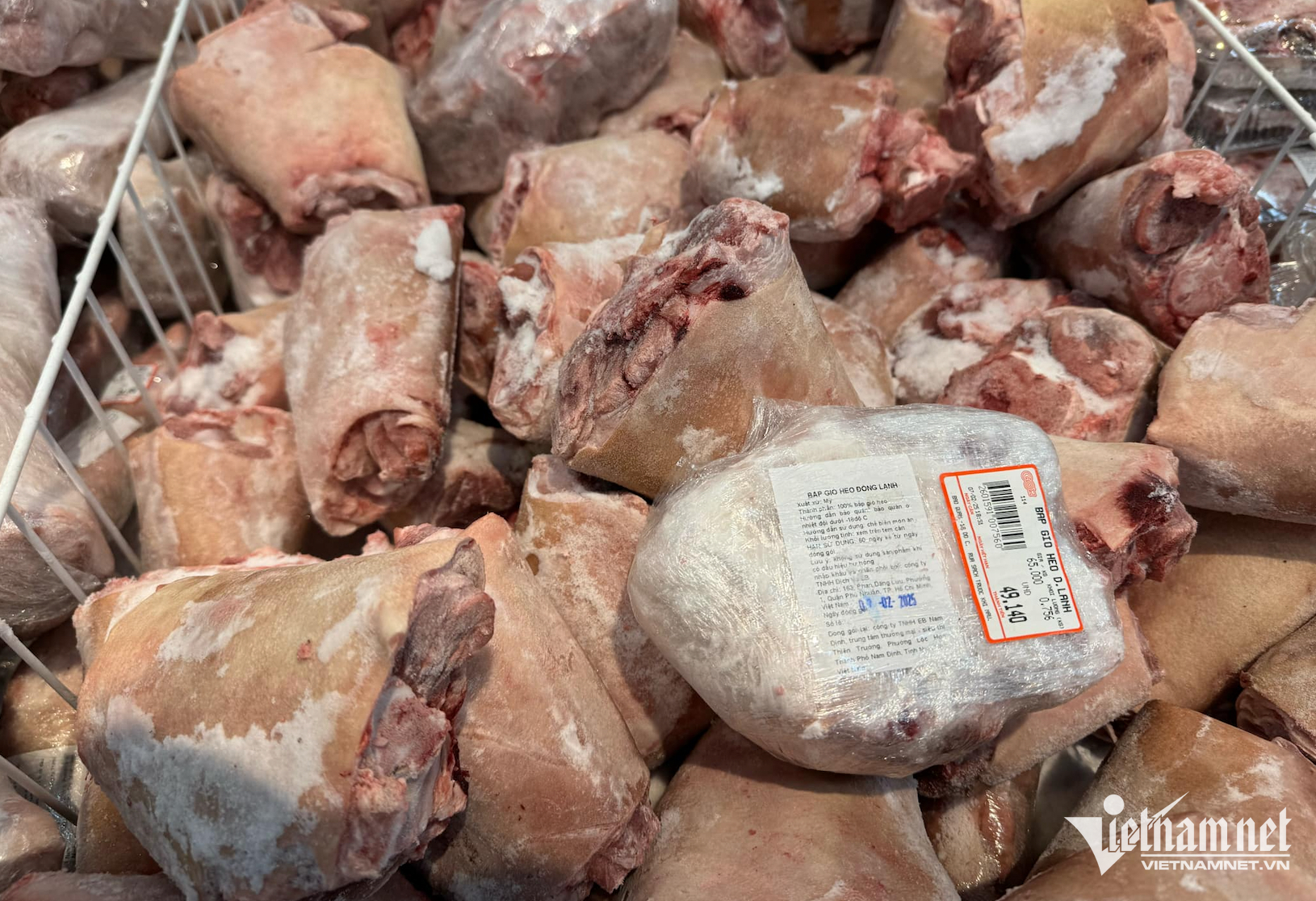
Vietnam imported nearly 1 million tons of meat and edible by-products in 2025. Photo by TA
Sharp rise in pork imports
Figures from the General Department of Customs indicate that Vietnam imported 978,300 tons of meat and meat products in 2025, up 11.6% in volume and 12.2% in value compared to the previous year.
India remained the largest supplier, accounting for 19.29% of total meat imports with 188,700 tons valued at $681.32 million. This marked a slight drop of 2.8% in volume but a 5.6% increase in value year-on-year.
Other major exporters included Russia, Brazil, the US, Australia, and Canada. Notably, imports from Russia rose by over 59% in both volume and value. Brazil’s meat exports to Vietnam increased by 42.7% in volume and 57.3% in value. In contrast, imports from the US and Australia declined.
Vietnam also expanded imports from several European and Asian markets, including Poland, South Korea, Germany, Spain, Turkey, Italy, France, and China.
Poultry leads in quantity, buffalo meat in value
The import breakdown reveals that poultry and edible by-products accounted for 36.77% of the volume and 17.94% of the value. Buffalo meat made up 17.68% of the volume but contributed a high 31.85% of the value. Pork imports accounted for 18.75% of the volume and 20.88% of the total value, while fresh beef comprised 4.04% of the volume and 13.95% of the value.
Vietnam also imported a significant amount of chilled and frozen edible by-products from pigs, buffalo, and cattle, representing 18.86% of volume and 12.67% of the value. Other categories made up the remaining 3.9% in volume and 2.7% in value.
Particularly, pork imports saw a significant increase. Vietnam imported 183,400 tons of chilled or frozen pork in 2025, worth $418.54 million - an 18.75% increase in volume and 20.88% in value compared to 2024.
Russia emerged as the largest pork supplier, providing 48.44% of Vietnam’s total imported pork. Brazil followed with 30.91%, then Germany (4.03%), Canada (4%), the Netherlands (2.58%), and other markets (10.04%).
The average import price of pork stood at $2,273 per ton - or around 59,000 VND per kilogram - down 2.8% from the previous year, and significantly cheaper than local prices.
Supermarket pork cheaper than at wet markets
Despite declining wholesale prices, pork at traditional markets remained costly. Reporters from VietNamNet observed that after peaking at 82,000 VND/kg in late January, live hog prices fell to 75,000–78,000 VND/kg across different regions.
Yet, prices at local wet markets stayed high. At Dai Tu Market in Hanoi’s Dinh Cong area, pork shoulder, leg cuts, and boneless hock saw a 10,000 VND/kg increase, reaching 150,000–160,000 VND/kg. Pork belly jumped 15,000 VND to 175,000 VND/kg, while loin cuts cost 170,000 VND/kg and rib cuts reached 190,000 VND/kg.
Interestingly, some major supermarket chains slashed pork prices to break even ahead of the Tet Binh Ngo holiday. Importantly, they emphasized that these were local pork products - not imported.
Regional price breakdown at supermarkets
In northern Vietnam, prices fell significantly:
Pork leg: down 12% to 123,000 VND/kg
Minced pork: down 17% to 123,000 VND/kg
Pork belly: down 11% to 165,000 VND/kg
Pork tail bone: down 25% to 64,000 VND/kg
Pork shank: down 12% to 145,000 VND/kg
In the central region:
Pork leg: down 10% to 109,000 VND/kg
Minced pork: down 15% to 105,000 VND/kg
Pork belly: down 3% to 155,000 VND/kg
Pork chop (cotlet): 120,000 VND/kg
Shoulder cut: down slightly to 145,000 VND/kg
In southern Vietnam, supermarkets offered deep discounts on VietGAP-certified pork:
Pork leg: down 19% to 112,000 VND/kg
Minced pork: down 19% to 113,000 VND/kg
Pork shoulder: down 19% to 115,000 VND/kg
Pork chop (cotlet): down 21% to 115,000 VND/kg
Pork belly: down 16% to 150,000 VND/kg
Despite record levels of meat imports and falling live hog prices, pork remains costly in Vietnam’s traditional markets - especially during the Tet season.
Meanwhile, supermarkets have stepped in with steep discounts, offering consumers more affordable access to domestic meat. This price disparity reflects ongoing supply chain inefficiencies and market dynamics, even as Vietnam opens wider to global meat suppliers.
Tam An
.svg)
