 Vietnamnet.vn

 Podcast



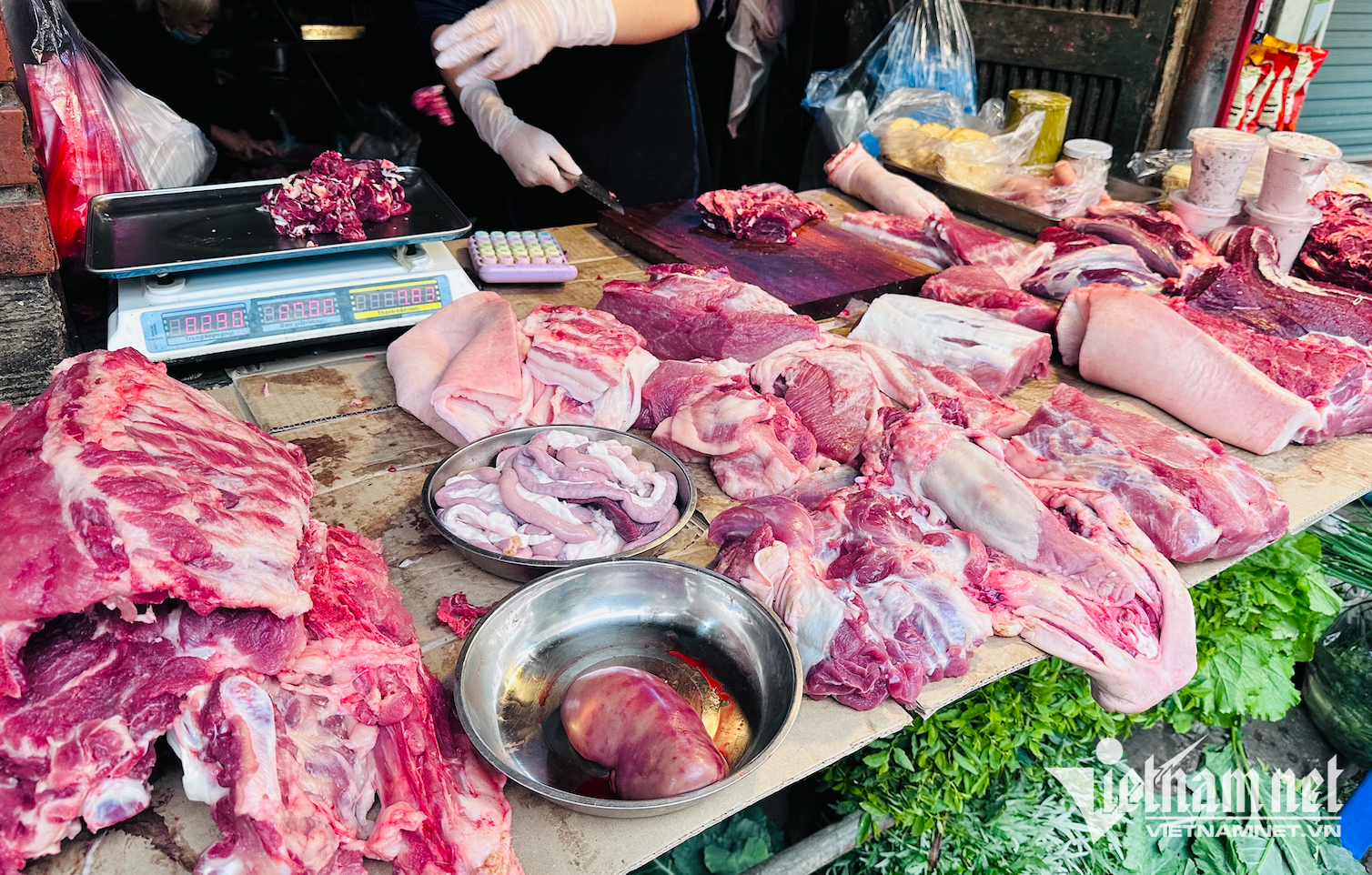
Over the past year, Vietnam spent USD 1.95 billion importing meat and edible animal by-products to supplement domestic supply. Yet, as the Lunar New Year of the Horse approaches, live pig prices continue to soar and remain at high levels.
According to the Ministry of Agriculture and Environment, the total import value of meat and edible by-products from slaughtered animals reached USD 1.95 billion in 2025, an 11.6% increase compared to the previous year.
Data compiled through November 2025 shows that Vietnam primarily imported:
– Poultry meat and edible by-products (fresh, chilled, or frozen) under category 01.05, accounting for 18.06%
– Buffalo meat at 31.1%
– Pork at nearly 21.6%
– Edible slaughter by-products from pigs, buffalo, and cattle at 12.8%
– Beef at 13.7%
– Other items at 2.77% of total import value.
India remained Vietnam’s largest supplier of meat and meat products, accounting for 18.9% of the nation’s total imports in this category. India shipped 168,100 tonnes of meat to Vietnam in 2025, valued at approximately USD 601.8 million-down 4% in volume but up 3.6% in value year-over-year.
Other major suppliers included Russia, Brazil, the United States, and Australia. Among them, imports from Russia jumped 70.1% in volume and 72.3% in value, while imports from Brazil increased by 51.3% in volume and 70.8% in value compared to the same period in 2024.
This influx of imported meat helped form a major supply source for the domestic market throughout the year-especially in the pork segment.
However, by December 2025, live pig prices at the farm gate surged past VND 70,000 per kilogram.
In northern Vietnam, prices had been around VND 53,000–55,000 per kg in late November, but soared to VND 68,000–69,000 by late December, even hitting VND 71,000 at certain points.
A similar trend was seen in the central and Central Highlands regions, where prices rose from VND 64,000 to VND 68,000 per kg-an increase of VND 14,000 within a month.
In the southern region, prices climbed from VND 52,000–55,000 per kg to VND 61,000–65,000.
As of early January 2026, live pig prices have fluctuated slightly but remain high, ranging between VND 62,000 and 69,000 per kg depending on the region.
According to the Ministry of Agriculture and Environment, over 1.23 million pigs were culled in the first 11 months of 2025 due to African swine fever. While pig farming is gradually recovering in many provinces, several central regions continue to struggle with restocking herds due to prolonged flooding that disrupted livestock operations and reduced farming capacity.
The ministry had earlier advised businesses and livestock households to proactively plan their supply strategies to meet the expected surge in demand during the year-end and Lunar New Year period. The goal is to prevent any supply shortages, especially if small-scale farms are unable to restock due to disease or financial losses.
Livestock experts noted that pork consumption typically spikes ahead of Tet. In this context, localized supply shortages are expected to keep prices high. However, the experts also believe that a pork price crisis is unlikely, thanks to large volumes of imported meat which are expected to partially offset domestic shortfalls.
Tam An
.svg)
