 Vietnamnet.vn

 Podcast


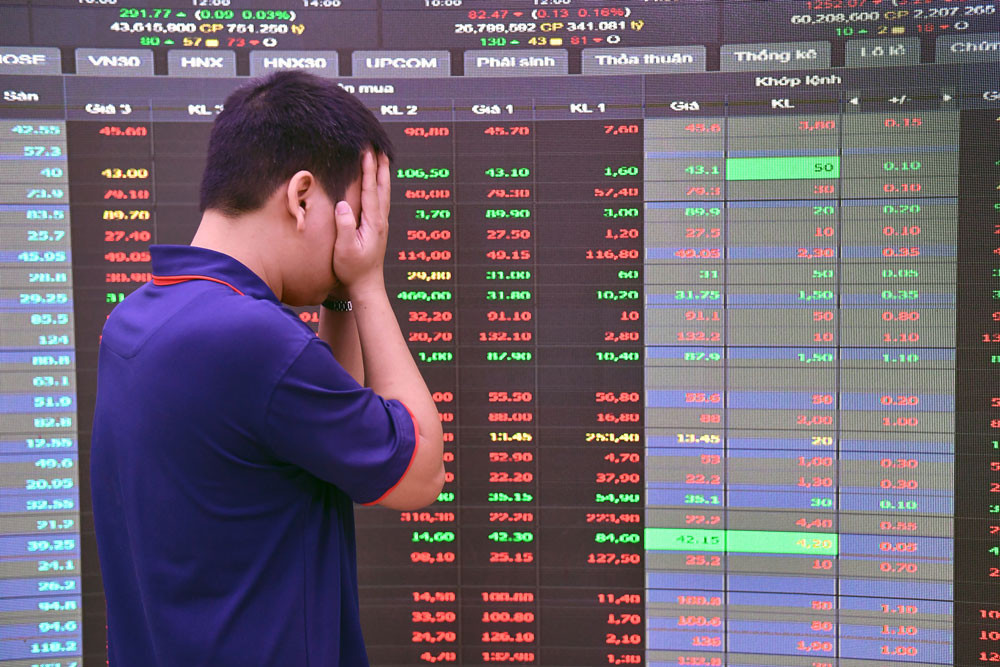
Heavy losses across blue-chip stocks
Selling pressure intensified during the November 26 trading session, particularly towards the close, sending Vietnam's stock market deep into negative territory.
The benchmark VN-Index plunged 57.77 points, or 3.42%, to 1,629.68, while the VN30-Index lost 49.7 points to close at 1,728.88. Trading value on the Ho Chi Minh Stock Exchange (HoSE) exceeded VND15.77 trillion ($597.3 million).
Losses spread across most sectors, from manufacturing, construction, shipping and electrical equipment to finance, real estate and energy. On HoSE, 285 stocks declined, while only 46 advanced and 73 remained unchanged.
Among VN30 constituents, only a handful of stocks gained or remained unchanged. VNM rose VND200 to VND52,700 per share, while MCH gained VND2,000 to VND132,000. SSB remained unchanged at VND14,900.
By contrast, VIC plunged VND15,400, or 6.28%, to VND230,000 per share, while VHM lost VND2,100 to close at VND59,000.
Notably, technology giant FPT fell VND1,550 to VND44,500 per share, its lowest level since early 2023. The stock has lost approximately 33.2% of its value since trading at VND66,600 on September 23.
Compared with its peak of nearly VND120,000 per share in late January 2025, FPT has fallen almost 63%, wiping out approximately VND142 trillion ($5.38 billion) in market capitalization.
Jewelry retailer PNJ remained under pressure following negative developments surrounding its business operations and brand reputation. Its shares fell another VND700 to VND12,100.
Meanwhile, KOS dropped a further VND140 to VND2,460 per share, extending its losing streak.
US tariffs, Fed policy and AI concerns weigh on markets
The sharp decline in Vietnamese equities comes as global financial markets are being rattled by uncertainty over US monetary policy and a widespread sell-off in technology stocks.
The possibility that the US Federal Reserve (Fed) could raise interest rates to contain inflation has made investors increasingly cautious. Further US rate hikes would increase global borrowing costs and make bond yields more attractive, potentially prompting investors to shift capital away from riskier assets, including emerging-market equities.
Another source of pressure is the sell-off in stocks linked to artificial intelligence (AI). Concerns over valuations, commercial viability and the enormous capital investments required by technology companies are prompting investors to reassess the sector's prospects.
FPT is among the companies seen as vulnerable to these developments. Despite continued growth in its business performance, the company's share price has fallen sharply in recent months.
According to its financial disclosures, FPT generated revenue of VND44.96 trillion ($1.7 billion) and pre-tax profit of VND9.95 trillion ($377 million) in the first 10 months of 2026, up 12.5% and 16.8% year on year, respectively.
However, investors are concerned that AI could replace some traditional technology services, particularly in coding, software testing and requirements analysis.
Other pressures include foreign investors' net sales of approximately $600 million worth of FPT shares since the beginning of the year and the possibility of the stock being removed from the VN-Diamond Index.
Adding to domestic market concerns is a US proposal to impose additional tariffs of up to 35% on Vietnamese imports under a Section 301 investigation.
According to Vietnam's Ministry of Industry and Trade, the proposed tariff rate could be reduced to 20% if Vietnam and the US reach a reciprocal trade agreement.
However, the tariff remains a proposal and has yet to take effect. The Office of the United States Trade Representative (USTR) is expected to begin hearings on January 25, 2027, with a final decision anticipated as early as February and no later than March 11, 2027.
Beyond macroeconomic factors, company-specific risks are also weighing on investor sentiment.
PNJ is a notable example as the jewelry retailer continues to grapple with a crisis involving diamond certification and its product buyback policy.
According to company executives, PNJ holds approximately VND17 trillion ($644 million) in inventory, including nearly VND7 trillion ($265 million) in diamonds and diamond jewelry with slow inventory turnover.
Sales revenue remains insufficient to cover operating expenses, while payments under its product buyback policy continue to fall due.
In the short term, Vietnam's stock market could remain volatile as investors closely monitor US interest rates, foreign capital flows and the progress of trade negotiations between Vietnam and the US.
The medium-term outlook will depend heavily on whether global uncertainties ease and investor confidence improves. As long as concerns over interest rates, technology stock valuations and corporate financial health remain unresolved, selling pressure and sharp market swings could persist.
Manh Ha

