 Vietnamnet.vn

 Podcast


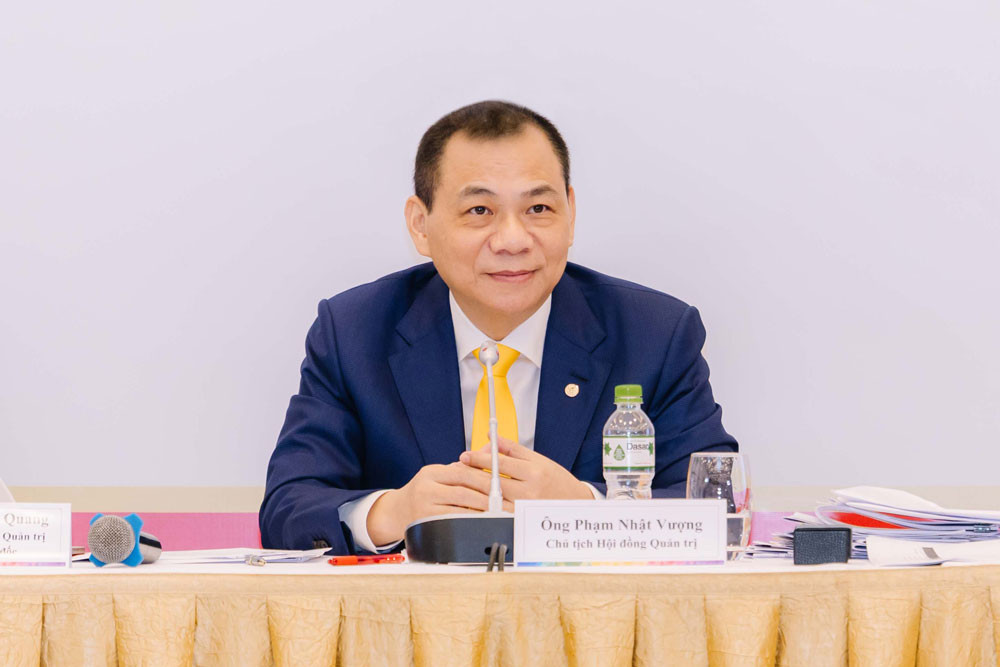
Investor interest in VIC and VHM comes as Vingroup accelerates its expansion across multiple sectors, including property development, electric vehicles, infrastructure, manufacturing and technology.
One of the main drivers is the conglomerate's improving financial performance.
During the first nine months of 2026, Vingroup more than doubled its revenue, while after-tax profit exceeded 125% of its full-year target.
Its electric vehicle subsidiary, VinFast, delivered more than 211,000 vehicles worldwide, up 91% year on year, while expanding its presence in India, Indonesia and the Philippines.
In real estate, Vinhomes recorded nearly VND219.6 trillion ($8.35 billion) in sales during the nine-month period, an increase of 35%.
The value of properties sold but not yet handed over reached VND185.6 trillion ($7.06 billion), providing a potential source of revenue in subsequent reporting periods.
Electric mobility operator Green SM has also emerged as a new growth driver.
According to VNDirect Securities, the company operates approximately 288,000 electric vehicles across eight countries and aims to expand into 11 markets by the end of 2026.
Notably, its management has confirmed plans for an initial public offering in Hong Kong.
Vingroup is also making substantial investments in transport infrastructure.
Its railway subsidiary VinSpeed has partnered with Siemens Mobility to supply trains and operating systems for two proposed railway lines connecting Hanoi with Quang Ninh and Ben Thanh with Can Gio in Ho Chi Minh City.
Meanwhile, a consortium comprising Vinhomes and SGC plans to develop five metro lines in Hanoi, with a combined investment of nearly VND900 trillion ($34.2 billion).
The conglomerate is expanding into manufacturing and advanced technology as well.
It has partnered with Italian engineering company Danieli to develop rail steel production in Ha Tinh Province, while also investing in robotics and the VinSat satellite project, which involves a constellation of four satellites scheduled for launch in April 2027.
Together, these initiatives have raised expectations that Vingroup could build an interconnected business ecosystem spanning property, infrastructure, construction materials and manufacturing.
Such integration could allow the group to participate more extensively in the value chains of major development projects.
However, the ambitious expansion strategy also brings considerable financing pressures.
As of September 30, Vingroup's total assets stood at approximately VND1.6 quadrillion ($60.8 billion), nearly 50% higher than at the beginning of the year.
Cash and short-term financial investments totaled VND106.8 trillion ($4.06 billion), while outstanding borrowings approached VND390 trillion ($14.8 billion).
Over the preceding 12 months, the group raised more than $2.3 billion through international bonds, preferred shares and syndicated loans.
Access to substantial financing has enabled Vingroup to pursue large-scale projects, but it has also increased the importance of debt servicing and cash flow management.
High interest rates, potential cost overruns, construction delays and lengthy investment recovery periods could all weigh on project returns.
Ultimately, Vingroup's prospects will depend not only on the size of its business ecosystem or the pace of expansion, but also on its ability to turn ambitious projects into revenue, profits and sustainable cash flow.
That ability will be a decisive factor in determining the long-term investment appeal of VIC and VHM shares.
Manh Ha

