 Vietnamnet.vn

 Podcast



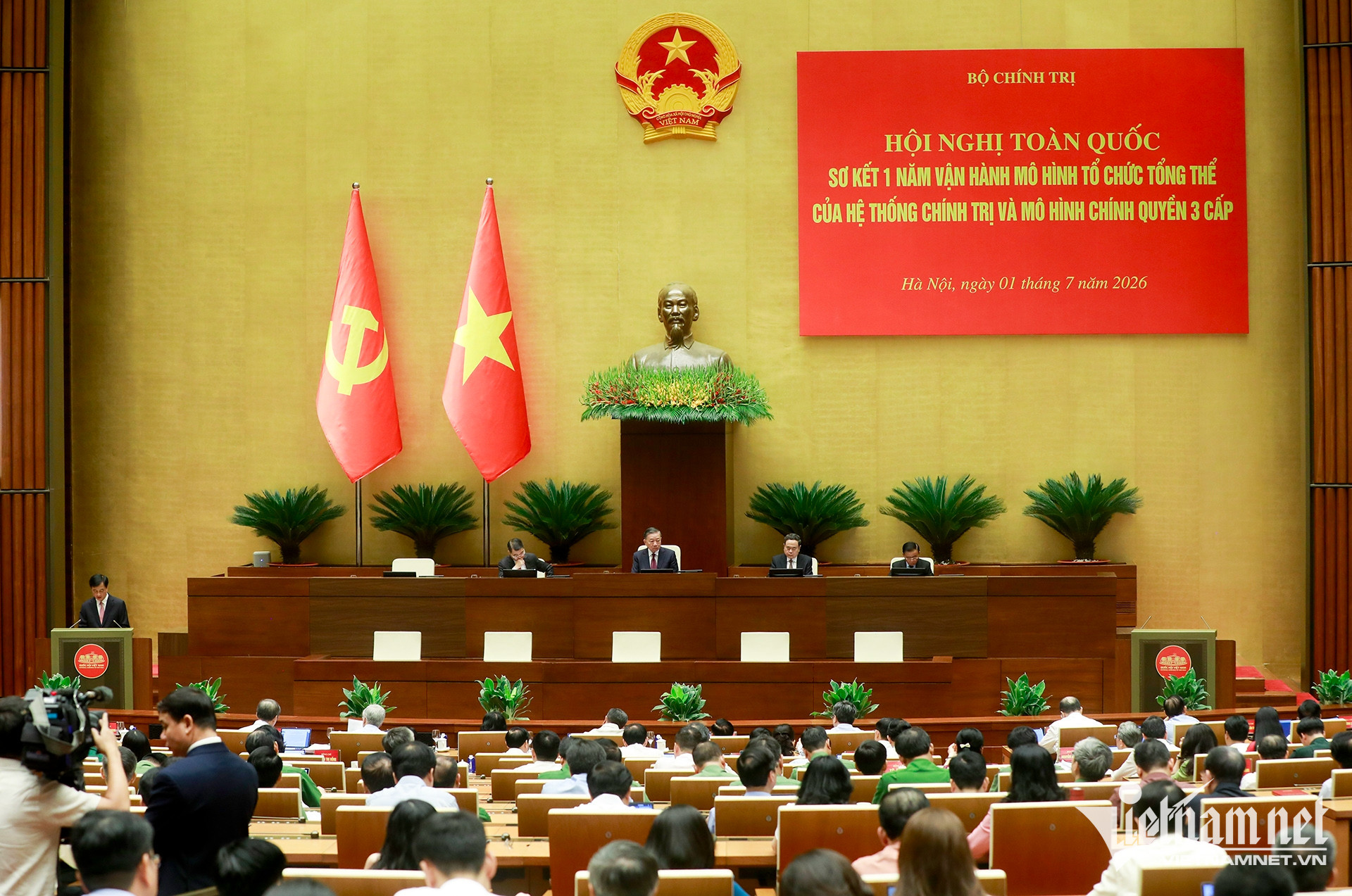
On the morning of July 1, the Politburo held a nationwide conference reviewing one year of operation under Vietnam's reorganized political system and three-tier government model. General Secretary and State President To Lam, together with other senior leaders and Nguyen Duy Ngoc, Head of the Party Central Committee's Organization Commission, chaired the meeting.
The conference was held in person at the National Assembly building and connected online to 3,651 venues across ministries, central agencies, provinces, cities, communes, wards and special administrative zones nationwide, with more than 500,000 participants.
Results after one year
Opening the conference, Nguyen Duy Ngoc, Head of the Party Central Committee's Organization Commission, presented a summary report on the first year of implementing Vietnam's reorganized political system and three-tier government model.
He said the Party's regulations and the State's legal framework had been comprehensively reviewed and updated in a timely, coordinated and practical manner to meet governance requirements.
Ngoc said the delegation of authority and decentralization had been adjusted under the principle of "one task, one lead agency, one person primarily responsible," helping reduce overlapping responsibilities, eliminate administrative gaps and improve accountability.
The respective responsibilities of the central, provincial and commune levels have become clearer, creating a stronger foundation for individual accountability and more disciplined public administration.
Nationwide administrative restructuring reduced the number of provinces and centrally governed cities from 63 to 34, while commune-level administrative units fell from 10,035 to 3,321. The country's 696 district-level administrative units were abolished.
According to Ngoc, the reforms have established a more appropriate governance scale, optimized public resources and laid the foundation for future development.
The organizational structure across Party bodies, the National Assembly, Government, the Vietnam Fatherland Front, the armed forces and judicial agencies has also been streamlined from the central to local levels, reducing intermediate layers while strengthening governance capacity at the grassroots level.
He said the reforms had reduced administrative fragmentation, replacing it with a more integrated governance mechanism linking the central, provincial and commune levels. Decision-making has become faster, responsibilities more clearly assigned, and local governments better positioned to support development and serve citizens.
Commune-level authorities, he added, have gradually adapted to the new organizational model while improving governance capacity.
Personnel restructuring has progressed alongside institutional reforms. Ngoc said authorities had reassigned 134 centrally managed officials and completed personnel arrangements for 1,853 officials across 23 merged localities in preparation for upcoming Party congresses.
Policies for surplus personnel have also been implemented effectively. Recruitment, appointments and nominations for leadership positions have been further standardized.
Notably, Vietnam has completed the appointment of provincial Party secretaries and provincial People's Committee chairpersons who are not natives of the provinces they serve. Similar arrangements now apply to provincial inspection commission heads, chief inspectors, chief judges and chief procurators.
Workforce management and job-position frameworks have also begun operating under the new model, strengthening Party leadership while building a professional civil service capable of meeting the country's next stage of development.
Ngoc said that a streamlined administrative apparatus combined with digital transformation has produced significant progress toward building a government that is closer to the people.
Public satisfaction has reached 83.08%, while 89.09% of respondents reported that harassment or unnecessary difficulties caused by civil servants had largely been eliminated.
He described these outcomes as tangible evidence reinforcing public confidence in the Party's reform agenda.
Direction for future reforms
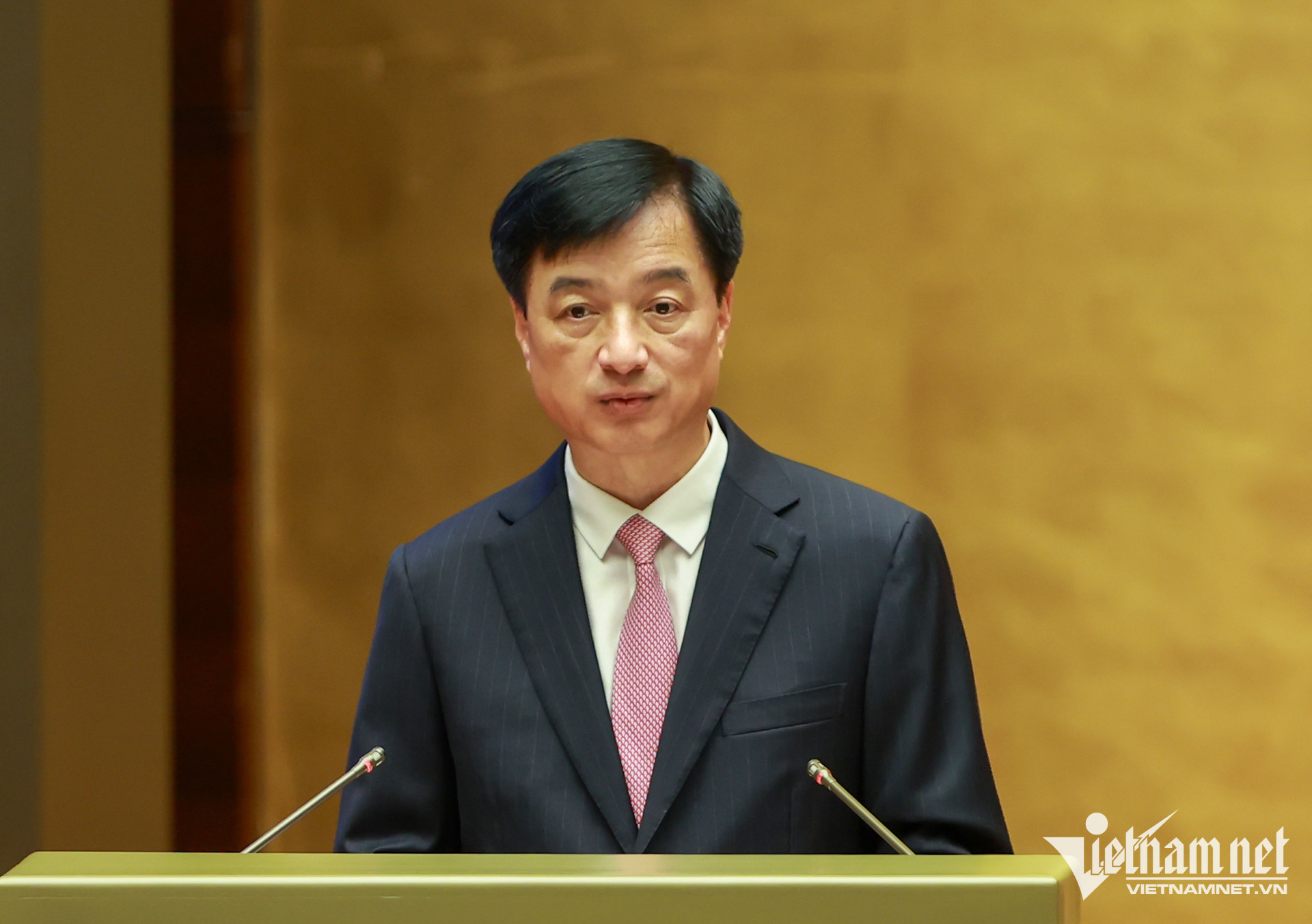
Looking ahead, Nguyen Duy Ngoc said the Party intends to maintain a three-tier organizational framework, from the central level to grassroots organizations, while reviewing and adjusting the structure of grassroots Party organizations to better reflect local conditions where necessary.
At the provincial level, the proposal includes establishing specialized Party organizations covering sectors such as major enterprises operating across the province, provincial hospitals, universities, research institutes and central government agencies located in the locality.
At the commune level, Party organizations would consist of commune, ward and special-zone Party committees, together with subordinate organizations such as commune military Party committees, commune public security Party committees and other specialized units. Party cells would continue operating within local government offices, public institutions and residential communities.
Within the Government and provincial administrations, authorities will continue reviewing organizational structures from the central government down to communes, with the goal of eliminating unnecessary intermediate bodies while improving effectiveness.
Further reforms include restructuring public service providers - particularly public schools, local healthcare facilities and state-owned enterprises - to align with the three-tier government model.
Provincial governments will continue operating with 12 departments or equivalent agencies, maintaining consistency nationwide and avoiding the creation of additional departments except under special circumstances.
The central government also plans to transfer the responsibilities of several specialized departments - including tourism, planning and architecture, and food safety - to broader multi-sector agencies. Provincial departments for ethnic and religious affairs may be established where conditions warrant, subject to approval by competent authorities.
Another proposal is to discontinue provincial public administrative service centers once all administrative procedures are available through fully integrated direct processing. Land registration offices would also be transferred to commune-level governments, enabling local authorities to issue land-use right certificates directly.
At the commune level, the proposed organizational framework would include four to six specialized divisions, covering integrated economic affairs, sectoral economic management, infrastructure and urban development, rural development, social and cultural affairs, internal administration, office operations and public administrative services.
Ngoc also revealed that authorities are studying the establishment of special urban administrative units at the commune level. These units would function as development hubs responsible for coordinating regional growth, integrating public-service infrastructure and managing key economic spaces.
According to him, the proposal is intended to further refine Vietnam's three-tier government model, expand development capacity at the grassroots level and create an innovative governance model capable of driving future growth.
Tran Thuong
.svg)
