 Vietnamnet.vn

 Podcast



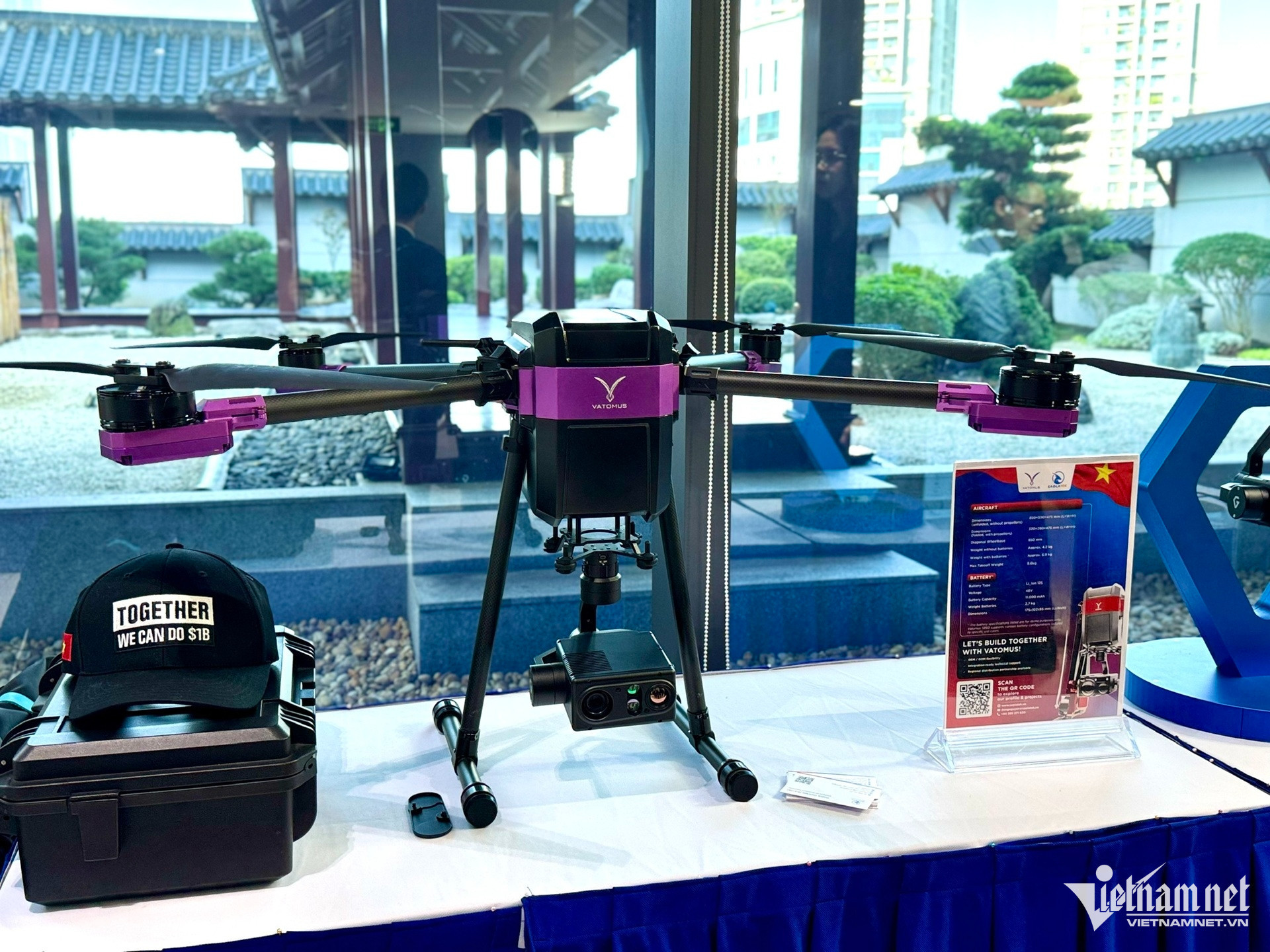
The Politburo has issued Conclusion No. 99-KL/TW on the exploitation, governance and protection of low-altitude airspace to support national development in the new context.
The document states: "Low-altitude airspace is a national resource, a new space for development and a special sovereign domain, closely linked to the critical tasks of protecting airspace sovereignty, data sovereignty and cybersecurity, as well as safeguarding key facilities, borders, seas, islands and major cities."
The exploitation, governance and protection of low-altitude airspace must therefore be integrated into the implementation of policies adopted at the 14th National Congress of the Communist Party of Vietnam and efforts to reform the country's development model.
Development of the sector will be closely integrated with technologies including semiconductors, artificial intelligence (AI) and space technology, with the aim of translating these capabilities into national strength.
Building domestic UAV technology, targeting 1.5% of GDP
Under the roadmap, Vietnam plans to put three national flight-testing zones and at least one national UAV research and testing center into operation by 2030.
The country aims for domestically produced components and technologies to account for more than 30-40% of its key UAV product lines used for production purposes by 2030, with the localization rate expected to exceed 85% by 2045.
By 2045, the low-altitude economy is envisioned as a major economic and technological sector with strong regional competitiveness, contributing about 1.5% of Vietnam's gross domestic product (GDP).
To achieve these goals, the state will prioritize budget investment in essential infrastructure for the governance, exploitation and protection of low-altitude airspace, while allocating funding for scientific research.
Vietnam will also develop technology complexes, manufacturing clusters and national UAV flight-testing zones. Tax, credit and land incentives will be offered to companies engaged in UAV research, manufacturing, testing and the commercialization of UAV products and services.
Legal framework, altitude-based governance and wider applications
The Politburo has called for the legal framework to be completed and a modern national governance model established based on data, digital platforms and risk management.
Low-altitude airspace will be managed by altitude layers and designated operating zones, with comprehensive oversight covering the entire process from registration and identification to licensing, monitoring and enforcement.
In 2027, Vietnam plans to develop and complete national standards and technical regulations for infrastructure, equipment and management technologies, bringing them closer to international standards.
Low-altitude airspace management infrastructure will be developed in a coordinated manner and interconnected with military and civil aviation control systems. Regulatory sandboxes, or controlled testing mechanisms, will be introduced for new UAV technologies, products and services.
Low-altitude flight applications will be expanded across sectors including logistics, smart cities, agriculture, infrastructure monitoring, natural resource management, disaster prevention and response, and emergency medical services.
Vietnam will also expand training programs in UAV technology, the low-altitude economy and related fields.
Policies will be introduced to attract and retain highly qualified domestic and international experts and scientists, while strengthening training for strategic-level and other officials responsible for leadership, management and implementation in the sector.
Du Lam
.svg)
