 Vietnamnet.vn

 Podcast


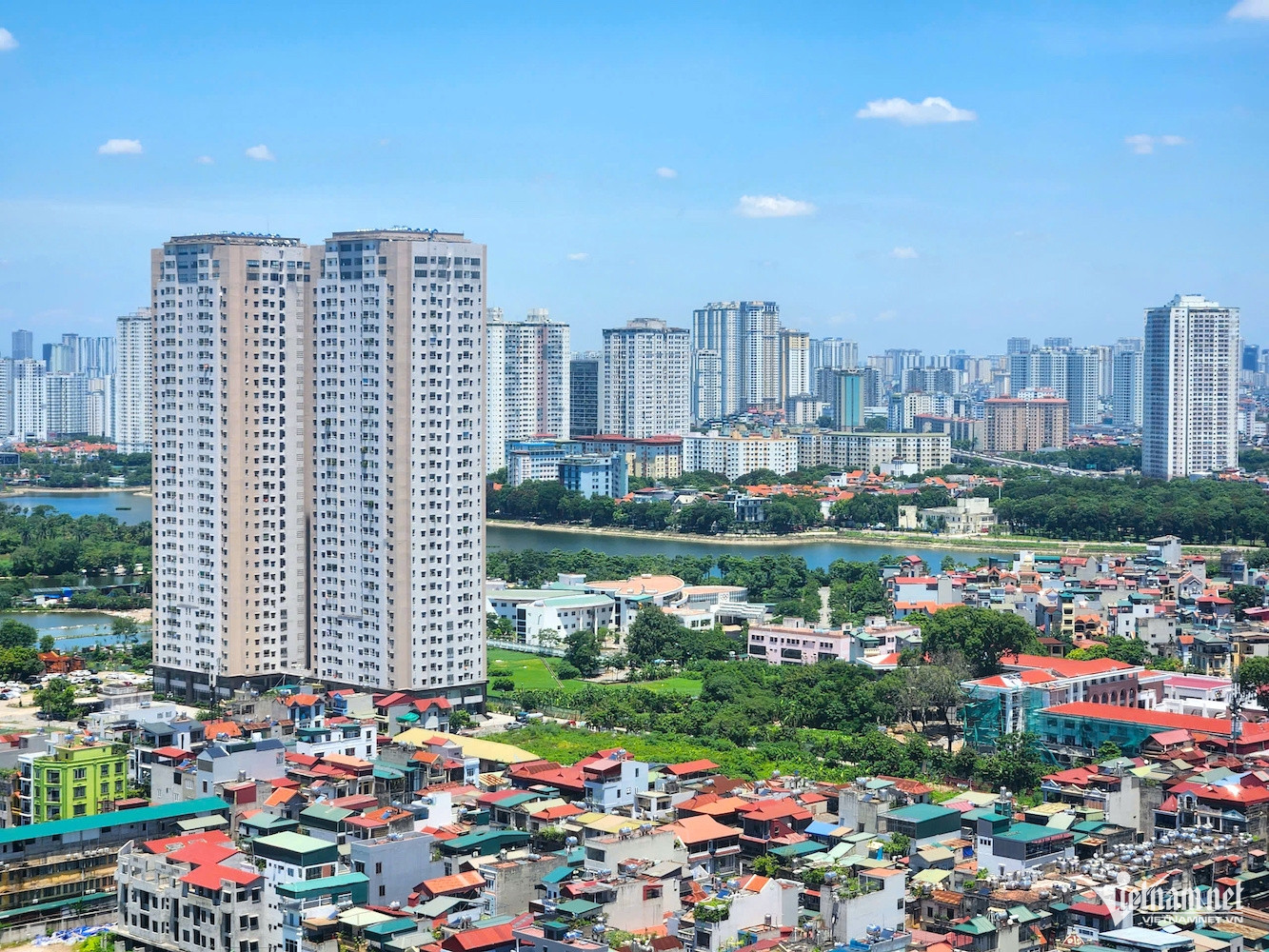
Vietnam's Ministry of Construction is preparing a comprehensive report on the real estate market for submission to the Prime Minister in November, including proposed response scenarios to prevent potential spillover effects on the financial and banking systems.
The move comes as property transactions continue to decline across major market segments, while housing prices in Hanoi and Ho Chi Minh City remain elevated.
Housing prices remain high despite market adjustments
According to the ministry's report on its performance during the first 10 months of 2026 and priorities for the final two months, the property market experienced notable changes in the third quarter.
Selling prices across several segments showed signs of declining compared with the previous quarter, but overall price levels remained high.
In the apartment segment, prices generally softened quarter-on-quarter. However, apartments in major cities remained expensive amid rising construction investment and financing costs.
Surveys conducted toward the end of the third quarter showed that apartment prices at The Zen Residence in Hanoi ranged from VND83 million to VND94 million (approximately US$3,200-3,600) per square meter.
At Mipec Riverside, prices ranged from VND99 million to VND110 million per square meter.
In Ho Chi Minh City, apartments at Saigon Royal Residence were priced at approximately VND110 million to VND121 million per square meter, while units at The Privé ranged from VND105 million to VND128 million.
Villas and townhouses within residential developments also recorded price declines compared with the second quarter.
Market liquidity remained weak, with buyers increasingly favoring projects that have clear legal status, completed infrastructure and practical potential for occupancy or commercial use.
In Hanoi, surveyed prices for villas and townhouses at Mon City ranged from VND447 million to VND459 million per square meter.
Prices at Nam An Khanh stood at approximately VND137 million to VND148 million per square meter, while those at Hinode Royal Park ranged from VND166 million to VND176 million.
In Ho Chi Minh City, properties at Van Phuc City were priced at approximately VND208 million to VND220 million per square meter, compared with VND160 million to VND175 million at Jamona Golden Silk.
The land plot segment also experienced a general decline in secondary market prices during the third quarter, although movements varied considerably between locations and projects.
In Hanoi, average land plot prices at Melorita Hoa Lac increased by approximately 5.6% to VND25.9 million per square meter.
By contrast, prices at An Lac Green Symphony fell around 4.7% to VND124.4 million per square meter.
In Ho Chi Minh City, average land plot prices in Thanh My Loi rose approximately 4.1% to VND124 million per square meter, while those at Tang Long Garden declined 4.5% to VND43 million.
According to the Ministry of Construction, transactions are increasingly concentrated in land plots with clear legal documentation, existing infrastructure and practical development potential.
Plots whose valuations depend largely on expectations of future price appreciation continue to face difficulties attracting buyers.
Property transactions fall 32.7% year-on-year
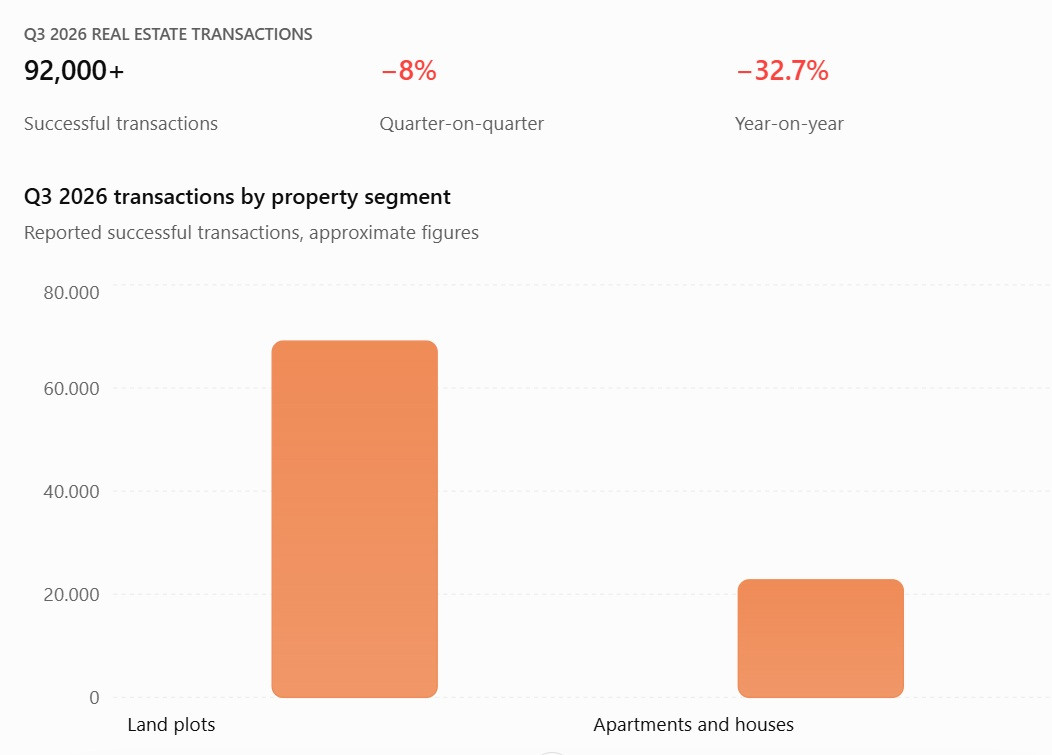
The most significant development has been a widespread decline in market liquidity across property segments.
According to reports submitted by local authorities, Vietnam recorded more than 92,000 successful real estate transactions in the third quarter of 2026.
These transactions covered commercial housing projects and infrastructure development projects involving the transfer of land-use rights to individuals for residential construction.
Apartment and individual housing transactions totaled more than 22,800, down approximately 14% from the previous quarter and 28.9% from the same period last year.
Land plots accounted for more than 69,100 successful transactions, representing a decline of around 6% quarter-on-quarter and 34% year-on-year.
Cumulatively, Vietnam recorded more than 331,800 successful property transactions from the beginning of 2026 through the third quarter.
Of these, apartments and individual houses accounted for more than 80,200 transactions, while land plots represented more than 251,600.
The figures highlight a market facing declining liquidity despite persistently high asking prices at many developments.
The sharp year-on-year contraction also reflects growing caution among buyers over property valuations and affordability.
Ministry to submit market assessment and response scenarios to Prime Minister
In response to these developments, the Ministry of Construction plans to intensify market monitoring, assess emerging risks and introduce timely measures to support safe and sustainable real estate development.
A key priority is completing a comprehensive report on the property market for submission to the Prime Minister in November.
The report will examine supply, liquidity, prices, transactions and unsold inventory across individual property segments and geographical areas.
Based on these assessments, the ministry will identify potential risks and propose response scenarios and policy measures designed to prevent problems in the property sector from spreading to the financial and banking systems.
The ministry will coordinate with the Ministry of Finance, the State Bank of Vietnam and local authorities to monitor the market using a range of indicators.
These will include primary and secondary property prices, transaction volumes, unsold inventory, credit conditions, corporate bonds and project implementation progress.
Another priority is removing obstacles facing projects that meet the necessary conditions for implementation.
The ministry also aims to encourage the development of reasonably priced commercial housing, social housing and rental accommodation.
During the final two months of 2026, the ministry will strengthen inspections and accelerate implementation of the national program to build one million social housing apartments for low-income earners and industrial park workers during 2021-2030.
It will also continue implementing social housing and rental housing targets under Government Resolution No. 303.
These measures form part of broader efforts to stabilize the real estate market, improve housing accessibility and limit potential risks to Vietnam's financial system.
Hong Khanh

