 Vietnamnet.vn

 Podcast



Ta Thuy Lien, head of the Liaison Committee of the Vietnamese Community in Singapore, said the visit comes at a pivotal moment and delivers a powerful dual strategic message to Vietnamese people living in Singapore.
The homeland stands behind every Vietnamese abroad
Lien said the presence of Vietnam’s top Party and State leader affirms that “the homeland always stands behind every step forward made by Vietnamese people overseas.”
According to her, the visit serves as a sacred source of encouragement, inspiring national pride and a stronger desire among overseas Vietnamese to contribute to the country.
“In terms of national standing, the country’s stature itself is the most valuable passport and strongest guarantee for Vietnamese people living abroad,” she said. “The visit will help shape new strategic cooperation frameworks between the two countries.”
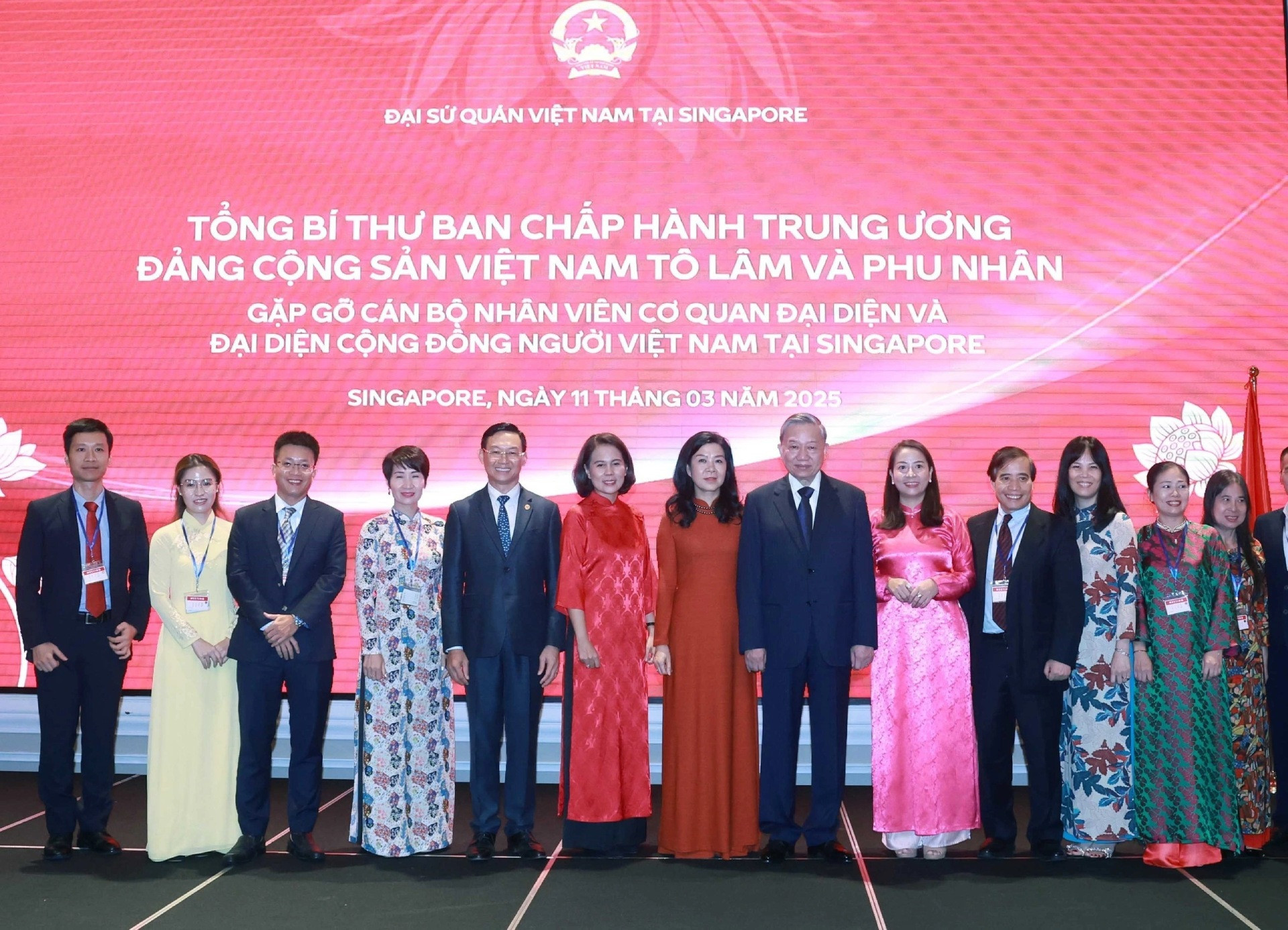
Party General Secretary and President To Lam and his spouse meet staff of Vietnam’s representative agencies and members of the Vietnamese community in Singapore during a previous visit in March 2025. Photo: VNA
“The stronger and more influential the homeland becomes, the greater the diplomatic weight Vietnam carries. That gives Vietnamese people here a more solid platform to assert themselves confidently in elite spaces of development in the host country, thereby expanding their ability to contribute to both homelands,” Lien added.
The Vietnamese community in Singapore is estimated at between 20,000 and 25,000 people, including students, researchers, intellectuals, Vietnamese brides and workers.
Lien said the Vietnamese community in Singapore holds a unique position.
“Although our community is not large in number, we are proud to possess a highly connected ecosystem of talented human resources,” she said. “The community’s contributions have become a strategic internal resource and a co-creation partner in bilateral relations, rooted in three key foundations.”
The first foundation, according to her, is pioneering efforts to implement Resolution 57 on innovation and strategic national consultation. By leveraging geographical, cultural and especially Singapore’s research and development ecosystem, the community has become an important bridge connecting the two countries.
She cited the VSIF 2026 Forum held on May 23 at the National University of Singapore, which brought together leading experts in priority sectors including artificial intelligence, semiconductors, biotechnology and green technology.
Beyond technology transfer, the community is also working to distill lessons from Singapore’s public governance model, inter-agency coordination and innovation management systems to provide policy recommendations for Vietnam’s macro-level planning.
The second foundation focuses on strengthening soft power and internal resilience. Participation in major cultural events such as the Chingay Parade and co-organizing the Vietnam Pho Festival are ways for overseas Vietnamese to promote Vietnam’s national image through cultural diplomacy.
Most recently, the community liaison committee collaborated with Singaporean media agencies to produce a documentary about Vietnamese Tet celebrations in Singapore. The film captured emotional and authentic moments showing how the community preserves and promotes Vietnamese cultural and artistic traditions.
The third foundation, she said, is the practice of “people-centered diplomacy” and civic responsibility. Whenever Vietnam faces storms, floods or natural disasters, overseas Vietnamese in Singapore are among the first to organize fundraising and support efforts for people back home.
“That spirit of solidarity is the clearest proof of the sacred bond connecting overseas Vietnamese to the homeland,” Lien said. “No matter how far away they live, their hearts still beat in harmony with the destiny of the nation.”
Turning Vietnam into a destination for global youth
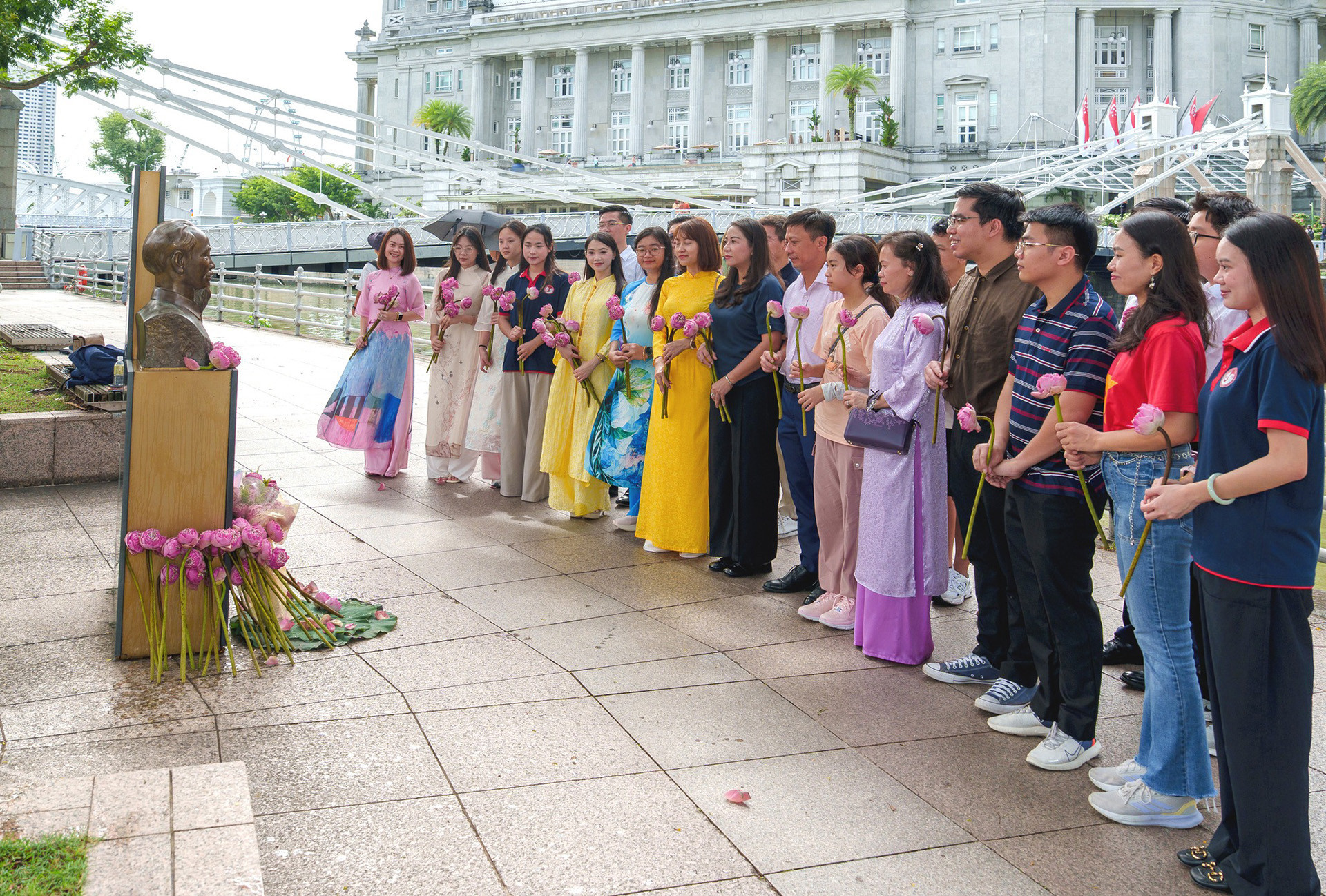
Members of the Vietnamese Community Liaison Committee in Singapore gather at the Asian Civilisations Museum to pay tribute to President Ho Chi Minh on the 136th anniversary of his birth. Photo: Vietnamese Community Liaison Committee in Singapore
In the fields of science, technology and innovation under Resolution 57, Lien proposed building a comprehensive data ecosystem for overseas Vietnamese intellectuals.
She said stronger and more systematic coordination mechanisms are needed between ministries in Vietnam and overseas intellectual associations to continuously digitize and update databases of Vietnamese experts abroad.
“Only by clearly understanding what technological ‘keys’ the community possesses can the country effectively assign them to solve major national challenges,” she said.
Lien added that Vietnam should study Singapore’s centralized coordination model in talent attraction and technology development.
“We are very encouraged to see the Party, the State and some localities such as Hanoi introducing breakthrough policies to attract talent,” she said. “However, to fully unlock the strength of Vietnamese expert networks in technology hubs like Singapore, the State should expand these models and establish a barrier-free cooperation framework.”
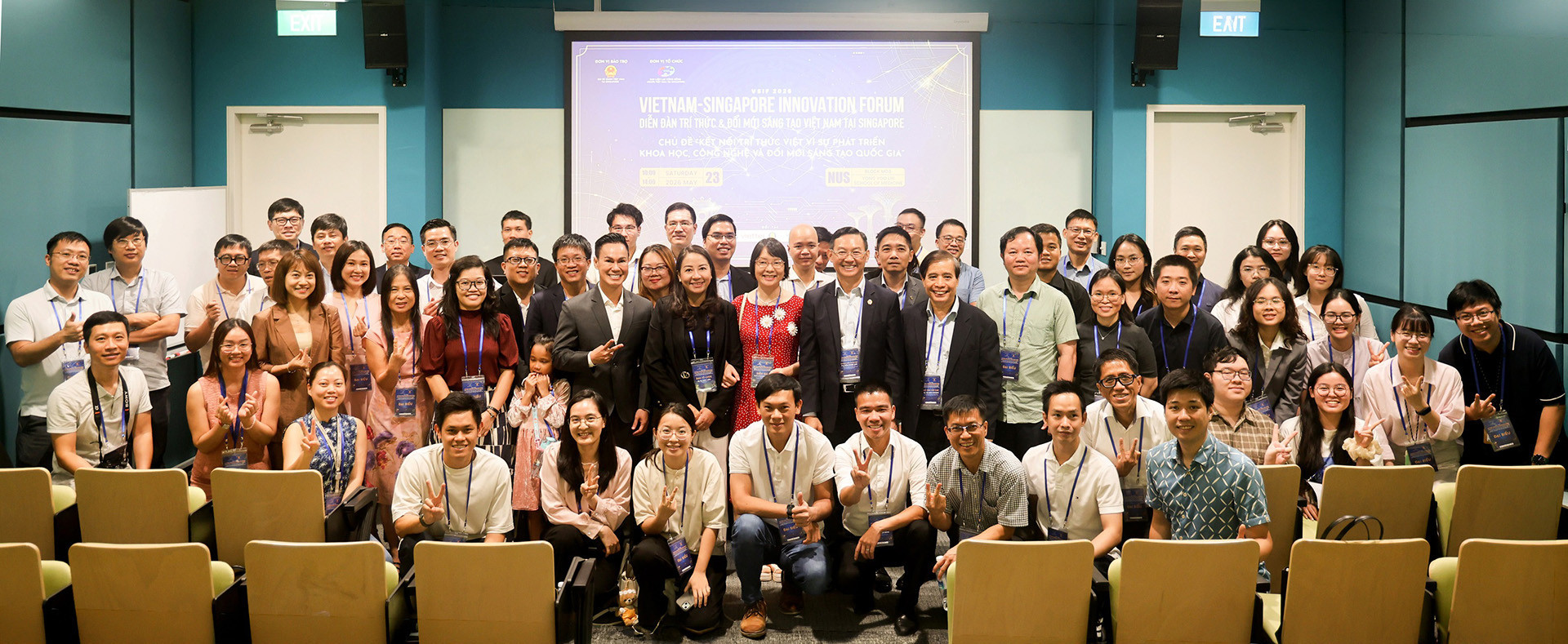
The Vietnam-Singapore Innovation Forum 2026 (VSIF 2026) held in Singapore. Photo: Vietnamese Community Liaison Committee in Singapore
She proposed allowing overseas experts to participate flexibly and remotely as senior advisors or members of independent appraisal councils.
“This mechanism would transform overseas intellectual communities into strategic gatekeepers, helping Vietnam quickly access technology trends while carefully screening high-quality investment flows and technologies,” she said.
Lien also called for stronger dialogue and substantive cooperation mechanisms between research institutions in both countries.
Vietnamese ministries and agencies, she said, should establish direct communication channels and co-funding mechanisms linking research institutes, universities and innovation centers with Singaporean partners.
Information on Vietnamese intellectual communities in Singapore has already been systemized across various public and educational platforms, helping facilitate research cooperation and innovation nationwide.
Regarding younger generations, Lien said Vietnam should position itself as an internship and startup destination for overseas Vietnamese youth and international students.
“The trend of overseas Vietnamese youth and international students wanting to return to Vietnam for internships and startups is growing rapidly,” she said.
She suggested the State act as a facilitator by creating networks linking capable domestic enterprises with universities and colleges in Singapore and other developed countries.
“Creating these opportunities in the homeland is essential not only for maintaining cultural roots, but also for accumulating invaluable human capital for the nation,” she added.
Lien also noted that overseas Vietnamese communities have largely relied on voluntary efforts to promote Vietnam abroad. To further strengthen Vietnam’s national branding, she said the State should establish professional support mechanisms in areas such as artistic direction, scripting and production.
“This professional push would elevate community activities into internationally recognized diplomatic products and create stronger cultural connections,” she said.
Tran Thuong
.svg)
