 Vietnamnet.vn

 Podcast



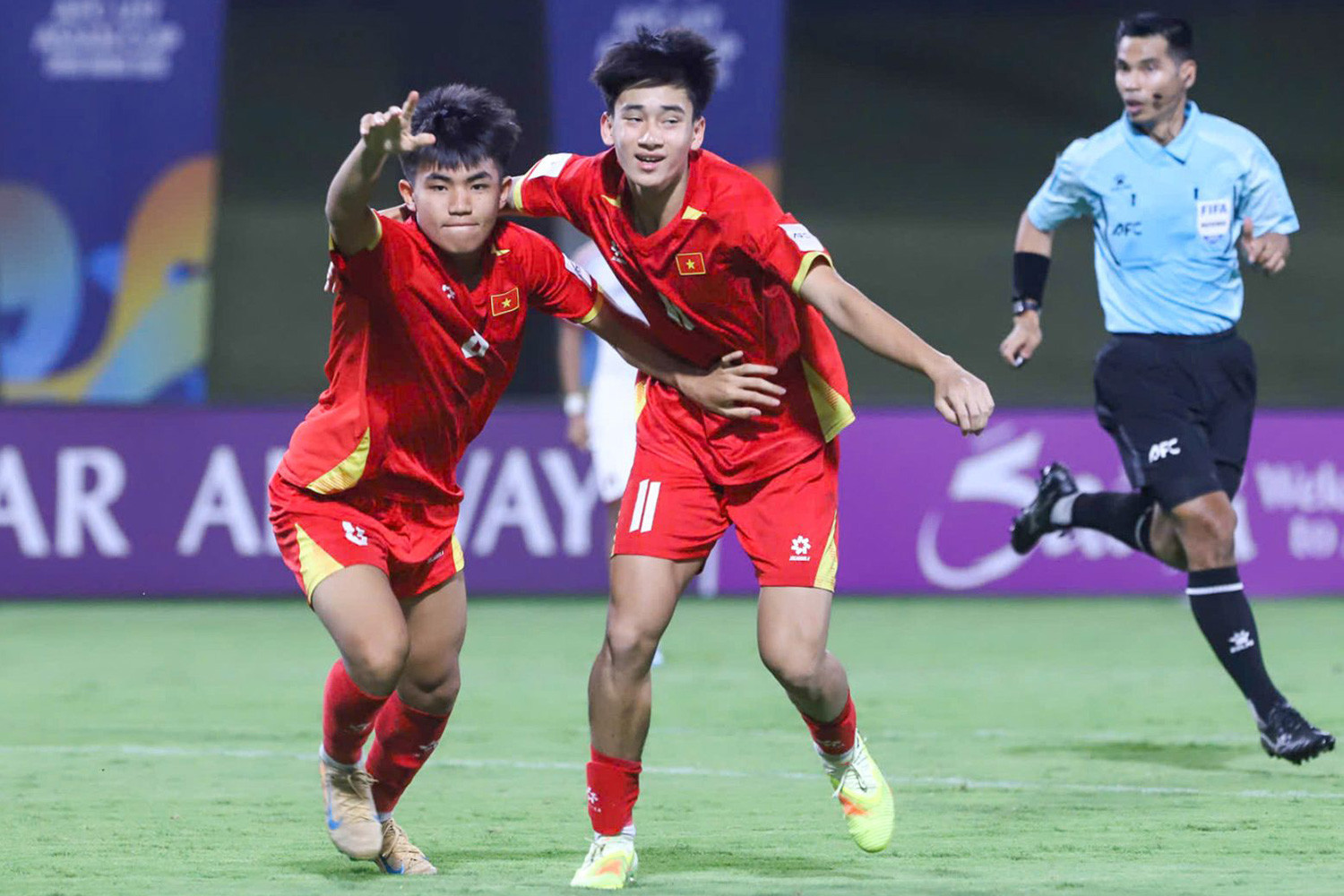
Cristiano Roland’s side saw their journey end after a defeat to Australia U17, a result widely viewed as unsurprising given the clear differences in physicality, speed, training systems and squad depth between the two teams.
Yet across the tournament as a whole, Vietnam’s young players delivered a performance that exceeded expectations and earned widespread praise from supporters.
More importantly, the campaign secured the country a historic place at the upcoming FIFA U17 World Cup later this year.
One of the biggest positives from Vietnam’s run was the team’s approach to the game.
Unlike many previous Vietnamese youth sides that often sat deep and absorbed pressure, Roland’s players showed confidence in controlling possession, building attacks from the back and pressing aggressively when needed.
They also demonstrated a willingness to compete directly against stronger opponents instead of simply defending.
That shift in mentality has been seen as a major step forward for Vietnamese youth football.
Although Vietnam suffered a heavy defeat against South Korea U17 in the group stage, many observers felt the scoreline did not fully reflect the team’s overall display.
Before conceding four quick goals late in the match, Vietnam had largely held their own and exposed few major weaknesses.
For that reason, the quarter-final defeat to Australia may ultimately prove even more valuable.
The match highlighted the remaining gap between Vietnam and Asia’s top youth football nations.
Australia dominated physically, showing superior strength, pace and endurance throughout the game.
As the tempo increased, Vietnam gradually lost control and struggled to maintain their intensity.
The match also exposed inconsistencies in Vietnam’s tactical structure.
While the team performed well when maintaining compact spacing, defensive gaps began to appear whenever they faced sustained pressing or rapid transitions.
Perhaps most significantly, the defeat served as a reminder that Vietnamese football cannot rely solely on technical ability and fighting spirit.
To compete consistently at the continental level, players will need stronger physical foundations, sharper tactical awareness and greater squad depth.
Rather than being viewed as a setback, the loss to Australia is now being seen by many as an important lesson ahead of the U17 World Cup.
The tournament showed Vietnam’s progress, but it also underlined how much further the team must go to compete with Asia’s elite.
In many ways, the defeat may prove more useful than an easy victory.
It brought the young players back down to earth and offered a clearer understanding of the gap that still exists between Southeast Asian football and the highest level of youth competition in Asia.
For Vietnam U17, the Asian Cup ended not with regret, but with belief - and a sharper sense of what comes next.
Duy Nguyen
.svg)
