 Vietnamnet.vn

 Podcast



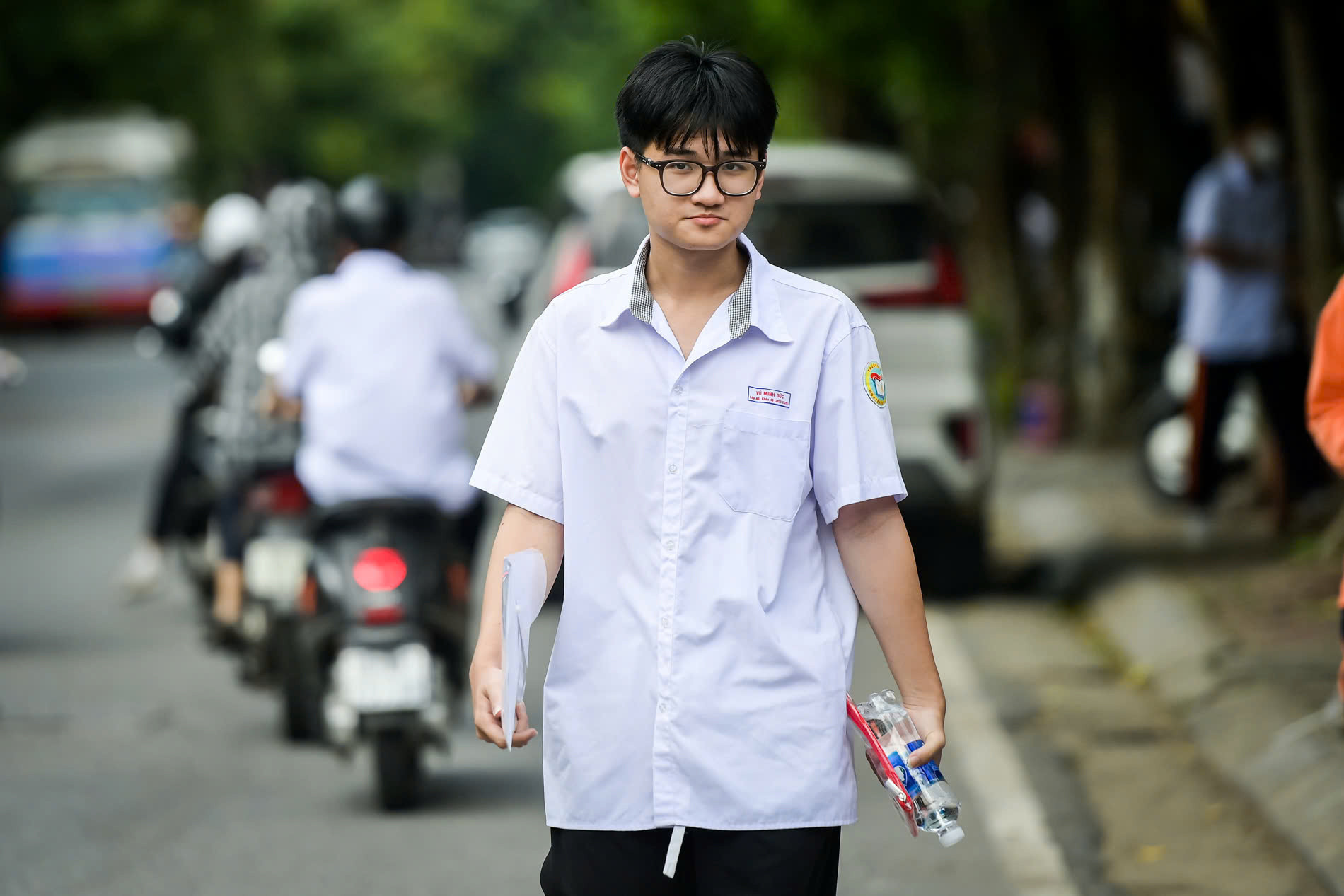
Following the announcement of first-round admission scores, universities across the country have opened large-scale supplementary admissions.
From public institutions to private universities, many still have hundreds or even thousands of places available, with application thresholds starting at 15 points.
Among public universities, Ho Chi Minh City University of Law is seeking another 350 students for its Quang Tri campus, with applications accepted through August 31.
Ton Duc Thang University is offering supplementary admission across dozens of programs, with around 1,000 places available.
International University under Vietnam National University-Ho Chi Minh City has another 305 places, while the University of Economics Ho Chi Minh City is recruiting additional students for its Vinh Long campus.
Ho Chi Minh City University of Education is offering supplementary admissions at its Long An and Gia Lai campuses.
Ho Chi Minh City University of Technology and Engineering is seeking additional students for its law program, while Ho Chi Minh City University of Industry and Trade has dozens of places still available.
In northern Vietnam, VNU International School under Vietnam National University, Hanoi is offering around 420 additional places across eight programs, with application thresholds ranging from 19 to 20 points.
Thai Binh University of Medicine and Pharmacy has another 111 places, with minimum scores ranging from 18 to 20 depending on the program.
Private universities stand out for the scale of their supplementary recruitment, with several seeking thousands of additional students and accepting applications from scores as low as 15.
Van Lang University currently has one of the largest supplementary intakes, offering 2,000 places across all its programs and accepting applications through August 30.
For applications based on national high school graduation exam results, standard programs accept scores from 15 points.
The threshold rises to 20 points for law and economic law, 22 for medicine and dentistry, 20 for pharmacy, and 18 for nursing and medical laboratory technology.
Ho Chi Minh City University of Technology is offering another 1,000 places across all programs.
Its application thresholds range from 15 to 22 points for high school graduation exam results, 18 to 23 for academic transcripts, 225 to 285 for V-SAT scores and 600 to 750 for the competency assessment administered by Vietnam National University-Ho Chi Minh City.
Notably, the university has reserved 10 additional places for medicine, a program it is offering for the first time this year.
Ho Chi Minh City University of Economics and Finance is recruiting another 800 students for 38 majors and training programs.
Its minimum high school graduation exam score is 15, except for law-related programs, which require at least 20 points. Applications are being accepted through August 25.
Mien Dong Innovative Technology University still has 860 places available, mainly in technology and engineering, economics, foreign languages and health sciences.
Its application threshold starts at 15 points, while pharmacy and economic law require at least 20.
Saigon International University is seeking another 500 students.
Nguyen Tat Thanh University has opened supplementary admissions for all programs, accepting high school graduation exam scores ranging from 15 to 22 and academic transcript scores from 18 to 23.
For competency assessments, applicants need at least 550 out of 1,200 points on the Vietnam National University-Ho Chi Minh City exam or 70 out of 150 on the Vietnam National University, Hanoi assessment.
Another private institution, Saigon Technology University, is seeking 600 additional students across 20 programs, ranging from economics, logistics and law to information technology, mechanical engineering, electrical and electronic engineering, construction and food technology.
Most programs had a first-round admission score of 15 based on the national high school graduation exam.
Hung Vuong University of Ho Chi Minh City is offering another 345 places across 12 programs. Most accept applications from 15 points based on graduation exam results, while law and economic law require at least 20.
Where have the students gone?
The scale of supplementary admissions raises an increasingly pressing question: Where are the prospective students?
Preliminary figures from the Ministry of Education and Training show that 874,811 candidates registered for university and college admissions in 2026, out of nearly 1.2 million students who took the national high school graduation exam.
Last year, 849,544 candidates registered admission preferences.
That means more than 325,000 of this year’s high school graduation exam candidates did not register for university or college admission at all.
The total number of university and college admission preferences submitted in 2026 reached 7,180,860, down from 7,615,560 last year.
Each applicant registered an average of 8.21 preferences, compared with 8.96 a year earlier.
A total of 467,590 candidates applied for STEM-related programs, submitting 2,368,179 preferences in those fields.
Meanwhile, 331,693 candidates applied to programs included on the list eligible for scholarships under the government’s Decree 179/2026/ND-CP, accounting for 1,291,839 preferences.
The figures suggest that the actual pool of students available to universities is considerably smaller than the total number sitting the high school graduation exam.
University is no longer the automatic choice
Pham Thai Son, admissions director at Ho Chi Minh City University of Industry and Trade, identifies three main reasons behind the situation.
The first is the 15-point entrance threshold.
Students who fail to reach that level through the national high school graduation exam route are not part of the potential university applicant pool under that admission method.
As multiple institutions compete for students during supplementary admissions, the number of candidates genuinely available to them is therefore much smaller than the overall number who sat the exam.
The second factor is that some students may have decided that college offers a more practical route.
Shorter programs can allow them to enter the workforce earlier, before pursuing further qualifications or transferring into higher-level study later.
“This is an economical and practical choice, rather than necessarily choosing supplementary admission to a university,” Son said.
Household finances are another important variable.
Choosing whether to attend university is no longer simply about examination scores. Families must also consider tuition, accommodation, living expenses, transportation and the number of years a student must study before beginning to earn an income after graduation.
As those costs increase, some students and their families are examining the return on investment of a university education much more carefully.
Son said tuition at his university has risen by an average of around VND20 million (about US$760) for an entire course this year.
The total is now approximately VND170 million (about US$6,460), compared with around VND150 million (about US$5,700) last year.
He said the increase was still relatively modest compared with tuition at some other universities.
The third reason, according to Son, is a changing attitude toward university education, particularly among students in rural areas.
In the past, the widespread expectation was straightforward: graduate from high school, then go to university.
That mindset appears to be gradually giving way to a more practical question: What should I study to gain skills, find a job and earn an income?
A student might attend college, graduate sooner, begin working and accumulate experience before continuing their education later.
Others may choose overseas employment opportunities in Japan, Taiwan or South Korea.
In that environment, university is no longer the only route toward a viable career.
The shift is also broadening the competitive landscape for universities.
Institutions are no longer competing solely against other universities for students. They increasingly face competition from colleges, vocational training institutions and overseas employment opportunities.
As universities across Vietnam open supplementary admissions for thousands of remaining places, some with application thresholds starting at 15 points, the issue is no longer simply how many seats remain vacant.
The more significant change is happening among the students themselves.
Vietnam’s pool of prospective university students is changing, and so are their priorities.
Some will continue looking for university opportunities through supplementary admissions. For others, however, the university gate is no longer the only door worth opening after high school.
Le Huyen
.svg)
