 Vietnamnet.vn

 Podcast


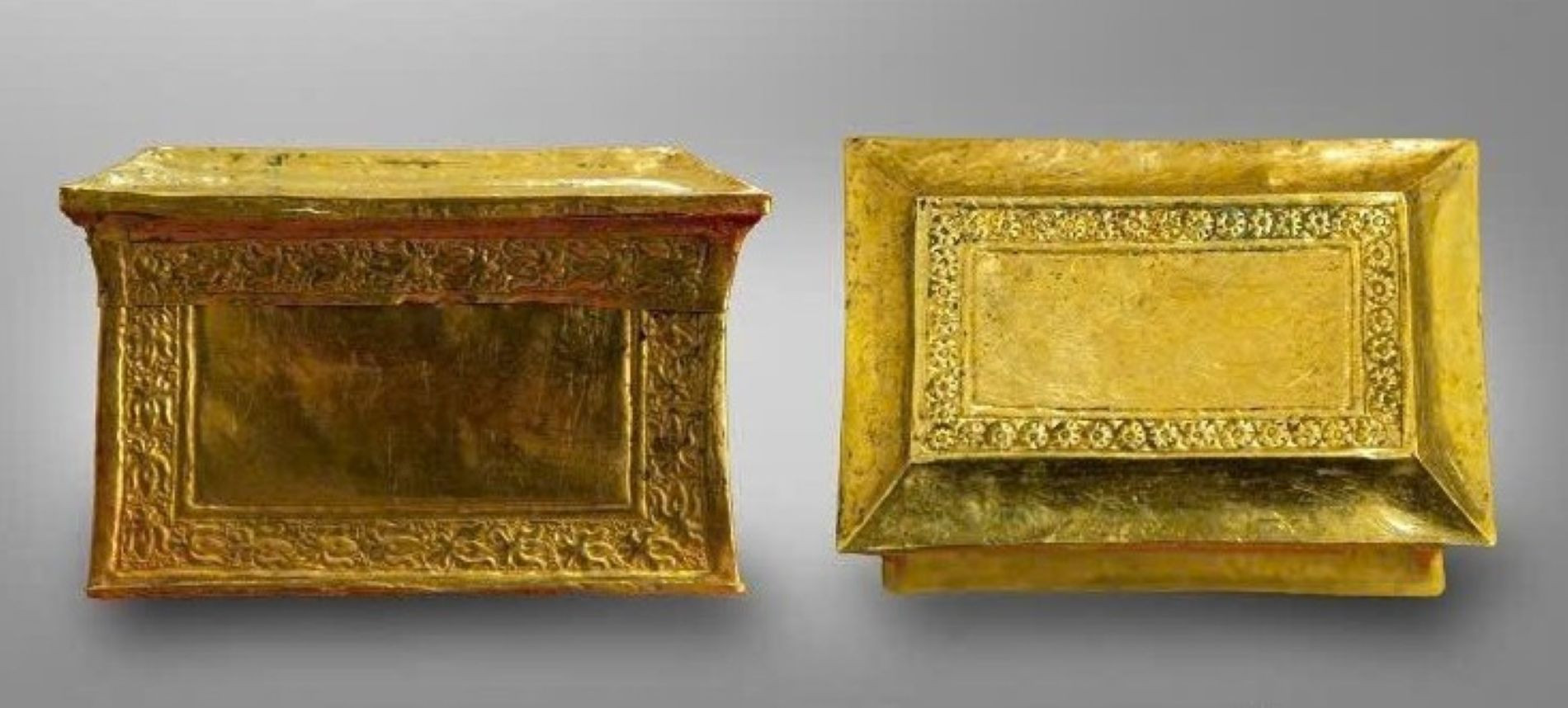
The Thap Nhan Buddhist Relic Box, a designated National Treasure and the only gold Buddhist relic container ever discovered in Vietnam, was the centerpiece of a ceremonial procession in Nghe An Province on November 17.
The event formed part of the province's 2026 Culture and National Unity Week, bringing an important artifact from Vietnam's early Buddhist history closer to the public.
The discovery also highlights the urgent need to preserve the archaeological site where the treasure was unearthed.
Ancient gold treasure makes ceremonial debut
The procession took place from 5pm to 6pm on November 17 in Vinh, Nghe An Province.
It featured a vehicle carrying the national treasure, vehicles transporting delegates and 108 electric vehicles carrying Buddhist followers and local residents.
The procession began at the Nghe An Museum of Nghe Tinh Soviet History, traveled along several streets and returned to the museum.
The event held particular cultural and spiritual significance, marking a major step toward making the ancient Buddhist artifact accessible to the public.
The Thap Nhan Buddhist Relic Box was discovered during archaeological excavations in 1985 and 1986 at the Thap Nhan archaeological site, now located in Kim Lien Commune, Nghe An Province.
At the center of the ancient tower, archaeologists uncovered a wooden pillar constructed from two hollowed-out halves of a tree trunk.
Inside was a rectangular bronze container holding a gold-colored metal box containing Buddhist relics.
The gold box measures 8cm in length, 5cm in width and 5.5cm in height, weighing approximately 200 grams.
Crafted using cold-hammering techniques, its lid features a six-petaled chrysanthemum motif, while its sides are decorated with stylized lotus patterns.
Inside were a layer of charcoal and ash, along with white objects identified as Buddhist relics in archaeological records.
Researchers consider the discovery exceptionally significant for Vietnamese Buddhist archaeology. To date, the Thap Nhan Relic Box remains the only gold Buddhist relic container discovered in the country.
On December 25, 2017, the Prime Minister issued Decision No. 2089/QD-TTg recognizing the artifact, dated to the seventh and eighth centuries, as a National Treasure.
Following years of preservation under special conditions, the treasure is scheduled to go on public display for the first time at 8pm on November 18 in a dedicated gallery at the Nghe An Museum of Nghe Tinh Soviet History.
The exhibition space, developed beginning in 2022, features specialized display cases equipped with temperature and humidity controls and security systems.
Its design draws inspiration from traditional pagoda roofs, incorporating Buddhist music, incense and transparent LED screens to help visitors appreciate the artifact's intricate decorative details.
Most Venerable Thich Tho Lac, Vice Chairman of the Executive Council of the Vietnam Buddhist Sangha, Head of its Central Committee for Culture and Rituals, and Head of the Sangha's Executive Board in Nghe An, said displaying the treasure would help educate the public about history and strengthen local pride.
He added that the exhibition would meet the spiritual needs of monks, nuns and Buddhist followers while creating opportunities to develop cultural and spiritual tourism.
Evidence of Buddhism's presence more than 1,300 years ago
The Thap Nhan archaeological site lies on the left bank of the Lam River, near Hong Long Temple in present-day Kim Lien Commune.
Excavations revealed that the tower's foundation was nearly square, measuring approximately 9.6m by 9m and standing 2.3m high.
Based on its construction materials and architectural characteristics, researchers dated the structure to approximately the late Six Dynasties period or early Tang Dynasty.
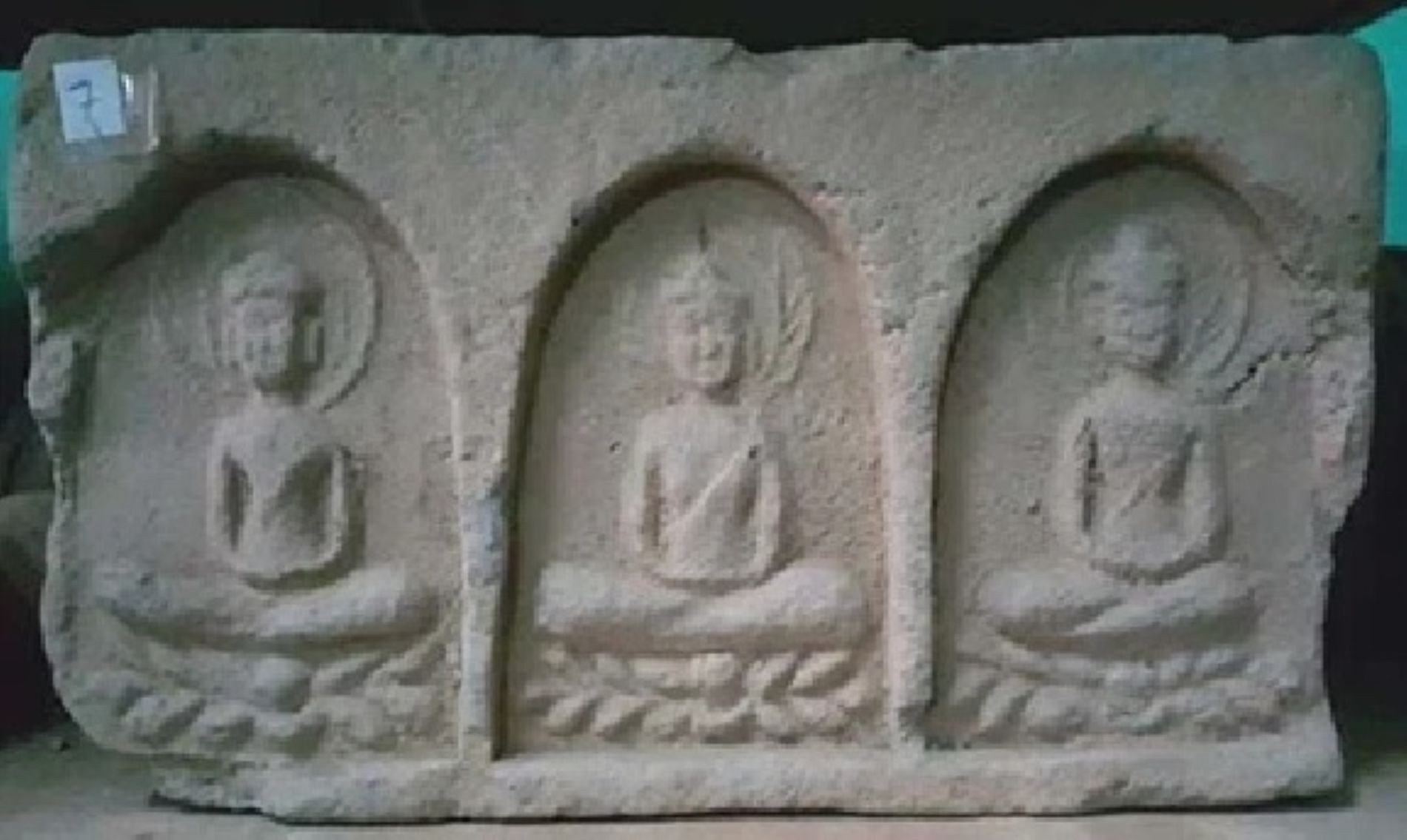
Several bricks discovered at the site depict three Buddhas seated in meditation.
One brick previously found by local residents bears an inscription referring to the sixth year of the Zhenguan era, corresponding to 632 during the reign of Emperor Taizong of the Tang Dynasty.
According to Buddhist historical records, in 601, Emperor Wen of China's Sui Dynasty ordered Buddhist relics to be distributed to various administrative regions for the construction of towers where they could be enshrined and worshipped.
Historical documents indicate that relics were sent to Giao, Phong, Truong, Ai and Hoan prefectures.
Hoan Prefecture corresponded to an area encompassing present-day Nghe An and Ha Tinh provinces.
Based on this historical evidence, some researchers have proposed that Thap Nhan may have been built to receive and enshrine relics sent to Hoan Prefecture during that period.
However, the precise origins of the relics remain uncertain and require further investigation.
Nevertheless, the gold container, architectural remains and other Buddhist artifacts provide important physical evidence of Buddhism's presence and development in Nghe An more than 1,300 years ago.
To mark the occasion, the Nghe An Museum of Nghe Tinh Soviet History is also organizing a thematic exhibition titled "Buddhism in Nghe An Through Ancient Artifacts" and an artistic and ceremonial program titled "Anh Tu Quang" (Light of Compassion), connecting the performance stage with the treasure's exhibition gallery.
Ancient tower faces deterioration despite treasure's protection
According to Most Venerable Thich Tho Lac, the treasure holds not only historical and archaeological significance but also serves as a reminder to Buddhist monks, nuns and followers of the religion's longstanding connection with Vietnam's history and cultural life.
However, making the artifact accessible to the public represents only one aspect of the broader preservation effort.
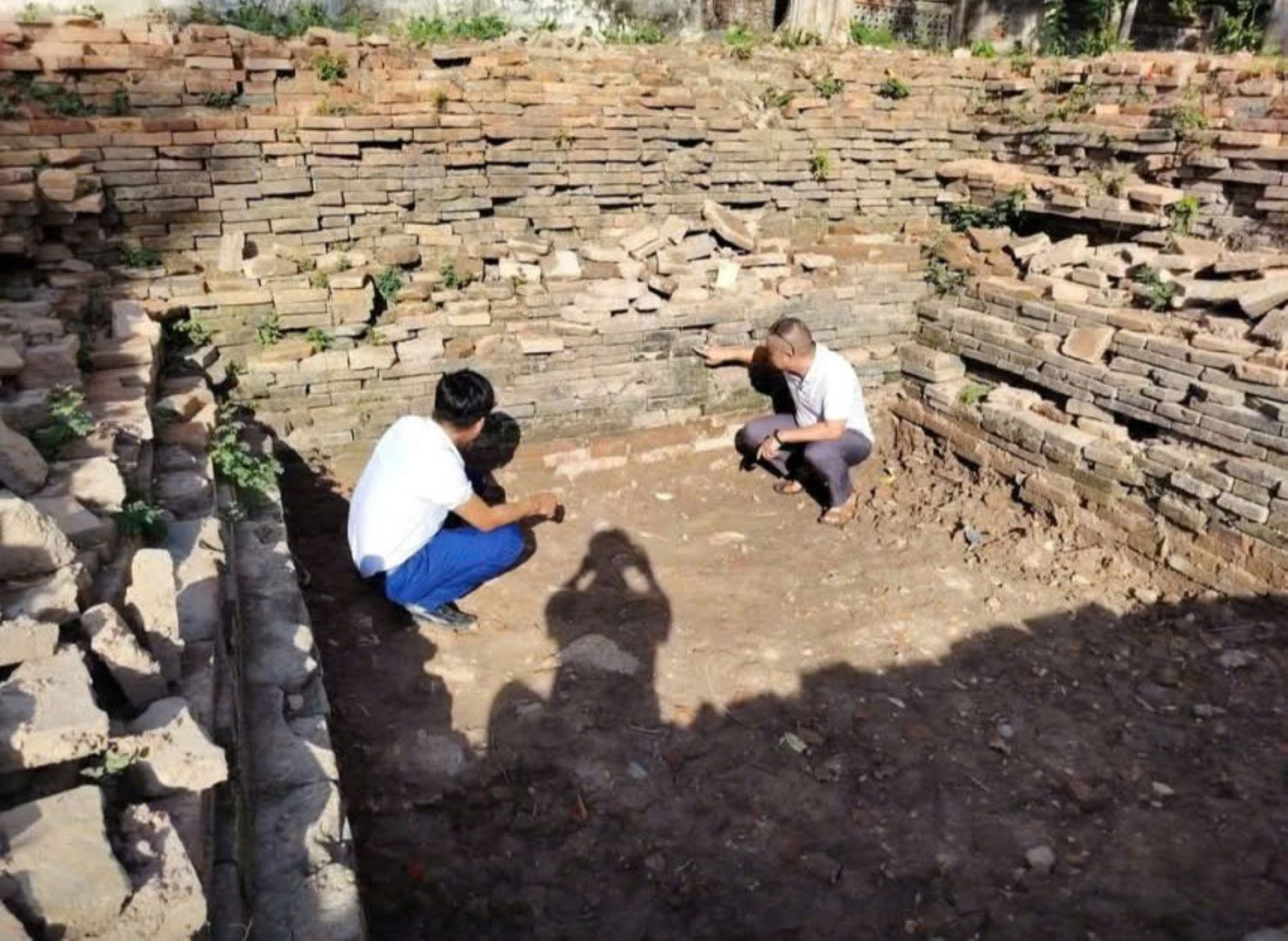
While the gold box is protected by specialized conservation systems, the original Thap Nhan archaeological site where it was discovered continues to face deterioration.
Research documents indicate that the tower's foundation remains without protective roofing, leaving it exposed to weather conditions.
A restoration and conservation project received initial investment approval in 2013 but has yet to be implemented because of funding difficulties.
After more than 13 centuries, the gold relic box stands as an exceptional testament to the Buddhist history of Nghe An.
Its ceremonial procession and upcoming public exhibition not only celebrate the region's cultural heritage but also draw attention to the urgent need to preserve and promote the historical value of the Thap Nhan archaeological site for future generations.
Thanh Hai

