Vietnam must shift from state subsidies to market-oriented policies and remove institutional barriers to unlock the potential of its cultural industries, experts said at a conference reviewing 40 years of cultural policy reform.
Vietnam needs to move beyond a subsidy-dependent approach and adopt a more enabling regulatory framework to accelerate the development of its cultural industries, policymakers and experts said at a scientific conference on November 18.
Organized by the Culture and Arts Magazine under the Ministry of Culture, Sports and Tourism, the conference, titled "40 Years of Cultural Policy Reform (1986-2026): Theoretical and Practical Issues," reviewed four decades of changes in cultural policymaking and implementation.
The event also sought to identify institutional obstacles and propose solutions to mobilize resources for a new phase of cultural development.
Cultural industries contribute 5% of GDP but face major barriers
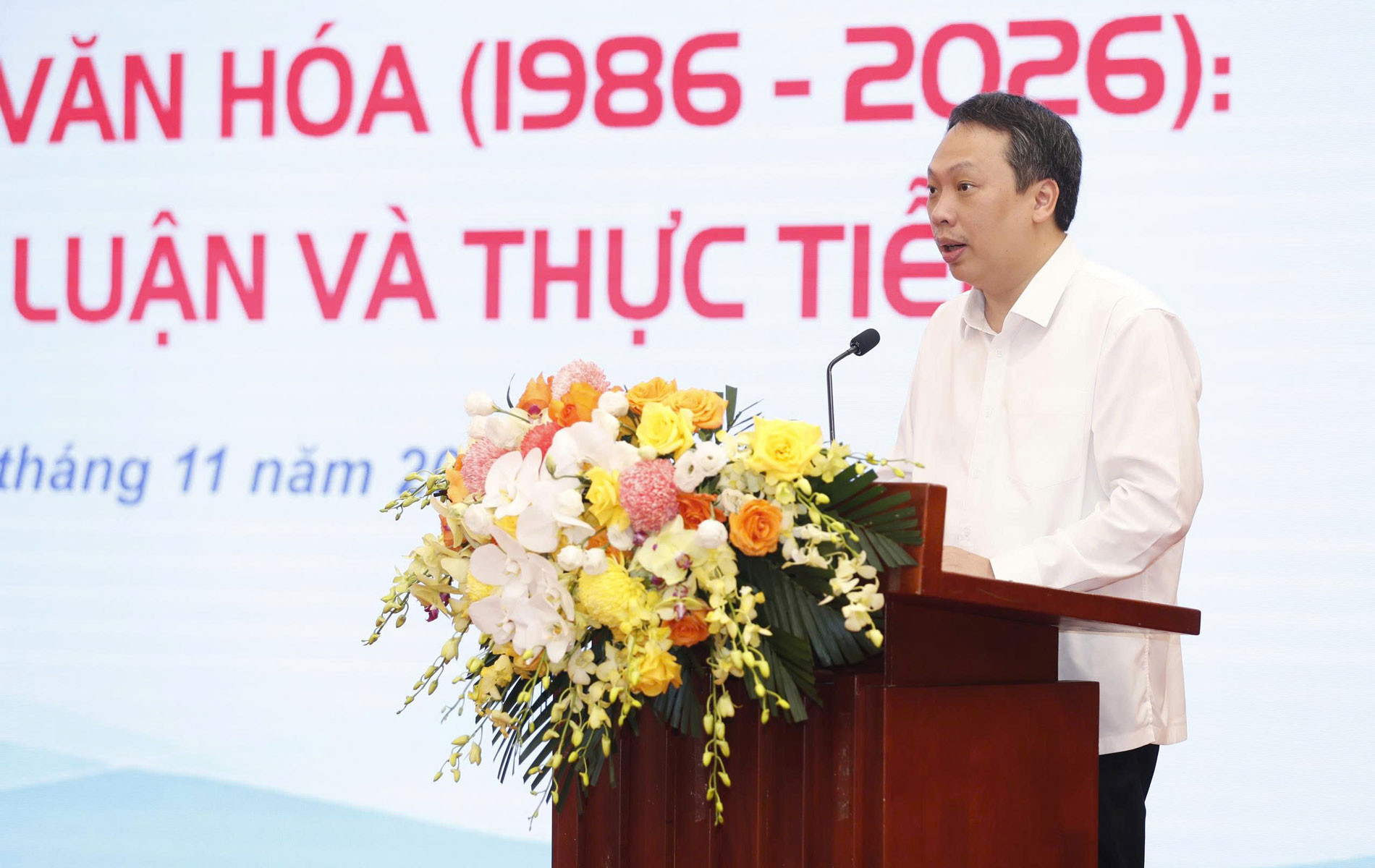
Deputy Minister of Culture, Sports and Tourism Nguyen Huy Dung said Vietnam had increasingly recognized culture as a spiritual foundation, an internal source of strength and a driver of national development.
Deputy Minister of Culture, Sports and Tourism Nguyen Huy Dung speaks at the conference.
He highlighted major policy milestones, including the fifth plenum resolution of the eighth Party Central Committee, Resolution 33 and the Politburo's Resolution 80.
Vietnam currently has more than 40,000 historical and cultural sites and nearly 70,000 inventoried intangible cultural heritage elements, while cultural industries contribute approximately 5% of GDP.
The commercial success of several Vietnamese films, which have generated hundreds of billions of dong in box-office revenue, demonstrates the potential to transform cultural resources into economic value and national soft power, Dung said.
However, he identified four major challenges hindering further development.
These include inadequate investment, fragmented policies and interagency coordination, unequal access to cultural activities, and emerging challenges associated with digital technologies, data, artificial intelligence and cross-border platforms.
The latter raise concerns about cultural identity, cultural sovereignty, intellectual property, copyright and related rights.
Hoang Ha, editor-in-chief of the Culture and Arts Magazine, called for a comprehensive assessment of achievements, shortcomings and lessons learned from four decades of cultural policy reform.
He identified three priorities: introducing mechanisms to attract investment, improving the capabilities of grassroots cultural officials under the two-tier local government model, and accelerating digital transformation alongside the development of digital cultural infrastructure.
Five priorities for a new cultural development model
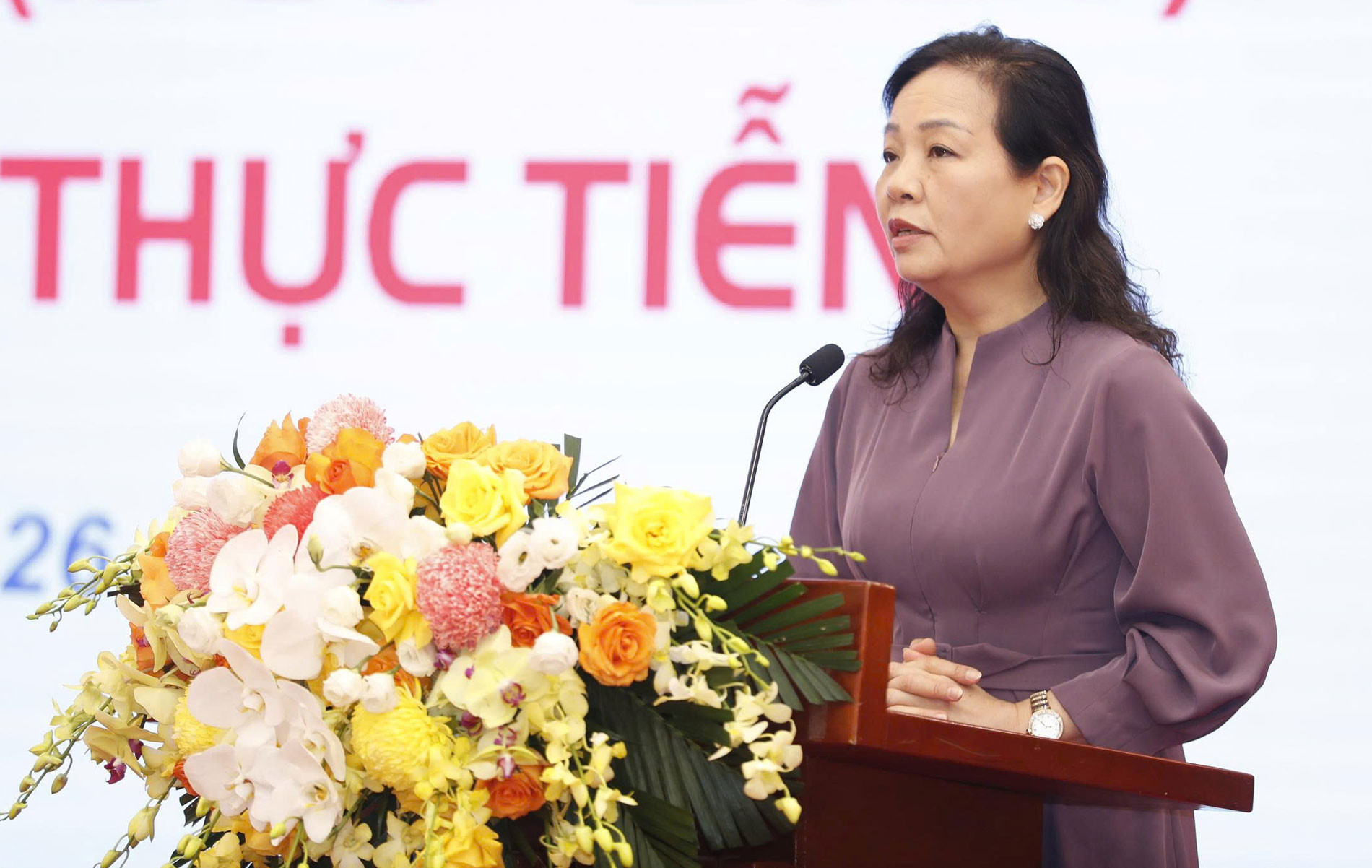
Associate Professor Bui Hoai Son, deputy head of the Party Central Committee's Commission for Information, Education and Mass Mobilization, outlined five priorities for reforming Vietnam's cultural development model.
Associate Professor Bui Hoai Son, deputy head of the Party Central Committee's Commission for Information, Education and Mass Mobilization.
Drawing on his observations of Moscow, Russia, where art is integrated into metro stations, architecture and public spaces, Son argued that culture should become an integral part of everyday life rather than remain confined to museums, galleries and theaters.
He said cultural development should be embedded in the country's overall development model instead of being treated as an addition after economic growth has been achieved.
This approach is consistent with Resolution 80-NQ/TW, which identifies culture as a pillar and a guiding force in national development.
His second priority was to transform the state's role from directly providing cultural services to creating an ecosystem that enables broader participation.
This would require expanding public-private partnerships under Resolution 28/2026/QH16 and ensuring that at least 2% of total state budget expenditure is allocated to culture in a meaningful and effective manner.
Third, cultural heritage should be preserved as a living resource capable of supporting creative industries, helping Vietnam achieve its target of increasing the sector's contribution to 7% of GDP by 2030.
Fourth, cultural development must embrace the digital environment through standardized heritage databases and stronger protection of cultural sovereignty online.
Finally, Son stressed that the ultimate measure of cultural policy should be improvements in quality of life, compassion and human happiness.
He referred to the message of Party General Secretary and President To Lam that economic prosperity should not come at the expense of cultural and moral values.
Film industry needs market-driven investment and distribution
Dr. Ngo Phuong Lan, chairwoman of the Vietnam Film Development Promotion Association, said cinema had substantial growth potential, ranking behind only music among cultural industries.
Dr. Ngo Phuong Lan, chairwoman of the Vietnam Film Development Promotion Association.
She cited the success of Mua do, produced by the People's Army Cinema, which generated more than VND700 billion (approximately $27.2 million) in box-office revenue.
However, many state-commissioned films continue to struggle commercially and are largely screened during holidays or commemorative events.
Lan proposed four groups of solutions to make publicly funded film production more responsive to market demand.
First, Vietnam should reform script investment and film commissioning mechanisms, placing greater emphasis on audience preferences, transparent producer selection and public-private partnerships.
She cited the 2015 film Toi thay hoa vang tren co xanh as a successful example of cooperation between public and private resources.
Second, public funding should be directed toward artistic films and debut projects by young filmmakers, which remain underserved by the commercial market.
Film distribution plans should also become a mandatory component of projects from the commissioning stage rather than being developed only after production.
Third, selection criteria should be made more transparent to allow qualified professional associations and non-state organizations to participate in production, promotion and copyright protection.
Fourth, international film promotion should focus on measurable outcomes, including expanding the overseas reach of Vietnamese cinema and attracting foreign productions to Vietnam.
Lan noted that the country had struggled to sustain the momentum generated by the 2016 production of Kong: Skull Island, which brought international attention to Vietnam's filming locations.
To address practical obstacles, the Vietnam Film Development Promotion Association has developed the Production Attraction Index (PAI), aimed at helping film crews navigate procedures and production costs while tax refund mechanisms under the Cinema Law remain difficult to implement.
The association has also developed a digital platform showcasing more than 1,000 filming locations nationwide to attract productions and stimulate tourism.
In addition, it has mobilized private and other non-state resources several times greater than its state budget allocation to sustain the annual Da Nang Asian Film Festival, strengthening the international profile of Vietnamese cinema.
Participants at the conference agreed that cultural policies can become effective drivers of development only when introduced at the right time, aligned with practical needs and designed to empower communities, businesses and professional associations to participate actively in cultural creation.
 Vietnamnet.vn

 Podcast