 Vietnamnet.vn

 Podcast



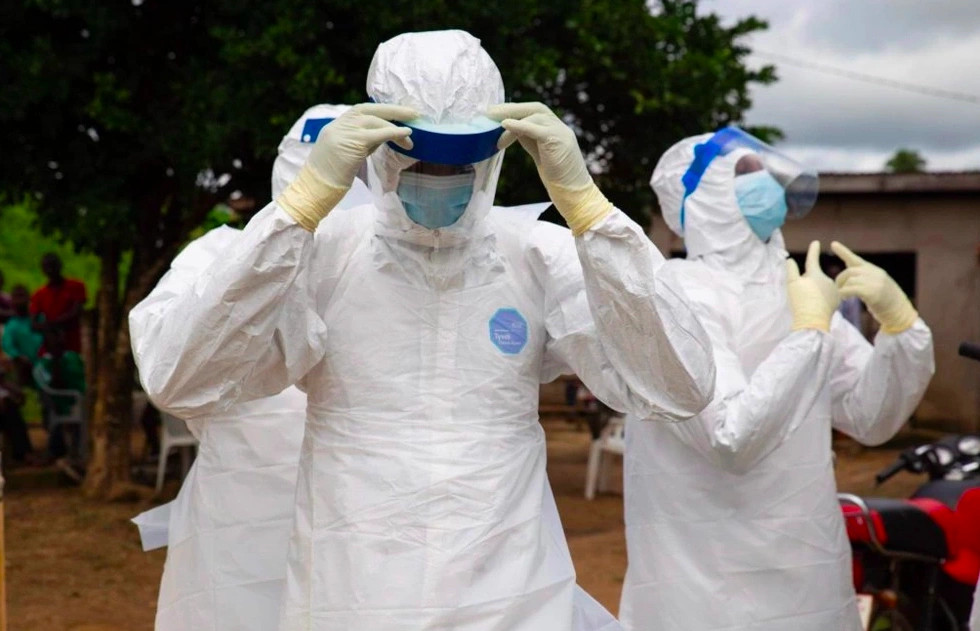
The warning was issued in an urgent directive signed by Deputy Health Minister Nguyen Thi Lien Huong and sent to provincial and municipal authorities, as well as regional Pasteur and epidemiology institutes, calling for stronger Ebola prevention and monitoring efforts.
Under the directive, local authorities have been instructed to enhance disease surveillance and quickly detect suspected Ebola cases at border gates, within communities, and in healthcare facilities in line with guidance from the Ministry of Health of Vietnam.
Authorities are also coordinating with immigration agencies to review passengers arriving from outbreak areas and advise them to self-monitor their health for 21 days. Individuals are encouraged to contact medical facilities immediately if they develop symptoms suspected to be linked to Ebola infection.
The ministry said any suspected Ebola cases must be isolated immediately, with biological samples sent to the National Institute of Hygiene and Epidemiology or the Pasteur Institute in Ho Chi Minh City for confirmatory testing.
Local governments have additionally been instructed to prepare outbreak response plans for border checkpoints and communities under different epidemic scenarios, while ensuring readiness of personnel, medical supplies, chemicals, equipment and vehicles in case infections emerge.
Regional Pasteur and epidemiology institutes were also ordered to review and reinforce rapid response teams to support provinces and cities if suspected or confirmed Ebola cases are detected.
Congo and Uganda outbreaks raise concerns
The World Health Organization has warned that Ebola outbreaks in the Democratic Republic of Congo and Uganda are becoming increasingly complicated.
After four healthcare workers died from Ebola infections in early May, Congo continued recording additional infections and fatalities. As of May 22, authorities had reported 750 suspected cases, including 177 deaths. The current outbreak marks the country’s 17th Ebola epidemic since 1976.
In Uganda, two imported Ebola cases linked to Congo were detected on May 15 and 16. Officials said the cases showed symptoms associated with the Bundibugyo strain, including one fatality, though no epidemiological link between the two patients has yet been established.
On May 17, the WHO declared the Ebola outbreaks caused by the Bundibugyo strain in Congo and Uganda a Public Health Emergency of International Concern (PHEIC).
Angela Pratt, WHO Representative in Vietnam, said the true scale of the outbreak was likely larger because of delayed detection and ongoing epidemiological investigations.
At present, the WHO assesses the risk of spread as very high at the national level in Congo and Uganda, high across the African region due to urban transmission, population mobility, instability and healthcare limitations, but low globally, including in Vietnam. The organization also emphasized that the outbreak does not currently constitute a global pandemic emergency.
Public urged to stay alert but avoid panic
Vietnamese health authorities stressed that the public should remain calm while maintaining vigilance, especially people traveling to or returning from outbreak regions such as Congo.
Residents were advised to avoid direct contact with suspected patients or bodily fluids, wash hands regularly, maintain personal hygiene and monitor their health after returning from affected areas.
“Anyone experiencing fever, fatigue or unusual symptoms after entering Vietnam from outbreak regions should seek medical attention early and clearly report their travel history for timely monitoring and response,” said Vo Hai Son.
Ebola primarily spreads through close and direct contact with blood, bodily fluids, or deceased patients infected with the disease. Health authorities noted that the risk of transmission remains relatively low if proper personal protective measures and infection control protocols are followed.
Vo Thu
.svg)
