 Vietnamnet.vn

 Podcast


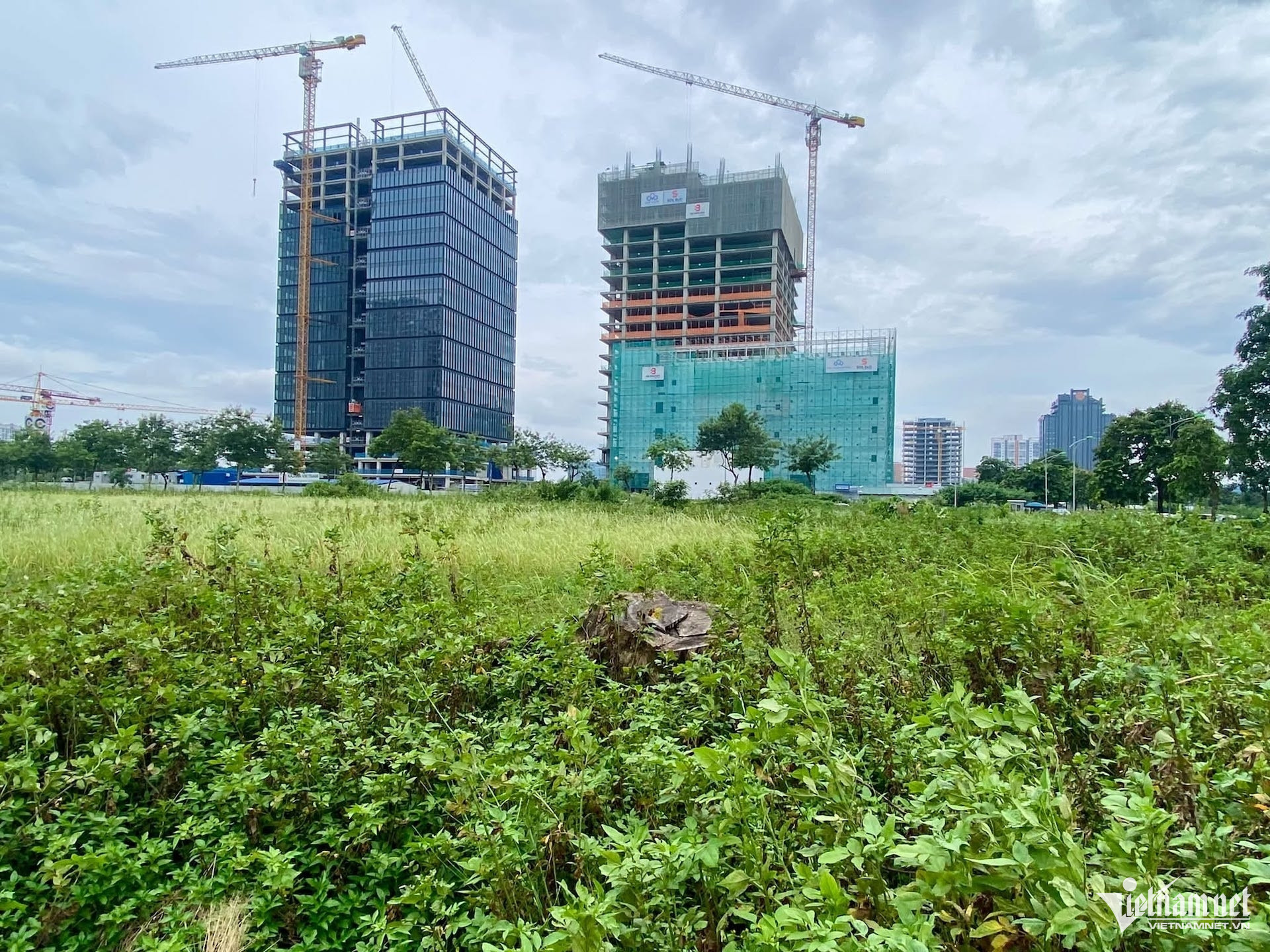
The draft Law Amending and Supplementing several articles of the Law on Non-Agricultural Land Use Tax proposes a 0.2 percent tax rate for idle or delayed-use land without cap limits. Setting an effective Vietnam vacant land-tax rate remains central to debates during the second session of the 16th National Assembly in November 2026.
Prof. Dang Hung Vo, former Deputy Minister of Natural Resources and Environment, argued that taxing idle land must target urban non-agricultural land where values remain high, rather than applying broad-spectrum taxation across all land categories.
He said agricultural land left fallow for one or two years to restore soil fertility should be exempt. Policy focus should prioritize non-agricultural urban land due to substantial property valuations, ensuring administrative tax collection revenues outweigh operational collection costs.
“Taxation should concentrate primarily on urban non-agricultural land without over-expanding target groups, as administrative collection costs could otherwise exceed total revenue,” he noted.
Regarding identification criteria for idle plots, Prof. Vo proposed that residential land left unconstructed after three years should be classified as vacant.
Furthermore, land featuring constructed assets that remain unused must also be deemed vacant. For example, if a house is completed but unoccupied, the underlying land plot should be treated as idle land.
He emphasized that tax policies must target land equity values rather than surface asset valuations.
Regarding tax rates, Vo criticized the proposed 0.2 percent tax rate as excessively low, failing to compel landowners to develop idle properties.
He cited data showing land prices surged between 2014 and 2024. For instance, social housing prices rose from VND11 million to VND33 million per square meter, a 200 percent increase over a decade, averaging 20 percent annually.
Even after adjusting calculations for inflation and speculative market bubbles, land value growth averages roughly 10 percent annually. Consequently, a 0.2 percent tax rate remains negligible compared to annual land value gains.
“With land values appreciating 10 percent annually, a 0.2 percent tax rate is like a ‘mosquito bite on wood’. Such low rates fail to solve speculation while wasting administrative tax collection costs,” he said.
Vo proposed establishing a Vietnam vacant land tax rate of at least 2 percent in the law, with progressive roadmap increases over subsequent years.
Distinguishing delayed-project land from idle non-agricultural plots
Dr. Pham Viet Thuan, Director of the HCMC Institute of Economics Environmental and Resources, emphasized the need to distinguish between delayed-project land and idle non-agricultural plots. These categories differ in legal nature, responsible parties, and regulatory remedies. Conflating them in tax policy risks creating regulatory unfairness and operational inefficiency.
According to Dr. Thuan, delayed-project land refers to plots allocated or leased by the state to developers for commercial, urban, or industrial projects that remain unbuilt or partially constructed. Delays often stem from legal hurdles such as land clearance, planning approvals, or developer financial distress.
For projects stalled by pending government planning approvals or incomplete site clearance, imposing punitive vacancy taxes unfairly penalizes developers.
Conversely, if developers intentionally delay due to financial incapacity, the strongest legal remedy remains land revocation and reassignment to capable investors, rather than imposing fines that allow them to hold land indefinitely.
Current laws already provide sanctions for delayed projects, including 24-month extensions requiring supplementary land-use fees, administrative fines, or land revocation under investment and land laws.
Conversely, idle non-agricultural land owned by individuals or small-scale investors presents a different challenge. These certified, infrastructure-ready plots are intentionally left vacant by owners awaiting price appreciation. This behavior stems primarily from speculative land hoarding by investors with idle capital.
For this group, taxation serves as a necessary regulatory tool. Currently, landowners pay low annual non-agricultural land use taxes between 0.03 and 0.15 percent. Therefore, a higher tax rate should be considered for non-agricultural land deliberately left unused, such as the proposed 0.2 percent or more.
Appropriate tax pressure encourages owners to bring real estate into productive use or transfer assets to end-users, expanding market supply and curbing speculative pressure.
However, Dr. Thuan cautioned that applying vacancy taxes to agricultural land requires extreme care. Many agricultural plots lie fallow due to natural disasters, saltwater intrusion, drought, or low crop prices causing operational losses. Taxing farmers under such adverse conditions imposes undue financial burdens.
Finally, policy design must prevent double taxation. Land buyers already pay personal income taxes, registration fees, and annual non-agricultural land use taxes. Introducing an additional Vietnam vacant land tax rate without precise targeting rules risks creating arbitrary over-taxation.
Nguyen Le

