 Vietnamnet.vn

 Podcast



Low-yield rice fields in Tho Chau Hamlet, Binh Minh Commune in Vietnam’s central province of Nghe An are being transformed into ponds for raising black apple snails, creating a 25-hectare farming area involving 72 households and generating more than VND20 billion ($758,000) in annual revenue.
From rice fields to a $19,000 snail harvest
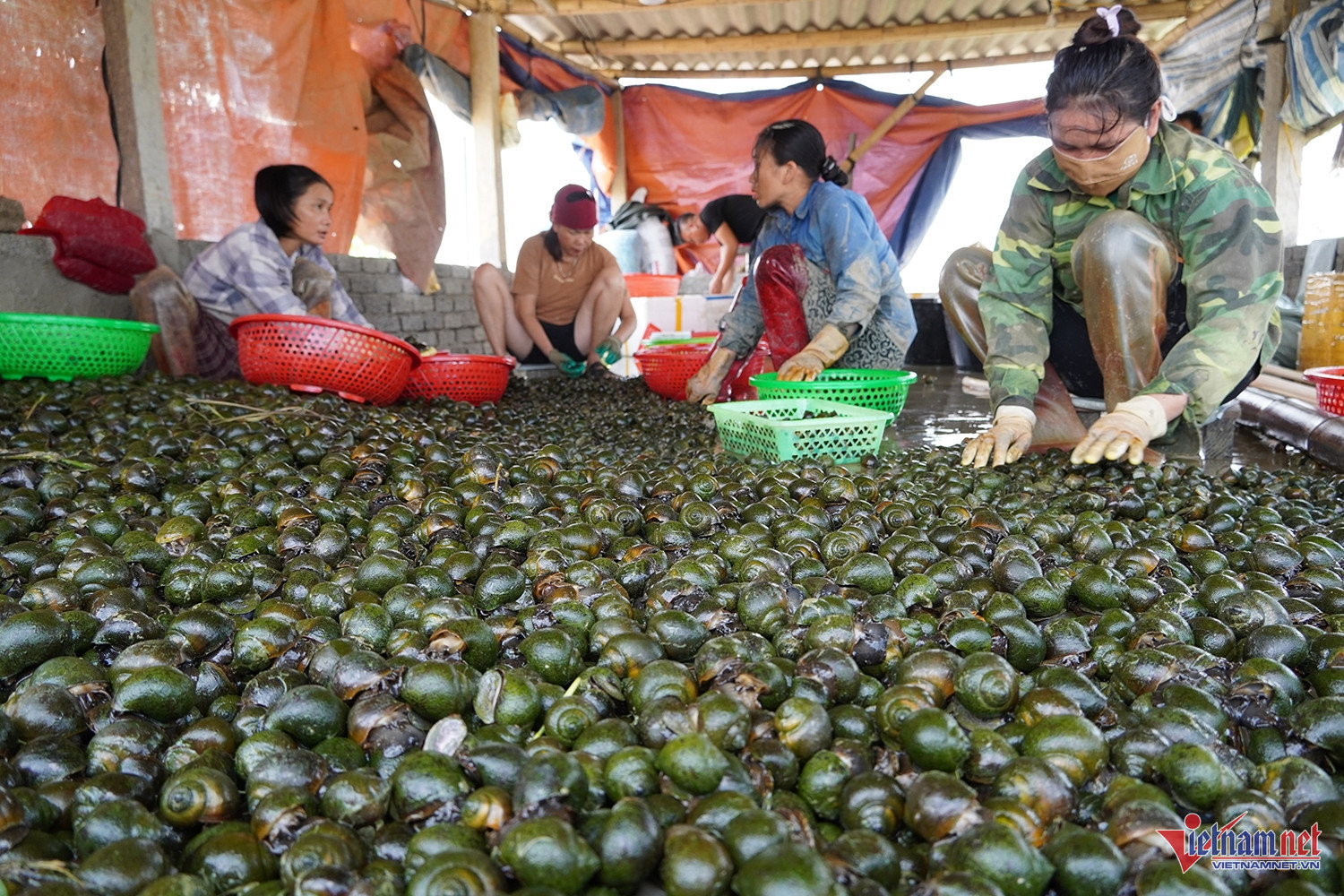
In early September 2026, harvest season was in full swing in Tho Chau, which locals have dubbed the area’s “capital” of black apple snail farming.
Farmers waded into ponds to collect the snails before bringing them ashore for sorting and packing into foam boxes. Traders from different parts of the country traveled directly to the hamlet to buy the harvest.
Nguyen Dinh Vuong, 37, is among the farmers who have recently switched to snail farming. His family started the operation in late 2025 on six sao of farmland, a traditional Vietnamese unit of land measurement.
Vuong invested about VND200 million ($7,580) to convert his rice fields into ponds, each covering 140-180 square meters, and built a shelter where the snails could be sorted after harvesting. He bought snail eggs from southern provinces, hatched them himself and raised the young snails as breeding stock.
According to Vuong, the land was previously low-lying and difficult to cultivate with rice. After local authorities allowed farmers to switch production models, his family decided to turn the fields into snail ponds.
“In our first crop, we harvested 11 tons of snails, generating around VND500 million ($19,000) in revenue,” Vuong said. “After expenses, we made a profit of about VND100 million ($3,790). We also basically recovered our initial investment after that first crop.”
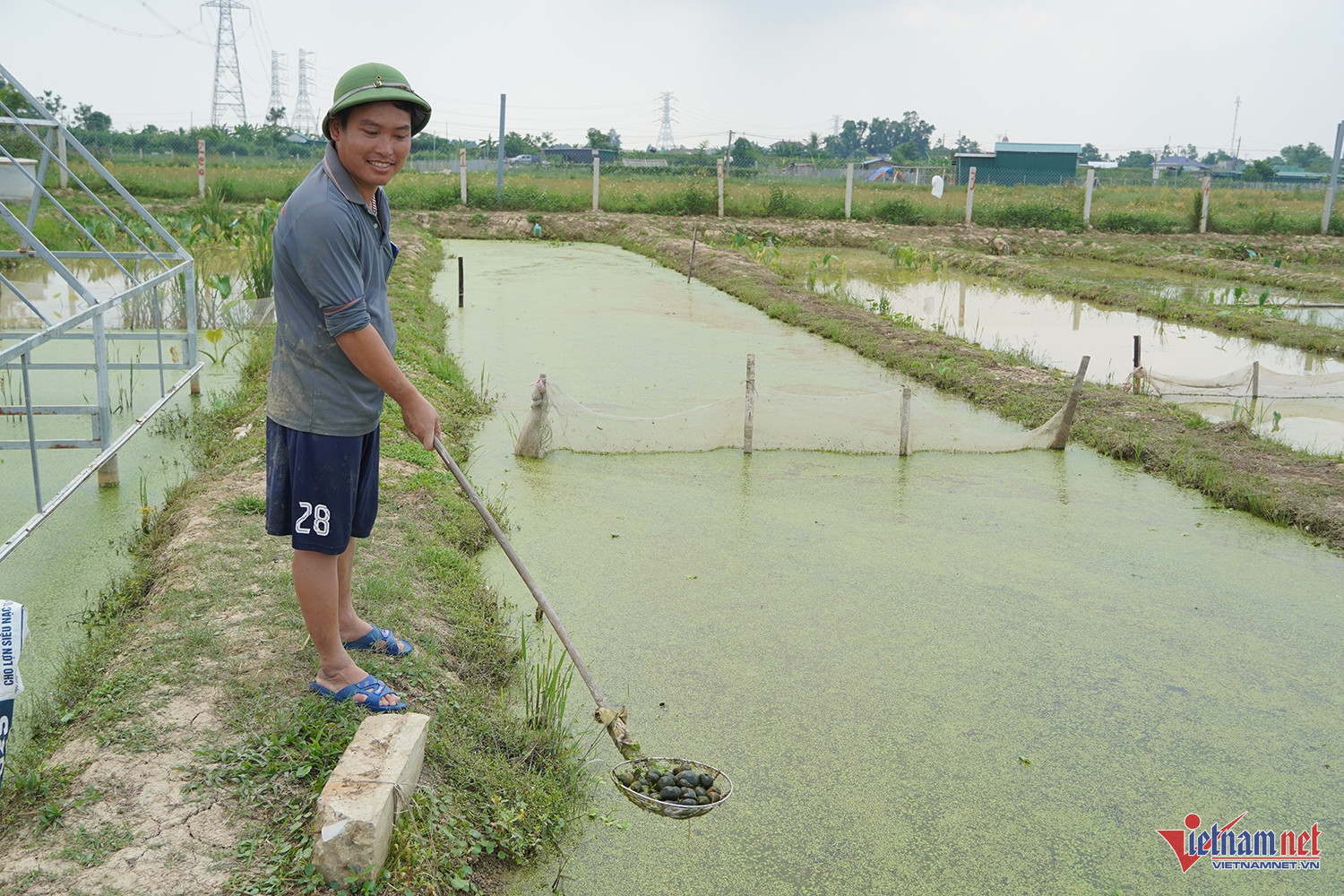
For the snails to thrive, Vuong said ponds need a reliable water supply that allows water to be regularly replenished and drained.
An appropriate stocking density is around 300 snails per square meter. They are fed mainly vegetables, aquatic plants and fruit, helping keep input costs relatively low.
With a growing cycle of around 2.5 months, farmers can raise two to three batches a year, depending on weather and water availability.
Snails weighing around 30 to a kilogram currently sell for approximately VND63,000 ($2.39) per kilogram. Those at 30-50 per kilogram fetch around VND53,000 ($2.01), while smaller snails at 50-80 per kilogram sell for about VND30,000 ($1.14).
Black apple snails are particularly prolific breeders, earning them a reputation among farmers as “super breeders.”
After buying eggs and hatching them to produce stock for his first crop, Vuong plans to retain adult breeding snails so his farm can produce its own eggs for subsequent batches.
The approach will give his family greater control over its supply of young snails, reduce the cost of purchasing stock and improve the farm’s overall efficiency.
Village targets 1,000 tons of snails a year
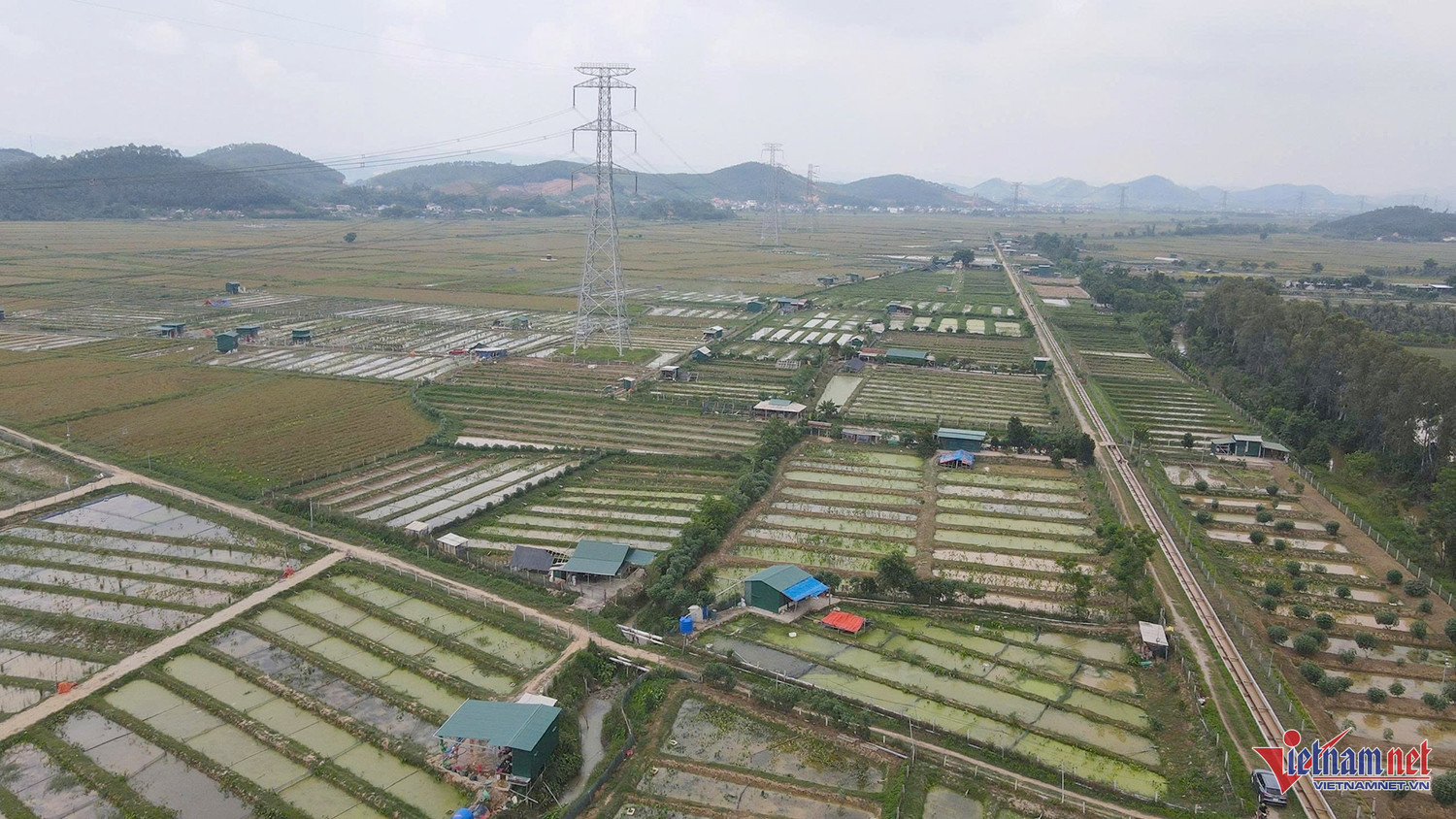
From just a few pioneering households, black apple snail farming has gradually developed into a commercial agricultural activity in Tho Chau. The area now has 72 participating households farming a combined 25 hectares.
In July, the Binh Minh Black Apple Snail Farming, Processing and Trading Cooperative was established to connect local households in production and product distribution.
Le Van Giang, the cooperative’s director, was the first to introduce the farming model to Tho Chau in 2017.
After visiting northern provinces and learning about snail farming from a friend, Giang bought breeding stock and tested the model on one hectare of land. His first crop produced seven tons.
Seeing that the snails were well suited to local conditions and could generate attractive returns, other farmers began approaching Giang to learn from his experience.
Poorly performing rice fields were gradually converted into ponds, eventually creating the concentrated production area seen today.
According to Giang, at current purchase prices, farmers in the area generate an estimated VND20 billion ($758,000) in combined annual revenue from snail farming. After expenses, their total profit is estimated at more than VND10 billion ($379,000).
One of the key factors determining the model’s success is water.
Black apple snails require clean water that can be regularly replenished and drained, meaning not every rice field is suitable for conversion.
Local farmers contributed about VND1 billion ($37,900) to build a one-kilometer canal bringing water from the Dao River into the farming area.
The snails are sold well beyond Nghe An.
Trader Tran Anh Dung, 38, from northern Phu Tho Province, said he buys around two tons of snails a day in Tho Chau during peak harvest periods.
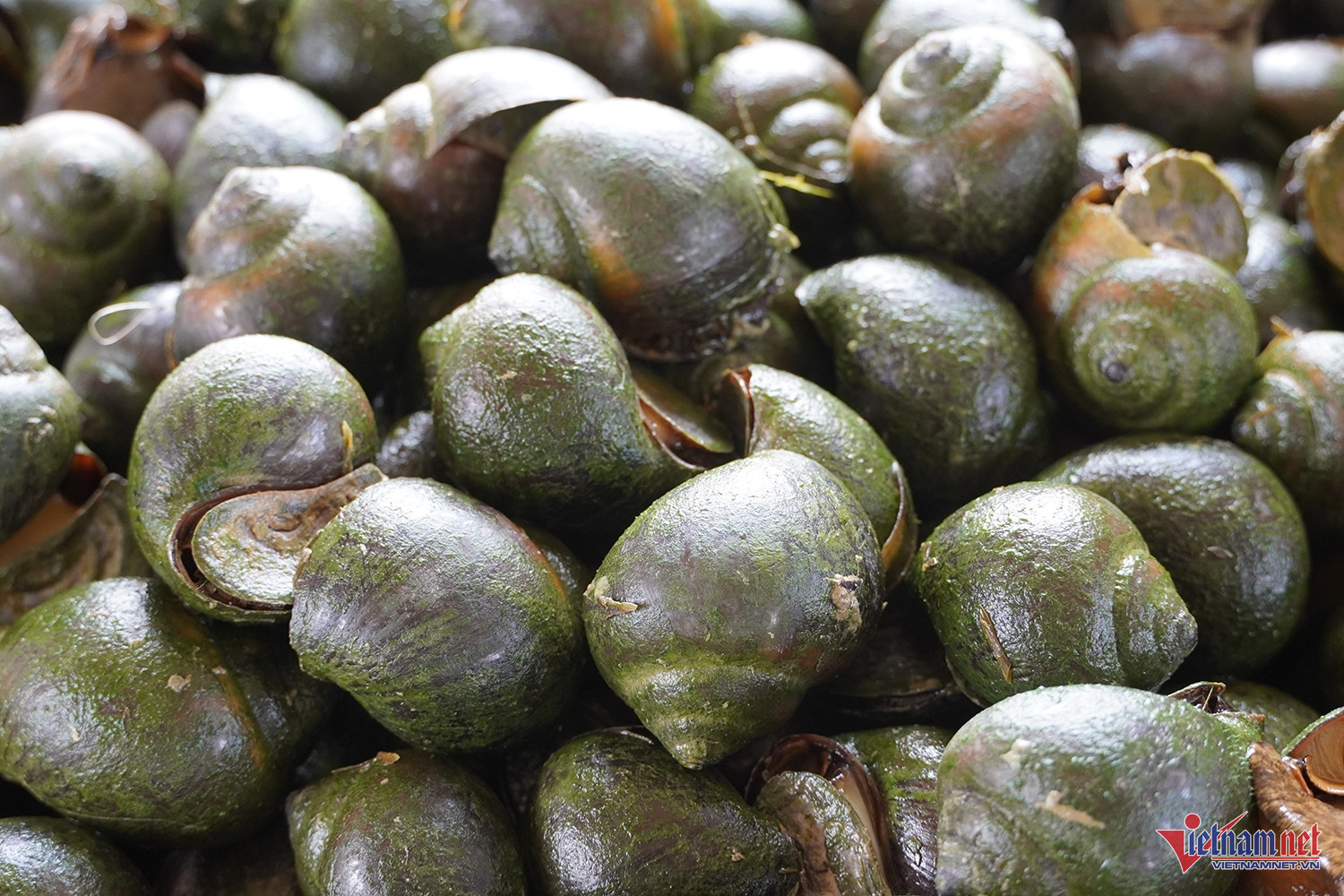
“The snails here are large and plump, and the market likes them,” Dung said. “After buying them, we take them to wholesale markets, restaurants and eateries in Hanoi and Hai Phong.”
As the farming model expands, Binh Minh Commune has developed a plan for 2026-2028 aimed at applying technical advances to black apple snail farming, controlling environmental conditions, strengthening links between production and distribution, and building a local brand.
Vu Trong Quang, chairman of the commune’s Farmers’ Association, said local authorities plan to gradually bring the production process under tighter control, covering everything from breeding-stock quality and feed to farming techniques, water conditions and product distribution.
“The plan aims to raise black apple snail output to more than 1,000 tons a year while improving product quality and the economic value generated for local residents,” Quang said.
Tran Tuyen
.svg)
