 Vietnamnet.vn

 Podcast



Vietnam’s Ministry of Finance has proposed allowing household businesses and companies with annual revenue of up to VND10 billion ($380,000) to pay tax as a percentage of revenue without having to account for expenses, as policymakers seek to ease compliance and support private-sector growth.
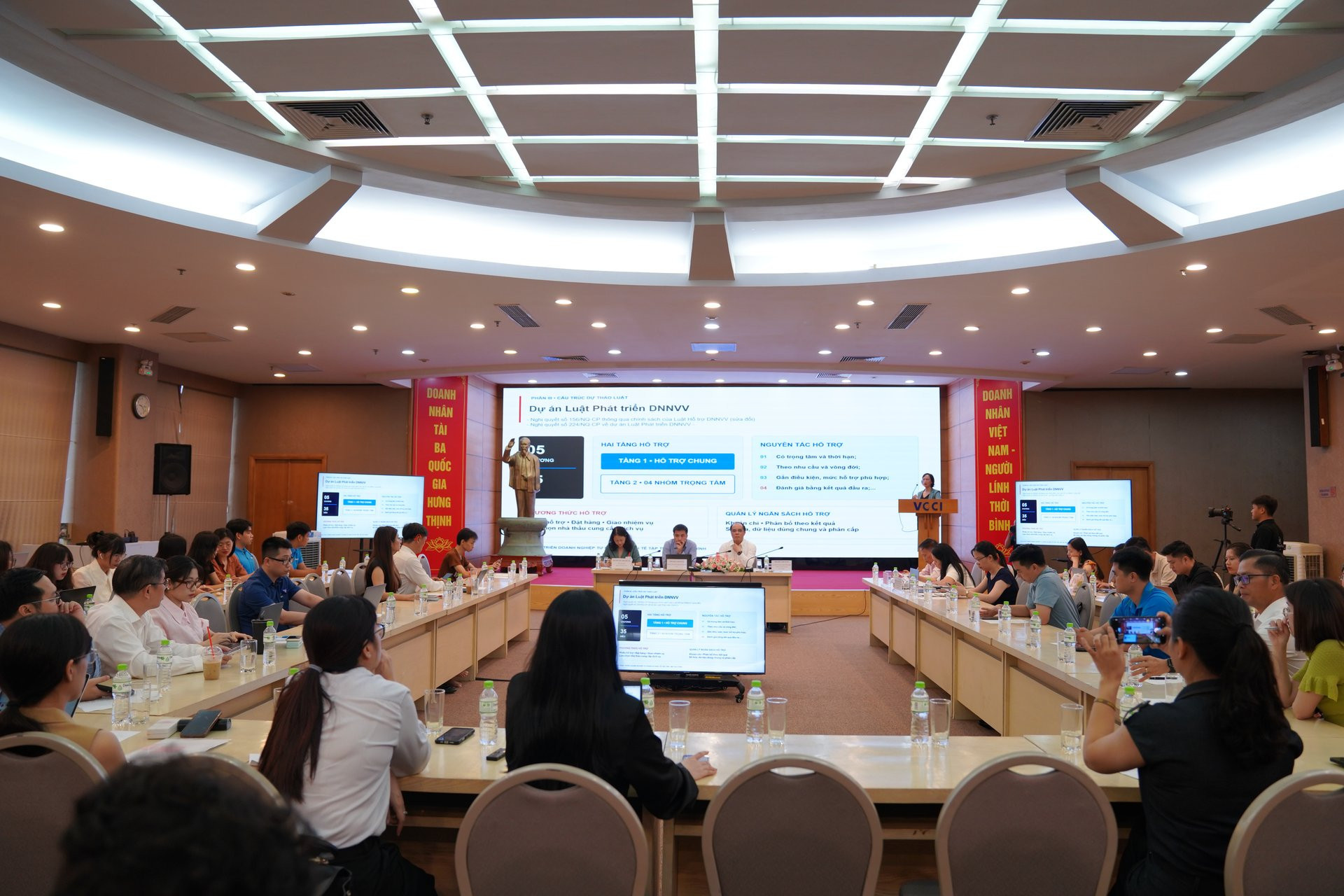
The proposal was discussed at the “Household Businesses & Growth Drivers” workshop organized by the Vietnam Chamber of Commerce and Industry (VCCI) in Hanoi on Aug. 21.
The event brought together representatives from the Ministry of Finance’s Agency for Private Enterprise and Collective Economy Development and Department of Tax, Fee and Charge Policy Management and Supervision, the Vietnam Tax Consultants’ Association (VTCA), economic and institutional experts, and representatives of the household business community to discuss the policy roadmap for 2026-2027.
Macroeconomic policy: From market transparency to creating resources for growth
Vietnam has seen notable changes in its approach to policymaking in 2026, with efforts to improve regulatory effectiveness increasingly being pursued alongside the need to preserve and expand room for private-sector development.
Against that backdrop, the government’s proposal to cut income tax by 30% in 2026-2027 for household and individual businesses and companies with annual revenue of up to VND10 billion ($380,000) illustrates how fiscal policy is increasingly being used as a tool to support growth.
The measure would not only reduce businesses’ immediate tax obligations but also allow them to retain more resources for production and commercial activities.
Cao Thi Thanh Lan, a representative of the Ministry of Finance’s Department of Tax, Fee and Charge Policy Management and Supervision, said one important change was the sharp increase in the annual revenue threshold below which businesses are not required to pay tax.
“An important change is that the tax-exempt revenue threshold has been raised significantly within a short period, from VND100 million ($3,800) a year under the previous method to VND1 billion ($38,000) a year from 2026,” Lan said.
“This level was considered with the aim of balancing management requirements and fairness with the goal of encouraging the household business sector to develop, while gradually creating conditions for businesses with sufficient capacity to transition into enterprises.”
Implementation gaps and compliance costs
Lan acknowledged that the revenue threshold is not the only issue facing household businesses.
As they move toward new management and tax declaration methods, many continue to encounter difficulties in fulfilling tax and accounting obligations, handling invoices and adapting to new requirements.
Nguyen Thi Thu Ha, deputy secretary-general of the Vietnam Tax Consultants’ Association, said the association fully supported the proposed 30% reduction in personal and corporate income taxes currently under discussion at the National Assembly.
However, the association considers the measure a temporary form of support and argues that, over the longer term, the policy framework should continue to be refined to create more meaningful incentives for household businesses.
Among its recommendations, the association said the revenue threshold for applying income-based taxation should continue to be reviewed and aligned with criteria used for microenterprises.
It also called for a reasonable transition mechanism rather than abruptly applying new rules based solely on the tax year, while avoiding overlapping obligations for e-commerce activities.
The association further recommended a “soft” transition period in which guidance and opportunities to correct mistakes would take precedence over penalties. Appropriate support or relief measures should also be studied to help household businesses cover additional compliance costs arising during the transition.
For household businesses with annual revenue exceeding VND1 billion ($38,000), it proposed applying a value-added tax exemption to the first VND1 billion of revenue, similar to the personal income tax exemption. Under such an approach, only revenue above the threshold would be taxed, reducing the financial “shock” as businesses expand.
During the workshop discussion, sector-specific regulations directly affecting retail outlets were also raised as a practical test of the quality of policy design and implementation.
One issue highlighted by household businesses was a proposal to restrict the display of tobacco products at retail outlets under draft amendments to the Law on Prevention and Control of Tobacco Harms.
Beyond the scope of the proposed regulation, household businesses raised concerns about how much time they would have to adapt to new requirements.
For measures such as restrictions on tobacco displays, businesses said they would prefer a reasonable transition period of around 18-24 months before full enforcement. Such a period, they argued, would reduce the risk of violations occurring before retailers fully understand or have time to adjust to the new rules. They also called for detailed guidance on compliant product displays.
Dau Anh Tuan, deputy secretary-general and head of the VCCI Legal Department, acknowledged these difficulties, noting that tobacco is a distinctive product category and that a display ban could leave household businesses uncertain about how to communicate available products to customers.
Experts said restrictions on product displays could affect millions of retail points across Vietnam, most of them small grocery stores, household businesses, stalls and traditional retailers.
Given the characteristics of Vietnam’s retail network, they said a meaningful transition period of 18-24 months should be considered.
Experts at the workshop broadly agreed that an effective policy system must maintain regulatory discipline while also nurturing resources and confidence, enabling business owners to continue investing, expanding and contributing to Vietnam’s broader growth objectives.
Lan Anh
.svg)
