 Vietnamnet.vn

 Podcast



Defeated by every Southeast Asian rival
Vietnam’s women’s volleyball team first raised concerns with a comprehensive 3-0 defeat to Thailand in the final of the first leg of the 2026 SEA V.Cup. After an emotional 3-2 victory over Thailand to claim the title last year, coach Nguyen Tuan Kiet’s side had been expected to mount a strong title defense, but those hopes went unfulfilled.
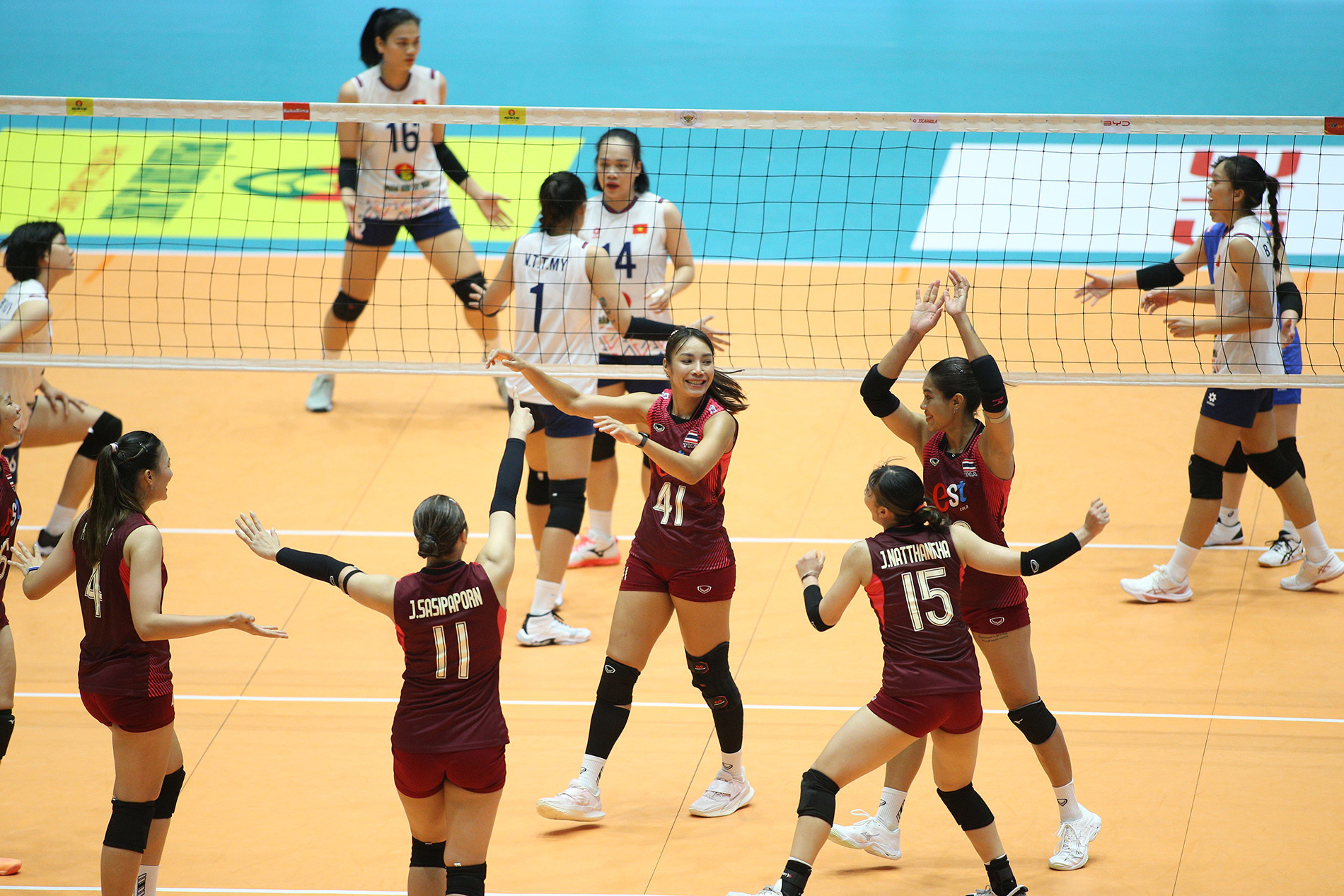
More concerning was the fact that Thailand brought its second-string squad to Vietnam, yet still secured a comfortable victory over the hosts.
In the second leg, Vietnam continued to struggle, producing unusually lackluster performances against Indonesia and the Philippines, two teams they had consistently been rated above.
Against Indonesia in the opening match, Thanh Thuy and her teammates appeared to be heading for victory after taking the first two sets. What followed, however, was a collapse few could have anticipated: coach Nguyen Ngoc Hoa’s team lost the next three sets to suffer a 3-2 comeback defeat.
It was Vietnam’s first such loss to Indonesia in seven years, since the 2019 ASEAN Grand Prix. The defeat cost Vietnam 4.7 points in the International Volleyball Federation (FIVB) world rankings, dropping the team to 28th.
Vietnam again made a promising start against the Philippines, winning the opening set before losing three in succession to fall 3-1. It was the team’s first defeat to the Philippines in seven years and pushed Vietnam out of the world’s top 30.
With performances deteriorating and confidence shaken by consecutive defeats to lower-rated opponents, Vietnam had little prospect of producing an upset against host Thailand in its final match of the tournament.
That proved to be the case.
Vietnam stayed close to Thailand early in the first set, but the hosts gradually pulled away with aggressive serving that destabilized Vietnam’s reception. Thanh Thuy, Quynh Huong and Luu Thi Hue helped narrow the gap, but Thailand remained composed at the decisive moments to take the set 25-20.
The second set was entirely dominated by Thailand. The hosts repeatedly exploited Vietnam’s problems in first-ball reception while combining an effective block with a varied attack. Pimpichaya and Sasipaporn scored consistently as Thailand cruised to a 25-10 win.
Thailand remained firmly in control in the third set despite making several changes to its lineup. Strong blocking from Thatdao and Ajcharaporn caused persistent problems for Vietnam’s attackers. Thanh Thuy remained a rare bright spot with several quality plays, but could not turn the match around.
Thailand won the third set 25-15 to complete a 3-0 victory and secure both titles at the 2026 SEA V.Cup. Vietnam finished fourth in the second leg after losing all three matches.
What went wrong?
In the space of just one week, Vietnam lost to all three of its Southeast Asian rivals: Indonesia, the Philippines and Thailand.
One factor behind the poor performances was the significant reshuffling of the squad between the first and second legs. Key players including Vi Thi Nhu Quynh, Nhu Anh and Le Thanh Thuy were rested at home, with several younger players or athletes struggling for form brought in as replacements.
Coach Ngoc Hoa also appeared to be under considerable pressure in her first spell in charge of the national team.
Former national player Thanh Tuyen was forthright in her assessment of Vietnam’s defeats.
“At its current level, Vietnam’s women’s volleyball team simply does not have enough squad depth to field several different lineups and still expect all of them to maintain the same quality and results,” she said. “Team cohesion cannot be created in just a few weeks or months. It has to be built through a long process of training, competing and experiencing matches together. Changing too many players, positions and ways of operating means we have to accept gaps in cohesion.”
According to Thanh Tuyen, experimentation must have a clear purpose and roadmap, and above all, the interests of the national team must come first.
“When results do not meet expectations, please do not rush to blame the coaches and players taking part in this tournament. Everyone called up to the national team is trying their best when given an opportunity. Young players in particular need time to adapt to their teammates, tactics and the pressure of representing the national team. We cannot expect them to become a complete unit after just a few matches.
But the national team represents Vietnamese volleyball on the international stage. Behind that jersey lies the pride of millions of supporters. We can win or lose. We can experiment, and we can make mistakes. But calculations or personal interests should never be placed above the interests of the national team,” Thanh Tuyen stressed.
Dai Nam
.svg)
