 Vietnamnet.vn

 Podcast



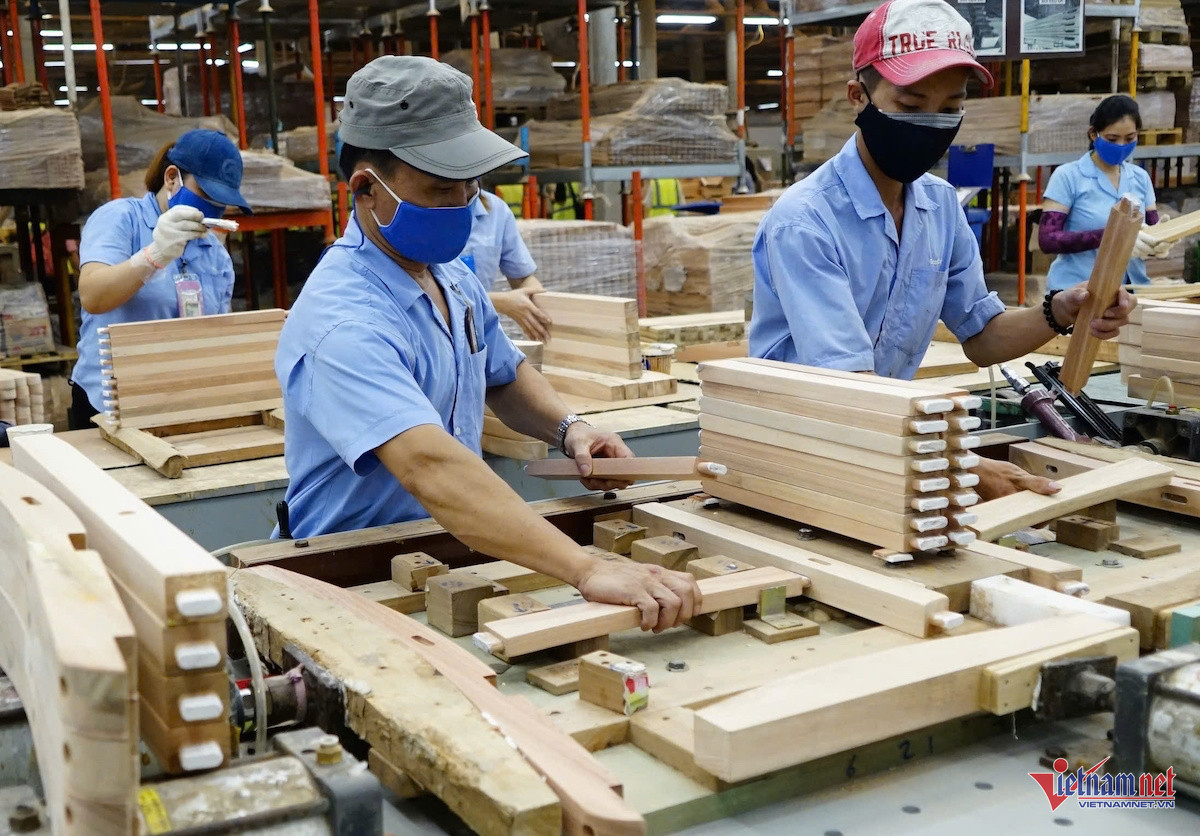
Le Duc Nghia, Chair of the Board of Directors of An Cuong Wood JSC, said at the 5th Term Congress (2025–2030) of the Vietnam Timber and Forest Product Association (Vifores) held on December 11 in HCMC that direct meetings help businesses gain a clearer perspective on the industry and find suitable solutions for their development process.
Nghia noted that the strength of domestic wood enterprises lies in the teams of highly skilled workers and the ability to create products that are competitive with foreign goods. However, management capacity remains a major challenge.
The representative of An Cuong Wood Company said that 10 years ago, when the company reached a revenue of about VND1,000 billion, he was confused because of a lack of management experience. This prompted him to restructure the business and invest $1 million in digital transformation.
"Digital transformation has helped An Cuong operate leanly and control the entire process over the past 5 years," Nghia said.
Vu Quang Huy, General Director of Tekcom JSC, said the company currently has revenue of about $100 million per year, equivalent to VND2,500 billion, with two main product lines: plywood and kitchen cabinets. However, the wood and plywood industry is changing rapidly, facing pressure from tariffs, and requirements on origin of goods and transparency.
According to Huy, wood enterprises are facing major challenges, including increasing input costs while selling prices decrease, legal risks related to the origin of raw materials, and the risk of supply chain disruption when many enterprises have to import raw materials themselves.
To overcome these difficulties, Huy proposed strengthening the transparency of origin; promoting cooperation and specialization; and transforming the supply chain and value chain.
"If linkage is strengthened, the Vietnamese business supply chain can compete with the supply chains of Thailand or China," Huy emphasized.
With many concerns about the development of the carpentry profession, Nguyen Thi En, Standing Vice Chairwoman of the Van Diem Craft Village Association, said that traditional carpentry villages are facing many difficulties.
Regarding the preservation of traditional carpentry value, handicraft products, which bear strong cultural imprints, are under great pressure from industrially manufactured goods and changing consumer tastes.
In addition, many traditional designs are not suitable for modern customer needs, making it difficult for products to access the market, especially for youth and high-end markets. Although handicrafts are highly valued in Europe, the ability of craft villages to meet international market standards is still limited.
In addition, digital transformation and e-commerce pose challenges for craft villages. According to En, most producing households still operate under the family model, lacking linkages and a systematic promotional strategy, while the current market is changing very quickly and demands a higher degree of digitization.
For sustainable development, En believes that craft villages need to be reorganized into a larger scale model linking production households to enhance competitiveness.
"Management agencies as well as Vifores need to provide stronger support in trade promotion, product advertising, design improvement, and digital transformation training for production households. Only by maintaining traditional values and adapting to new market demands can carpentry villages develop in long-term," En said.
Nguyen Quoc Tri, Deputy Minister of Agriculture and Environment (MAE), praised Vifores’ contributions to the wood processing and export industry.
To enable businesses to meet new standards, especially requirements for legal wood and technical barriers related to origin and emissions, he said that the association needs to innovate its mindset, operating methods, and accelerate the implementation of plans.
For the 2025–2030 term, the Deputy Minister proposed that Vifores focus on several key tasks, including: continuing to support businesses in the industry to overcome difficulties; participating more deeply in policy formulation; promoting market expansion; and encouraging businesses to develop high-value products.
Along with the goal of shaping a transparent, environmentally friendly wood production and processing industry that meets the increasingly high demands of the international market, an MAE representative proposed that Vifores enhance its role in building the legal wood supply chain.
Viforest Congress elected the Executive Committee for the 5th Term (2025–2030) consisting of 31 members. Nguyen Quoc Khanh, Chairman of the Board of Directors of AA Architecture Construction Joint Stock Company, was elected to the position of Association Chairman.
Anh Phuong
.svg)
