 Vietnamnet.vn

 Podcast



Vietnam's banking sector recorded a strong performance in 2025, with a string of major institutions reporting robust profits, stable asset growth, and well-controlled non-performing loan (NPL) ratios. However, Sacombank was a notable outlier, delivering only 52% of its planned pre-tax profit due to a significant increase in credit risk provisioning.
Banks report healthy profits
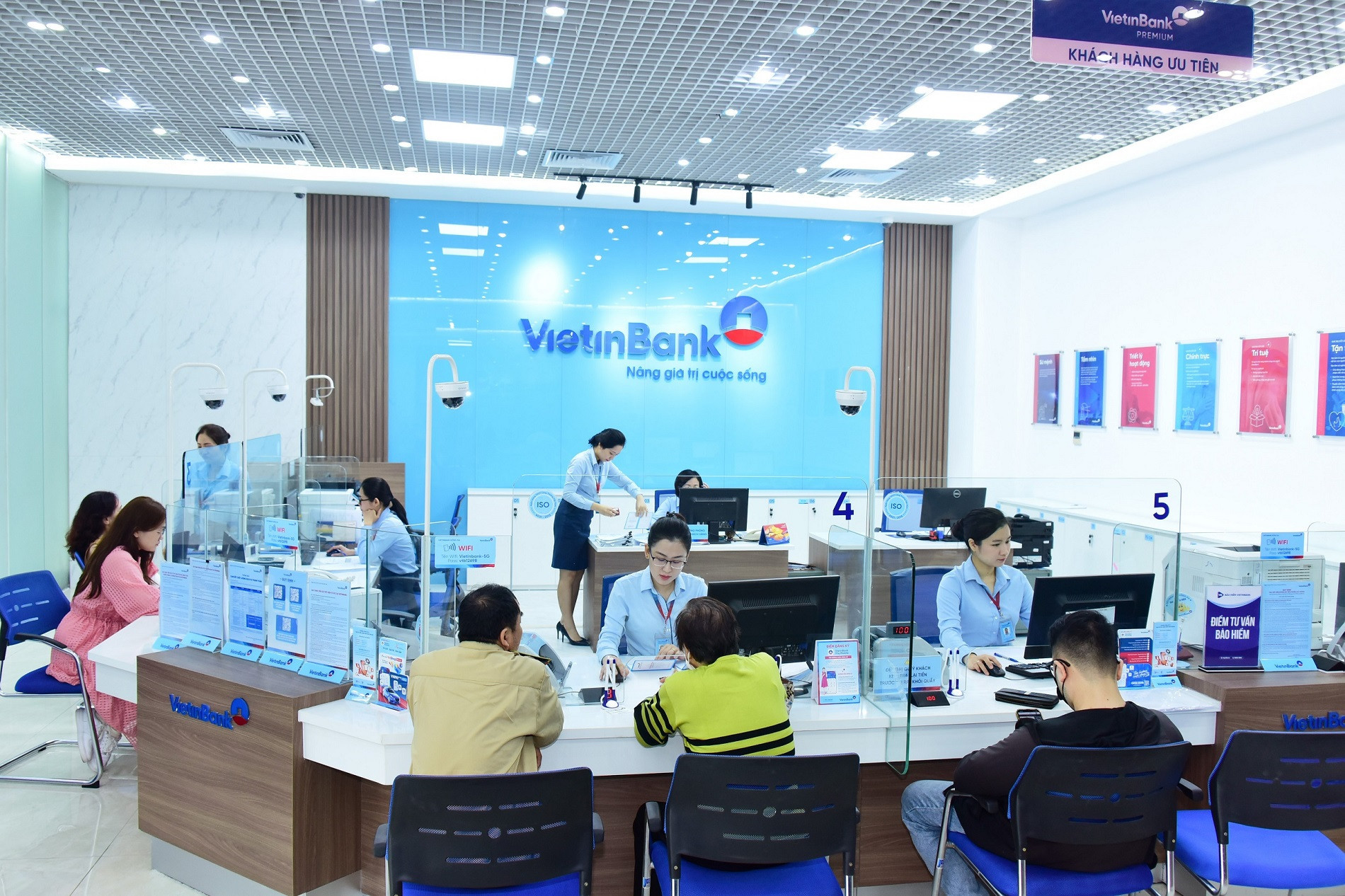
At VietinBank’s annual business review conference, bank executives announced positive outcomes for 2025. Total assets increased by approximately 18%, and credit growth reached 16% year-on-year, driven by proactive preferential loan programs aimed at fueling economic demand. Loans to priority sectors made up over 30% of the bank’s total credit portfolio.
Customer deposits grew 12% over the previous year, with a notable surge in low-cost current account savings accounts (CASA), which surpassed 25% of total deposits by the end of 2025 - an impressive feat amid a challenging market.
VietinBank also succeeded in diversifying income streams, with non-interest revenue contributing nearly 27% of total operating income. The bank kept its NPL ratio at 1%, aligning with its internal targets. Its standalone pre-tax profit posted solid year-on-year growth and fully met shareholder expectations.
Meanwhile, Vietcombank reported a 20% rise in total assets, reaching VND 2.48 quadrillion (approximately USD 101 billion), while credit outstanding grew over 15% to VND 1.66 quadrillion. Customer deposits stood at VND 1.68 quadrillion, up more than 10%. Vietcombank maintained an NPL ratio below 1% - the lowest among Vietnam’s large-scale financial institutions.
BIDV also posted strong results, with consolidated pre-tax profit exceeding VND 36 trillion (about USD 1.47 billion). All major business indicators met or surpassed targets. BIDV now leads the sector in total assets, which rose 20% to over VND 3.25 quadrillion (USD 133 billion).
Agribank announced a 14% increase in total assets and a 14.8% rise in credit to the economy. The bank reported an NPL ratio under 1.2% - its best result in years - and pre-tax profit of roughly VND 30 trillion (USD 1.22 billion), exceeding the target set by the State Bank of Vietnam. The bank also invested VND 700 billion (USD 28.4 million) into community welfare and disaster recovery efforts - one of the largest social contributions among Vietnamese banks in a single year.
MB Bank disclosed preliminary results showing pre-tax profit for 2025 at around VND 33.7 trillion (USD 1.35 billion), up 17% from 2024. MB’s total assets reached nearly VND 1.5 quadrillion (USD 61.2 billion), a 33% increase, far surpassing the year’s goals. Customer deposits hit VND 1.05 quadrillion (USD 42.8 billion).
Sacombank underperforms
In stark contrast to these gains, Sacombank reported a consolidated pre-tax profit of only VND 7.63 trillion (USD 311 million), meeting just 52% of its 2025 target. This was a sharp drop from its VND 12.7 trillion (USD 518 million) profit in 2024.
According to the bank, the disappointing result was primarily due to a substantial rise in credit risk provisions, which amounted to more than VND 11.3 trillion (USD 460 million) for the year.
Despite this setback, Sacombank’s total assets grew nearly 23% year-on-year to VND 918 trillion (USD 37.5 billion). Customer deposits rose 24% to VND 837 trillion, while total credit grew 16% to VND 626 trillion. The bank also recovered and resolved outstanding bad debts totaling more than VND 16 trillion (USD 653 million).
Outlook for 2026: credit growth and cautious optimism
The banking sector has now marked its second consecutive year of improving asset quality, with low bad debt ratios becoming more widespread. Looking forward, analysts expect 2026 to be a year of strong expansion for Vietnamese banks.
This optimistic forecast is underpinned by macroeconomic tailwinds, including a targeted GDP growth rate of over 10% for 2026 and a monetary policy stance that remains accommodative. Both corporate and household demand for credit are expected to rise significantly.
In preparation for the new year, the State Bank of Vietnam (SBV) has issued a directive to all credit institutions outlining the principles for allocating 2026 credit growth quotas. The central bank forecasts overall system-wide credit growth of approximately 15%, with room for adjustment depending on market conditions.
SBV also stressed the need for tighter controls on credit flows into risk-prone sectors, particularly real estate, and clarified that individual bank quotas would be based on 2024 performance ratings under Circular 52/2018 (as amended), adjusted by a standardized coefficient.
As Vietnam’s financial system prepares for a new phase of accelerated growth, the divergent trajectories of institutions like Sacombank serve as a reminder of the critical importance of prudent risk management - even in a rising market.
Tuan Nguyen
.svg)
