 Vietnamnet.vn

 Podcast


Preserving Buddhist scholarship through publishing
There was a time when publishing a Buddhist research article in Vietnam involved far more than finding an author and editing the content.
Journal editors also had to arrange for handwritten manuscripts to be typed. Equipment was scarce, funding was limited, and there were relatively few researchers in the field. Every published issue represented a considerable collective effort.
Among those who helped sustain that work was Most Venerable Thich Gia Quang, now Vice Chairman of the Executive Council of the Vietnam Buddhist Sangha (VBS), Head of its Central Information and Communications Committee, and Editor-in-Chief of the Journal of Buddhist Studies.
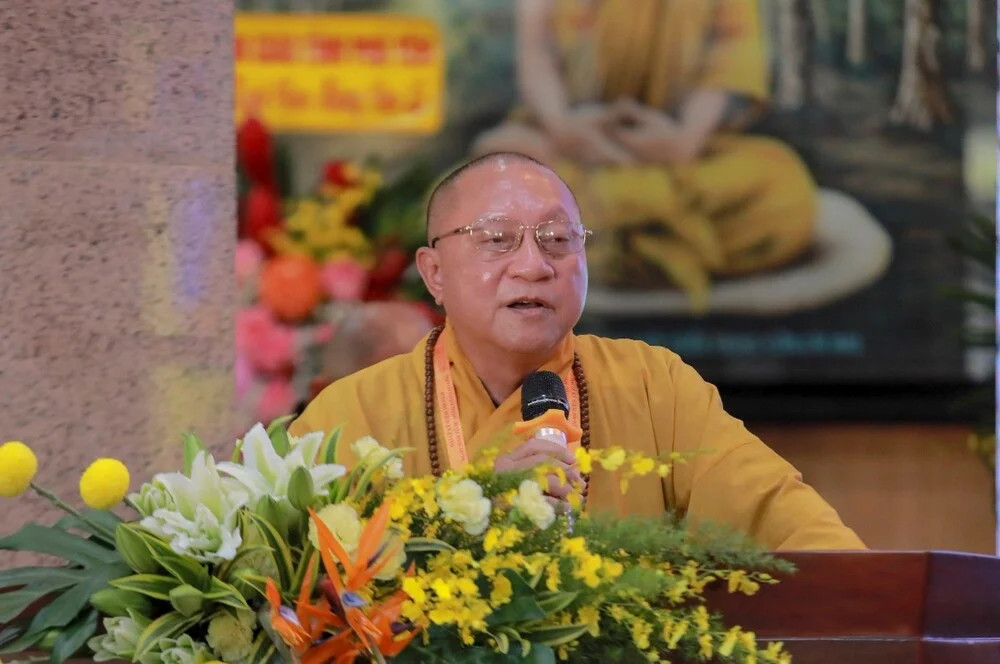
During his earlier years as a Buddhist monk, while working at the Hanoi branch of the Vietnam Institute of Buddhist Studies, he collaborated with colleagues to complete the procedures necessary to publish an internal Buddhist research bulletin.
Over time, that modest publication developed into a specialized academic journal where scholars, monks, nuns and others interested in Buddhism could exchange ideas on history, philosophy, Buddhist thought, culture and religious life.
Holding a doctorate in religious studies and serving as Director of the Hanoi branch of the Vietnam Institute of Buddhist Studies, Most Venerable Thich Gia Quang has devoted particular attention to exploring Buddhism's historical, cultural and ethical values, as well as its longstanding relationship with the Vietnamese nation.
For him, research should not be confined to academic circles.
Knowledge drawn from Buddhist scriptures, historical studies and religious practice should also provide a foundation for spreading Buddhist teachings, education and cultural life.
That mission has become increasingly important as religious information circulates more widely on the internet, where not every interpretation is accurate.
Rigorous scholarship, he believes, can help clarify historical questions, religious practices and cultural values that are sometimes misunderstood.
It also provides a reliable foundation for journalists and communicators to deliver accurate, thoughtful and well-researched information to the public.
Buddhist journalism should serve the wider community
While research helps illuminate Buddhist teachings and values, communication offers a way to bring them to a broader audience.
As Head of the VBS Central Information and Communications Committee, Most Venerable Thich Gia Quang has spent years encouraging new approaches to presenting Vietnamese Buddhism to the public.
His focus extends beyond religious ceremonies and events to stories about culture, ethics and social responsibility.
According to the monk, meaningful communication must be grounded in genuine activities and tangible contributions made by the Buddhist Sangha and its followers.
Reporting should do more than describe rituals or religious gatherings. It should show how Buddhist values are expressed through actions in everyday life.
This approach has shaped his interest in subjects closely connected to people's lives, including education, environmental protection, social welfare, culture and national solidarity.
He has also emphasized the role of journalism in helping society better understand religious beliefs and practices while highlighting positive contributions by Buddhist monks, nuns and lay followers.
"Buddhist communication is not only intended for the community of believers. It can also become a channel for nurturing cultural and ethical values throughout society," he said.
As social media, artificial intelligence and digital platforms transform the way people access information, Most Venerable Thich Gia Quang believes Buddhist communication must adapt.
New formats and technologies can help religious organizations reach wider audiences and communicate more effectively.
However, innovation must be accompanied by editorial standards, social responsibility and the use of authoritative information.
In an increasingly crowded information environment, accuracy and depth become even more important.
Bringing Buddhist compassion to Vietnam's mountain communities
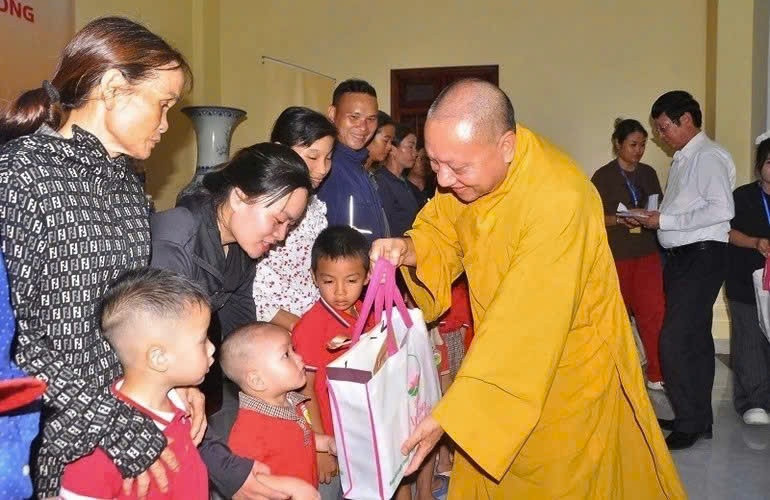
Beyond academic research and communications, Most Venerable Thich Gia Quang has maintained a longstanding commitment to Buddhist activities in Vietnam's northern mountainous provinces.
In 2005, he became Head of the provincial Executive Board of the Vietnam Buddhist Sangha in Cao Bang.
He subsequently oversaw Buddhist activities in Ha Giang and Tuyen Quang over several terms and currently serves as Head of the VBS Executive Board in Tuyen Quang province.
These mountainous areas are home to substantial ethnic minority populations, with challenging terrain and communities that continue to face socioeconomic difficulties.
According to Most Venerable Thich Gia Quang, Buddhism's presence in these regions should extend beyond meeting people's religious needs.
It should also strengthen ties between the Buddhist Sangha and local communities, respect traditional cultures and contribute to improving people's living conditions.
Working with provincial Buddhist organizations, monks, nuns, lay followers and benefactors, he has helped organize numerous programs supporting low-income households, disadvantaged students and residents of remote communities.
Since 2022, charitable activities that he has mobilized and coordinated in Cao Bang, Ha Giang and Tuyen Quang have distributed approximately 8,000 gift packages annually.
Each package is valued at around VND600,000 ($23), with total annual funding approaching VND5 billion ($190,000).
The assistance has gone beyond meeting immediate needs.
Most Venerable Thich Gia Quang has also supported projects intended to provide lasting benefits, including bridges, culverts and boarding schools in mountainous areas, alongside free medical examination programs.
Since 2014, examination counseling and support activities for students in Tuyen Quang have been maintained regularly, helping young people prepare for important exams and encouraging them to continue their education.
In remote mountain communities, a bridge that makes travel easier, a school better equipped to welcome students, or timely support before an examination can make a meaningful difference to families facing financial hardship.
Such initiatives reflect his belief that Buddhist compassion should be translated into practical responsibility toward society.
Recognition for decades of Buddhist and social contributions
Most Venerable Thich Gia Quang's contributions have received several national honors.
He was awarded the Great National Unity Order in 2011, the Third-Class Independence Order in 2015 and the Third-Class Labor Order in 2020.
In 2026, he was nominated for the Second-Class Labor Order in recognition of his continued contributions.
"These awards recognize the responsibilities entrusted to me and also motivate me to continue serving Buddhism and the nation," he said.
From preserving Buddhist scholarship through carefully edited publications to bringing practical assistance to disadvantaged communities, his work reflects a consistent commitment to connecting religious knowledge with the needs of everyday life.
Hong Phuc

