 Vietnamnet.vn

 Podcast



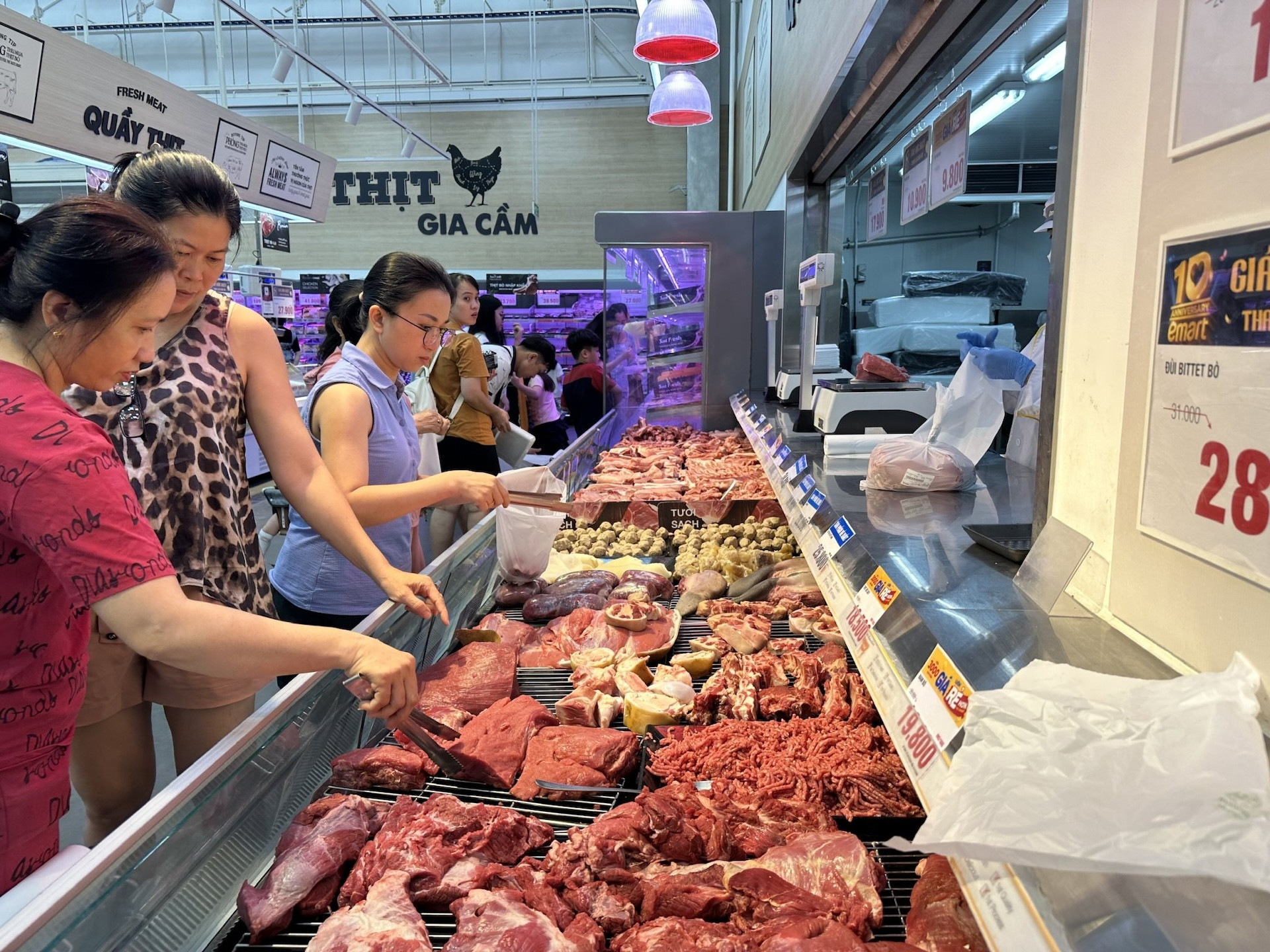
While browsing a large supermarket in HCMC, Kim Anh, who lives in Tan Son Nhat Ward, noticed that the pork on display came not only from domestic suppliers but also from Brazil and Russia. Pork from these two countries was significantly more competitively priced than domestic products.
Kim Anh said pork hocks, a domestic product from a major brand, cost VND99,000 per kilogram, while imported pork from Germany cost just VND49,000 per kilogram.
Similarly, high-quality pork belly sells for around VND160,000–180,000 per kilogram at traditional markets. In supermarkets, products from domestic brands cost VND198,000–250,000 per kilogram. By contrast, frozen pork imported from Russia or Brazil costs only VND119,000–130,000 per kilogram.
“Regardless of quality, a quick calculation shows that buying imported pork can ease some of the pressure on household budgets,” Kim Anh said.
Like Kim Anh, many consumers have noticed that imported pork is available not only in supermarkets and retail outlets but also on the shelves of shops and at wholesale markets. Its prices are attractive when purchased in large quantities.
Data from customs authorities show that Vietnam spent $1.95 billion importing various types of meat in 2025. In just the first eight months of 2026, however, the figure had already reached $1.91 billion, covering 658,700 tons of meat and meat products. This represented increases of 5.6 percent in volume and 26.3 percent in value year on year.
Imports of fresh, chilled or frozen pork alone totaled 124,100 tons, worth nearly $213 million. Volume rose 18.8 percent year on year, while value fell 23.8 percent. The average import price of fresh, chilled or frozen pork in the first eight months of 2026 was $1,712 per ton, down 36 percent from the same period in 2025.
On average, imported pork cost only around VND45,000 per kilogram. That was less than half the average retail price at traditional markets in HCMC, where pork sold for at least VND100,000 per kilogram.
Finding markets for imported pork
Phan Van Dung, deputy general director of Vissan, a big supplier of meat, said that although imported meat had a considerable price advantage, this did not mean frozen pork could replace fresh, unrefrigerated pork in Vietnamese daily meals.
According to Dung, 75 percent of Vietnamese people consume pork every day and continue to prefer fresh meat. They typically choose the cut they want and have it sliced on the spot, or buy pre-packed pork from supermarkets. Among regular pork consumers, only 5–10 percent choose frozen pork for their daily meals.
Because of these consumption habits, sales of frozen pork have not grown correspondingly, even though it is currently cheaper than fresh pork.
“Imported pork does not compete directly with fresh pork in every market segment. Apart from retail sales to the 5–10 percent of consumers who use it for daily meals, most imported pork is currently used as a processing ingredient,” Dung said.
Nguyen Kim Doan, vice chair of the Dong Nai Livestock Association, said imported pork entering Vietnam mainly goes to industrial kitchens serving workers and businesses, or to facilities that need raw materials for processed products. These channels prioritize cost efficiency while maintaining acceptable quality, with products subject to strict controls upon entering Vietnam.
Doan added that the growing presence of imported pork in the domestic market was not due to a shortage of local supply but was primarily driven by bilateral international trade.
According to Doan, free trade agreements (FTAs) currently in effect, together with tariff-reduction schedules, have enabled certain meat products from markets with advantages in production scale and costs to enter Vietnam at competitive prices.
Major meat exporters such as Brazil, Spain and India continue to view Vietnam as a promising export market.
Doan expressed concern that imported pork was putting pressure on domestic livestock farmers. In Dong Nai, many households have suspended operations and refrained from restocking their farms because of rising production costs, the risk of disease outbreaks and falling live hog prices.
Live hog prices in southern Vietnam currently hover around VND53,000–55,000 per kilogram, while some imported pork products sell for VND40,000–43,000 per kilogram.
The Dong Nai Livestock Association's leadership has urged the government to introduce measures soon to improve the competitiveness of domestic livestock farming.
Thu Ha
.svg)
