 Vietnamnet.vn

 Podcast



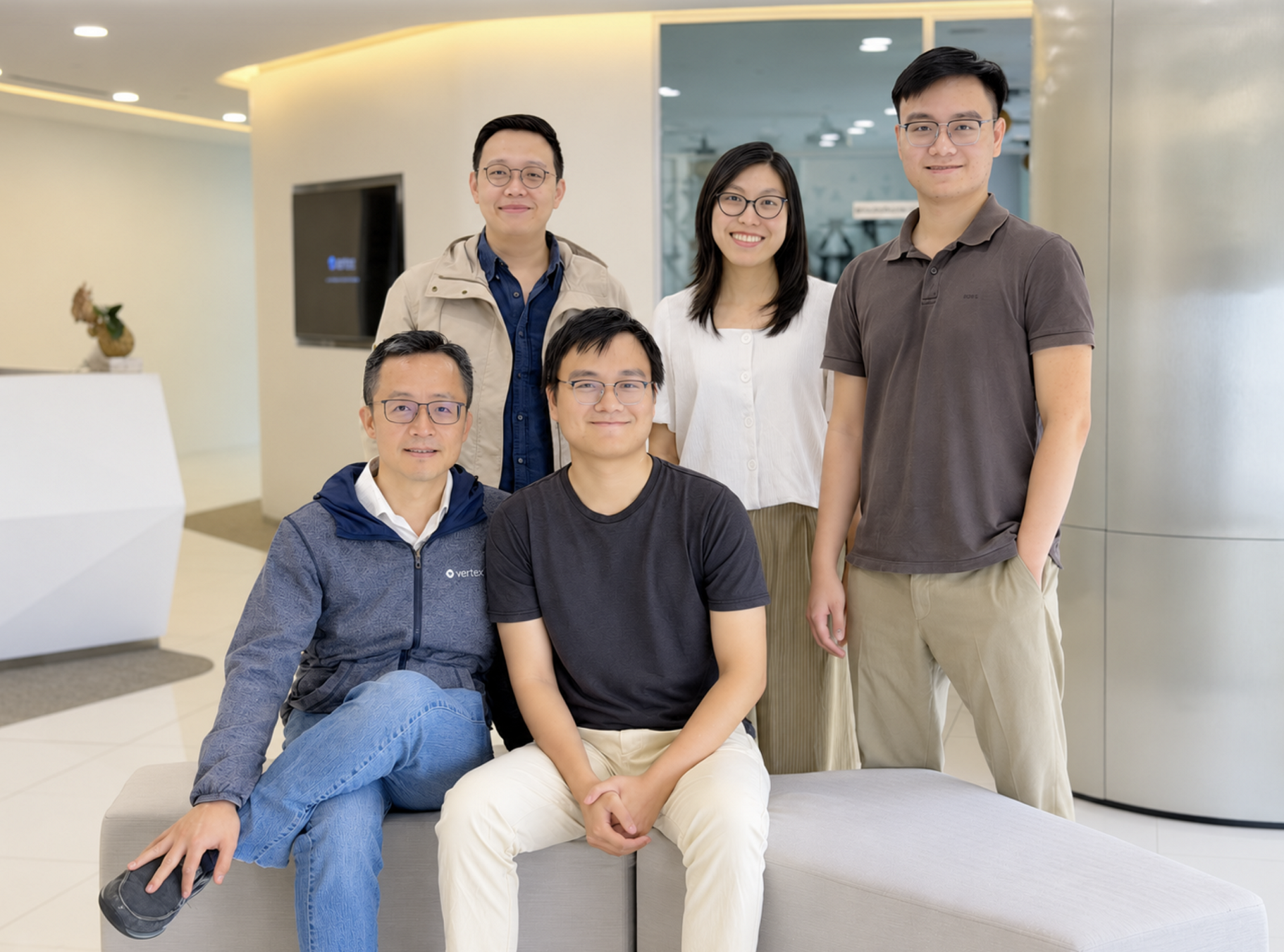
Founded in 2025 by John Phan, Henry Phan and Nhi Nguyen, Drylab AI operates in Singapore and San Francisco, the United States.
The startup recently secured $3 million in seed funding in a round led by Vertex Ventures Southeast Asia & India, with participation from strategic partner PatSnap.
According to the company, the fresh capital will be used to expand its enterprise sales operations, recruit more engineers and biology specialists, and obtain security and compliance certifications required by major research organizations.
The funding comes as artificial intelligence is rapidly transforming scientific research.
A study published in "Nature" in early 2026, analyzing 41.3 million scientific papers, found that researchers using AI published 3.02 times as many papers as those who did not. However, the research also revealed a paradox: the overall range of scientific topics being explored was narrowing.
One challenge is that many research institutions rely on general-purpose, ready-made AI models provided by third parties.
While these systems may offer powerful computational capabilities, they do not automatically retain knowledge about failed experiments, laboratory-specific analytical thresholds, validation methods or scientific expertise accumulated over years of research.
When projects end or researchers leave, valuable institutional knowledge can be lost.
According to Nhi Nguyen, Drylab's co-founder and Chief Science Officer (CSO), even specialized AI tools for protein design, pathology or single-cell analysis can remain essentially off-the-shelf solutions.
Such systems are not necessarily built around the specific goals, experimental frameworks, historical data, limitations and scientific judgment of individual laboratories.
Rather than developing another conventional chatbot, Drylab is building an agentic AI platform around what it calls "Self-Improving Intelligence."
The platform allows scientists to ask questions in natural language, after which AI agents can independently plan tasks, write code and execute advanced data analyses within the users' own workspaces.
Importantly, the system is designed to retain human oversight rather than eliminate it.
Scientists can review and validate critical decisions, including data thresholds and computational methods, at designated checkpoints.
The platform also records the research process, from initial hypotheses and unsuccessful experiments to optimized solutions, creating a project knowledge base that can be reused in future work.
Drylab demonstrated its autonomous research capabilities in the 2026 OpenADMET PXR Challenge.
Its system operated for seven consecutive days without manual intervention, ranking ninth among nearly 400 international teams in the first phase and 23rd among 100 finalists in the second phase.
Data security is another central consideration, particularly for pharmaceutical companies handling sensitive research information.
Drylab supports deployment in isolated cloud environments or directly on infrastructure controlled by customers, allowing organizations to retain ownership and control of their research data and generated knowledge.
"We want every pharmaceutical and biotechnology company to be able to build its own intelligence system, one that grows alongside its scientists. Every interaction should be an opportunity to make the system better than it was before," said John Phan, Drylab's co-founder and CEO.
Drylab's ambition goes beyond helping scientists learn how to use AI.
It aims to enable research organizations to build intelligence systems that progressively develop a deeper understanding of their scientific work.
The startup also illustrates how Vietnamese technology entrepreneurs are moving into highly specialized areas of the global research and development market, tackling complex challenges at the intersection of artificial intelligence, biotechnology and pharmaceutical research.
Du Lam
.svg)
