 Vietnamnet.vn

 Podcast



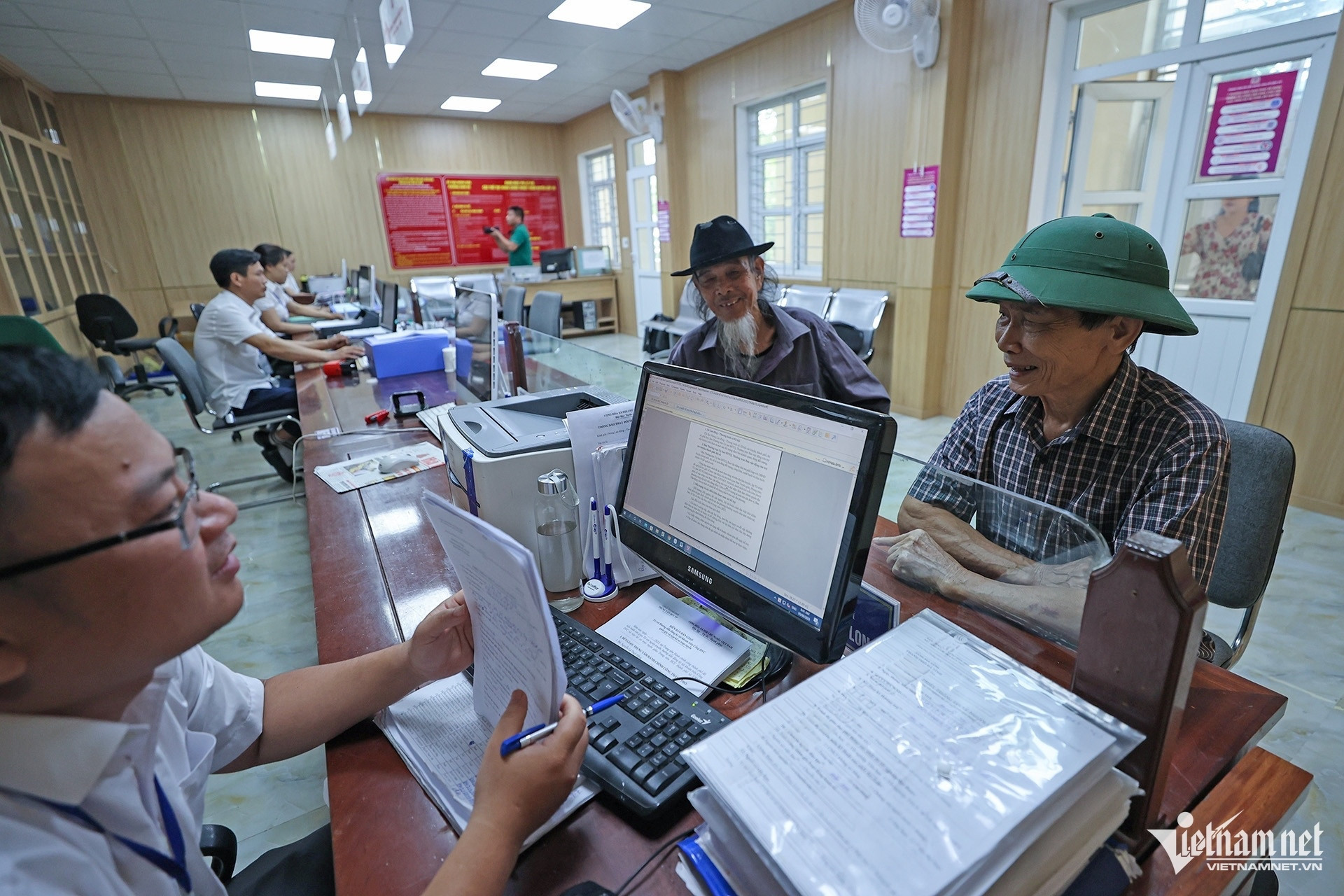
Under Directive 21 issued by the Prime Minister, localities must complete reviews and develop comprehensive plans for reorganizing villages and residential groups before June 10. This will serve as the basis for commune-level People's Committees to draft proposals, collect public feedback and submit them to local People's Councils for approval before June 30.
After that deadline, the nationwide restructuring of villages and residential groups will be completed in accordance with the new standards set out in Decree 185/2026.
In Quang Ninh, a comprehensive plan to reorganize villages, hamlets and residential quarters is being reviewed by relevant authorities. The province currently has 1,452 villages, hamlets and residential quarters. Although many already meet household-size requirements, 168 units still have fewer than 450 households, 989 have fewer than 350 households and 51 villages have fewer than 50 households.
Following the review, local authorities have proposed rearranging the existing 1,452 units into 624 new villages and residential groups. If approved, the number of grassroots-level units in the province will fall by about 57 percent.
In Phu Tho, authorities are implementing a large-scale restructuring plan for villages and residential groups. The province currently has 5,049 villages, hamlets and residential groups, including 4,444 villages and hamlets across 133 communes and 605 residential groups in 15 wards.
After the review, the province plans to reorganize 3,606 villages and residential groups into 1,639 new units. Once completed, the total number of villages and residential groups will decline to 3,082, a reduction of 1,967 units, or nearly 39 percent.
According to provincial statistics, Phu Tho currently has 13,492 part-time personnel working at villages and residential groups, along with more than 40,000 people directly involved in grassroots activities. The province said it will develop an appropriate roadmap to stabilize the organizational structure while ensuring benefits for affected officials and workers.
Meanwhile, the Department of Home Affairs of Thai Nguyen is finalizing its comprehensive proposal for submission to competent authorities. The province currently has 3,145 villages and residential groups, including 2,351 villages and hamlets and 794 residential groups.
Under the new regulations, villages and hamlets in the Northern Midlands and Mountainous Region must have at least 150 households, while residential groups must have at least 300 households. Only 659 units currently meet the standards, accounting for around 20 percent of the province’s total. Up to 2,444 units fall below the threshold and must be reorganized.
The province plans to restructure 2,926 villages and residential groups, retain 177 units unchanged and continue reviewing 42 units with special characteristics. If approved, the number of villages and residential groups in Thai Nguyen will decrease from 3,145 to 1,416, equivalent to a reduction of about 55 percent.
Provincial leaders have instructed that the process be carried out cautiously, particularly in ethnic minority communities, mountainous areas, especially disadvantaged localities and areas earmarked for urban development during the 2026-2030 period.
The reorganization of villages and residential groups is expected to streamline grassroots administration, improve the effectiveness of state management and align with population sizes following the restructuring of administrative units at different levels.
In Hanoi, some urban areas have populations equivalent to an entire ward.
Pham Quang Tuan, Secretary of the Party Committee and Chair of the People's Council of Kieu Phu Commune, said that after the two-tier local government model is implemented, villages and residential groups will become even more important because they serve as the “cells” and extended arms of grassroots authorities.
Under the draft proposal, villages in communes are expected to have around 500 households or more, while residential groups in wards are expected to have around 700 households. In reality, however, population sizes vary significantly. Some residential groups have just over 700 households, while others in urban areas and apartment complexes have more than 3,000 households.
Tuan said this issue requires careful consideration regarding mechanisms, policies and personnel. In some large apartment and urban developments, if boundaries are not properly defined, the population of a single residential group could be equivalent to that of an entire ward in the past. This would place enormous management and administrative pressure on grassroots officials.
“There are apartment complexes and urban areas where, if boundaries are not carefully determined, the population could be equal to that of an entire ward in the past,” Tuan said.
Tran Thuong
.svg)
