 Vietnamnet.vn

 Podcast



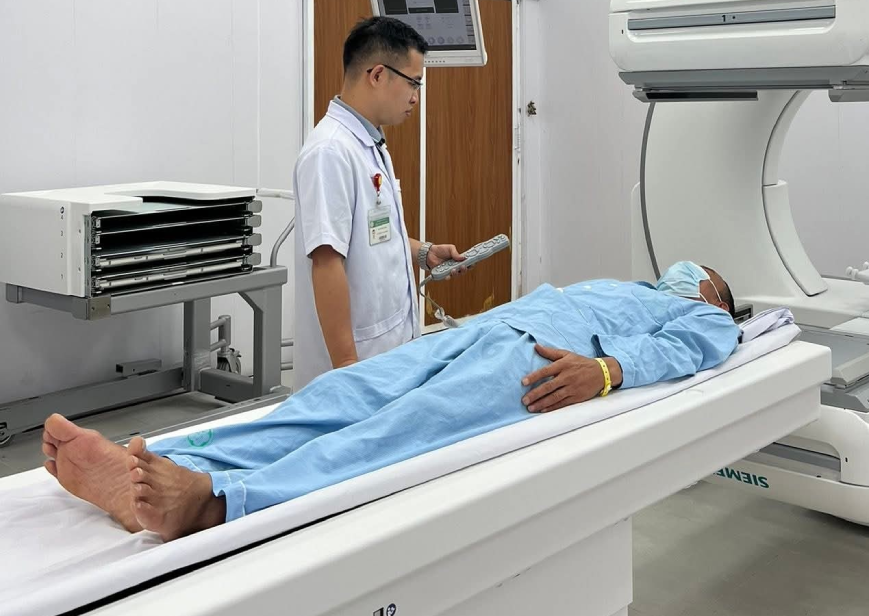
This means each person must spend the last 8-10 years of their life living with medication, often suffering from 2-3 chronic diseases simultaneously.
At the age of 64, N.V.T (Thuong Tin commune, Hanoi) has to use many types of medication every day. There are three prescriptions he has to follow: one for cardiovascular treatment (blood fat, hypertension, anticoagulants), one for bones and joints, and one for diabetes.
In short, he takes about 10 types of medicine daily at different times: some before meals, some after meals, some in the morning, and some in the evening. Remembering each type of medicine and the time to take them occupies almost all of his daily living time.
Previously, T. was healthy and rarely went for medical examinations. Occasionally, when his joints ached, he only took painkillers. Once, experiencing a headache, he went to the pharmacy to buy medicine and was advised to measure his blood pressure. The result reached 187 mmHg. From then on, he bought medication to treat hypertension on his own.
After nearly half a year of persistent coughing and weight loss, he went to Hanoi for a checkup and was diagnosed with multiple conditions: diabetes, hypertension, high cholesterol, and atrial fibrillation. Doctors prescribed anticoagulants to prevent stroke. Since then, medication has become an essential part of his daily life. He now always carries a notebook to track his daily blood pressure along with his medications.
A similar story happened to V.T.M (60, Thanh Ha, Hai Duong). Persistent knee pain forced her to regularly take painkillers, but the pain would return whenever she stopped.
After a medical examination, she was diagnosed with knee osteoarthritis. However, the medication for her joints caused stomach pain as a side effect. As a result, she has had to alternate with stomach medication for the past 4–5 years.
The pain has made walking increasingly difficult for M. Recently, she was further diagnosed with hypertension and blood fat. She entered old age with a “medicine bag” always carried with her, knowing she must use medication for the rest of her life.
Not only affecting health, the prolonged treatment also creates great mental and economic pressure for the patient. Each time she goes to the hospital, she has to ask her children for financial support. At times, she bought medicine of unknown origin to reduce pain, but information about fake and poor-quality medicine always leaves her worried.
P.V.R (67 years old, Bac Dong Quan, Hung Yen) has suffered from chronic obstructive pulmonary disease for nearly 10 years. He spends more time in the hospital than at home. There is always an oxygen tank ready in his house to support breathing. Previously, he had a habit of smoking for many years. At the age of 56, he suffered a stroke, and since then, his health has seriously declined.
A decade of living with illness
According to the Statistics Office, by 2030 Vietnam is expected to have around 18 million people aged 60 and above, an increase of nearly 4 million compared to 2024.
Although life expectancy is about 74.7 years, healthy life expectancy is only around 65, meaning people typically spend 8–10 years living with illness and medication, often with multiple chronic conditions.
The rate of chronic diseases is increasing rapidly: it is estimated that about two-thirds of people over 60 suffer from at least one disease. This creates great pressure on the healthcare system, economy, and society.
According to Associate Prof, PhD Nguyen The Anh, director of Huu Nghi Hospital (Hanoi), on average, each elderly person goes for check-ups 7-8 times per year, 2-2.5 times higher than other age groups.
Vietnam is among the group of countries with the fastest population aging speed in Asia. In 2011, the elderly accounted for 9.9 percent of the population; by 2012, it exceeded 10 percent, officially entering the aging stage.
Currently, the whole country has about 16.1 million elderly people, accounting for more than 16 percent of the population. It is forecasted that in the next 20 years, this rate will increase to 20 percent.
Notably, Vietnam's aging index is expected to exceed 100 by 2032, the time when the number of elderly people will be greater than the number of children. At the same time, the number of people of working age supporting one elderly person will decrease sharply, from more than 7 people (in 2023) to about 2 people in 2049.
Phuong Thuy
.svg)
