 Vietnamnet.vn

 Podcast



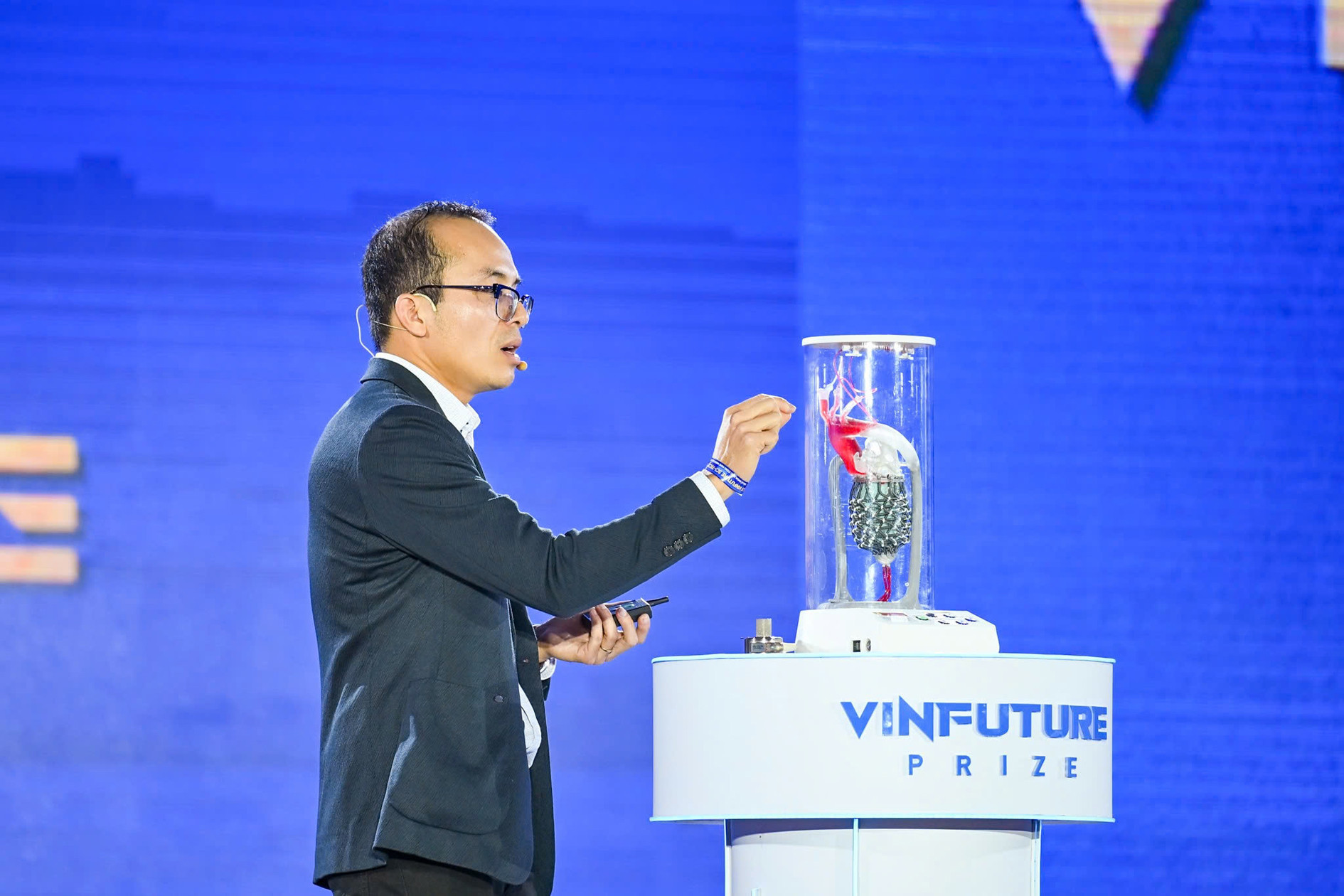
At the “Inspirational Keynote: Breakthrough Technologies of the Future,” part of VinFuture Science and Technology Week 2025, Vietnamese scientist Do Thanh Nho - currently working at the University of New South Wales (UNSW), Australia - delivered a profoundly humanistic vision for the future of medicine.
Motivated by the staggering fact that heart disease claims over 20 million lives globally each year, including 261,000 in Vietnam alone, he has set out on a bold mission: to create a soft artificial heart capable of mimicking the precise structure, movements, and hemodynamics of a real heart. This device holds promise not only for helping doctors assess surgical risks more accurately and practice complex procedures more safely, but most importantly, for giving hope to heart failure patients awaiting transplants.
“I believe that one day soon, soft robotic hearts could replace donor hearts and save the lives of heart patients,” shared Assoc. Prof. Do Thanh Nho.
Cardiovascular disease has long been the world’s leading cause of death, accounting for nearly one-third of all global fatalities. Conditions like heart failure, stroke, valvular disorders, and blood clotting complications take over 20 million lives annually. In Vietnam, approximately 261,000 deaths are linked to cardiovascular issues every year, while 1.6 million people live with heart failure, constantly at risk.
Despite major advances in medical devices and cardiac interventions, choosing the optimal treatment path remains challenging. Physicians often rely on static imaging, basic simulations, or patient history, while every heart is different in structure, elasticity, and rhythm. The lack of dynamic tissue data leads to misdiagnoses, suboptimal treatment plans, and elevated post-surgical complication rates.
Animal trials are also far from ideal due to significant physiological differences, which prolong product development and lower approval chances with agencies like the FDA. In this context, the urgent need for a model that fully replicates the function of a human heart became the foundation of Do Thanh Nho’s groundbreaking research.
A soft artificial heart: A breakthrough in biomedical robotics
The centerpiece of Assoc. Prof. Do Thanh Nho’s presentation at VinFuture 2025 was a soft robotic heart capable of beating almost exactly like a natural heart. Made with soft robotic materials and advanced hemodynamic simulation algorithms, the device is custom-built based on each patient’s specific parameters, replicating mechanical properties, pressure, blood flow, and complex chamber movements.
This allows doctors to better evaluate patient suitability for advanced interventions, predict surgical outcomes, and improve procedural success rates. The innovation also enables testing of new medical devices without animal models - cutting research costs and shortening development cycles.
In medical education, the soft robotic heart serves as a safe, hands-on training tool for students and residents to explore cardiac mechanisms, valve diseases, and heart failure scenarios. His research team has developed highly precise algorithms that simulate left ventricular behavior in real time, adapting to various disease models.
This marks a major leap in biomedical robotics, where materials, sensors, and AI converge to create devices that transform how we understand and treat traditional cardiac conditions.
A dream to replace donor hearts with robotic hearts
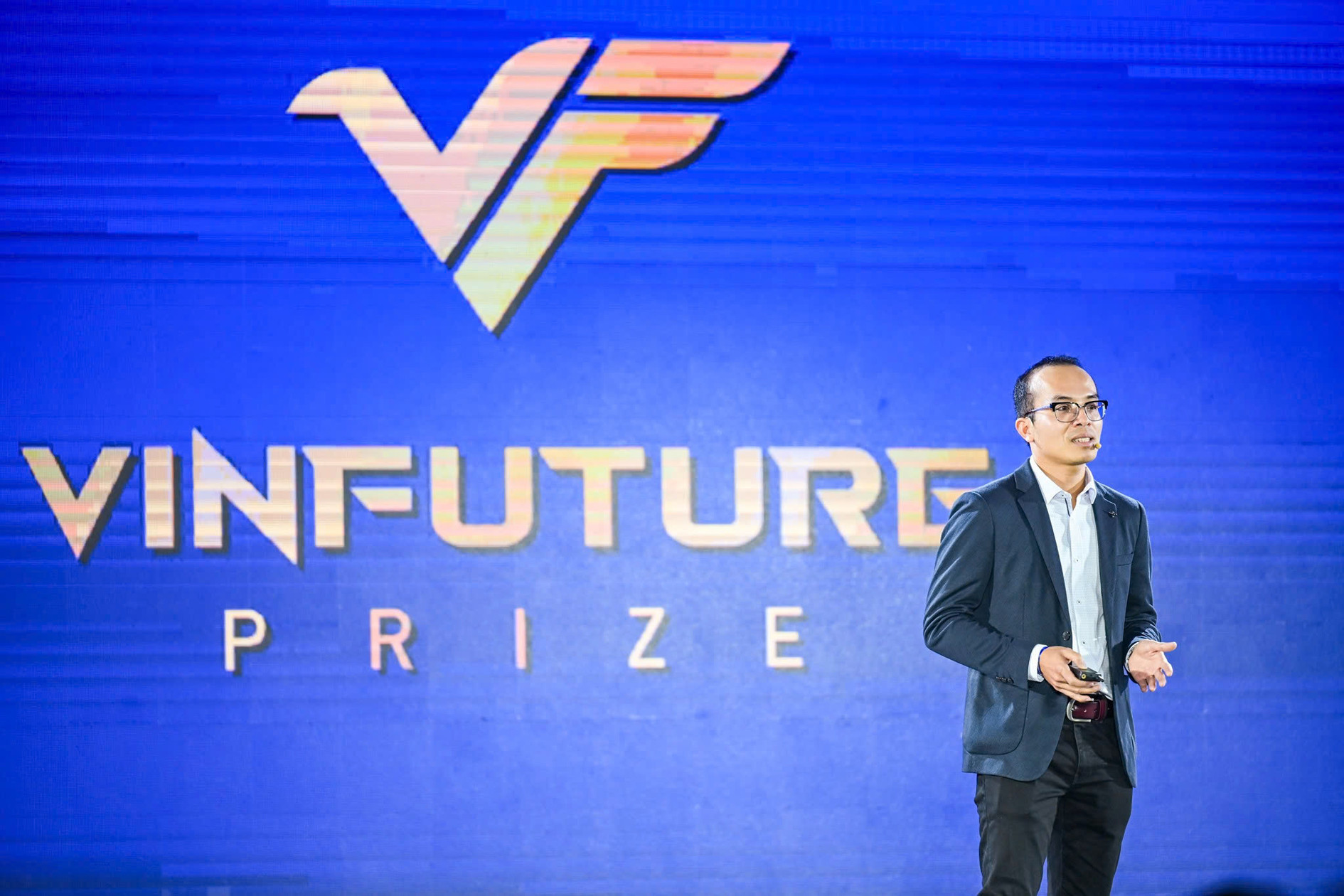
In a heartfelt moment, Assoc. Prof. Do Thanh Nho highlighted the harsh reality that hundreds of thousands of heart failure patients await transplants each year, but only a few receive suitable donor hearts. Most are left facing imminent danger as hope fades.
“My short-term dream is to create a soft robotic heart model that could one day replace donor hearts and offer a lifeline to patients waiting for transplants,” he said.
This aspiration stems from years of research in soft robotics, biomedical materials, and haptic technology. At UNSW Sydney, he leads the Medical Robotics Lab, focusing on surgical robots, artificial organs, exoskeletons, and advanced haptic systems. He holds 12 international patents, with many inventions already commercialized or licensed. His work has been featured by Reuters, The Washington Post, Engineers Australia, IEEE Spectrum, and ASME. He was named among Reuters’ Top 4 Robots of 2023 and recognized by the WHO as a Future Health Promoter.
These efforts reflect not just scientific passion but also a guiding principle: that technology should serve humanity and offer hope to lives hanging by a fragile beat.
Hope from a Vietnamese scientist shaping the future of medicine
What moved audiences was not only the disruptive nature of the technology, but also the story of a Vietnamese scientist at the forefront of global biomedical robotics. From Singapore to the U.S. to Australia, Assoc. Prof. Do Thanh Nho’s journey is living proof that Vietnamese intellect can help reshape the world of medicine.
His soft robotic heart project could also catalyze collaborations between Vietnam and Australia in the research, production, and testing of advanced cardiovascular devices. As heart disease cases continue to rise, Vietnam has the potential to be among the first to apply this technology, creating a powerful boost for the national healthcare sector.
In his closing speech, he shared: “When science is driven by compassion, every innovation becomes a bridge - linking knowledge, life, and the future of humanity.”
That is the spirit guiding his pursuit of a soft robotic heart - a dream steadily turning into reality.
Thai Khang
.svg)
