 Vietnamnet.vn

 Podcast


Finding new value in discarded coconut fibers
While many research projects focus on advanced technologies, Truong Dat Khang, Tang Hoa Nam, Do Ai Phuong Ngoc and Nguyen Thanh Nhan, students at Ho Chi Minh City University of Industry and Trade, chose to investigate a familiar agricultural byproduct: coconut fiber.
Coconut fibers are commonly used as growing substrates and materials for handicrafts, but are also frequently discarded. After reviewing scientific literature, the students discovered that coconut fibers contain significant amounts of lignin, a natural compound with antioxidant properties and potential antibacterial activity.
This prompted the team to explore whether lignin extracted from coconut fibers could be used to develop materials for healthcare applications.
Truong Dat Khang, the research team leader, said the students had never intended to search for a novel or expensive raw material. Instead, they wanted to unlock the potential of an abundant resource and develop a product with practical applications.
“We wanted to create new value from a familiar resource that often goes overlooked,” Khang said.
The project combines knowledge of chemistry, materials science and healthcare to explore new applications for coconut fibers.
Learning through unsuccessful experiments
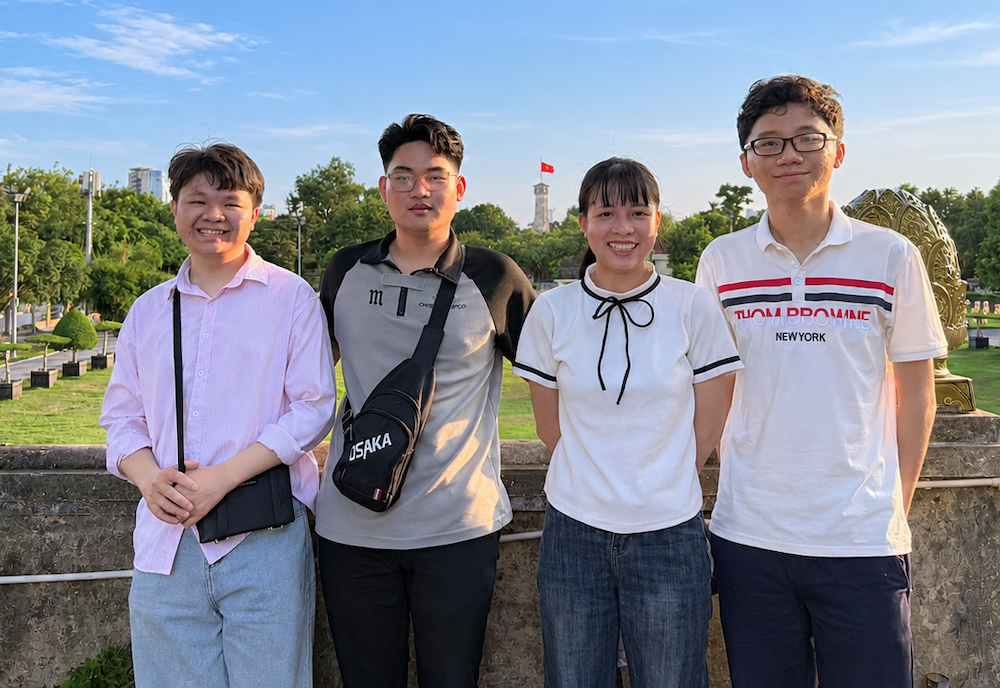
Turning the initial idea into a research project was far from straightforward. Despite lignin's promising properties, extracting, processing and evaluating the material in the laboratory presented numerous challenges.
The students conducted repeated experiments, adjusted research conditions and compared results across multiple trials.
Even when experimental parameters had been carefully calculated, the results sometimes fell short of expectations. Several experiments had to be repeated, requiring the researchers to patiently investigate the underlying causes rather than rush to conclusions.
These setbacks became an integral part of the research process. The students reviewed additional scientific literature, analyzed possible explanations, exchanged ideas and refined their experimental methods.
The experience helped Khang and his teammates gain a deeper understanding of scientific research. An unsatisfactory result did not necessarily represent a complete failure but instead provided valuable data for identifying problems and improving subsequent experiments.
Throughout the project, academic supervisors Doan Thi Minh Phuong and Vo Pham Phuong Trang provided technical guidance, helping the students overcome challenges and refine their research.
The project won second prize at the 2026 Science and Technology Awards for Students in Higher Education Institutions.
Further research needed before medical applications
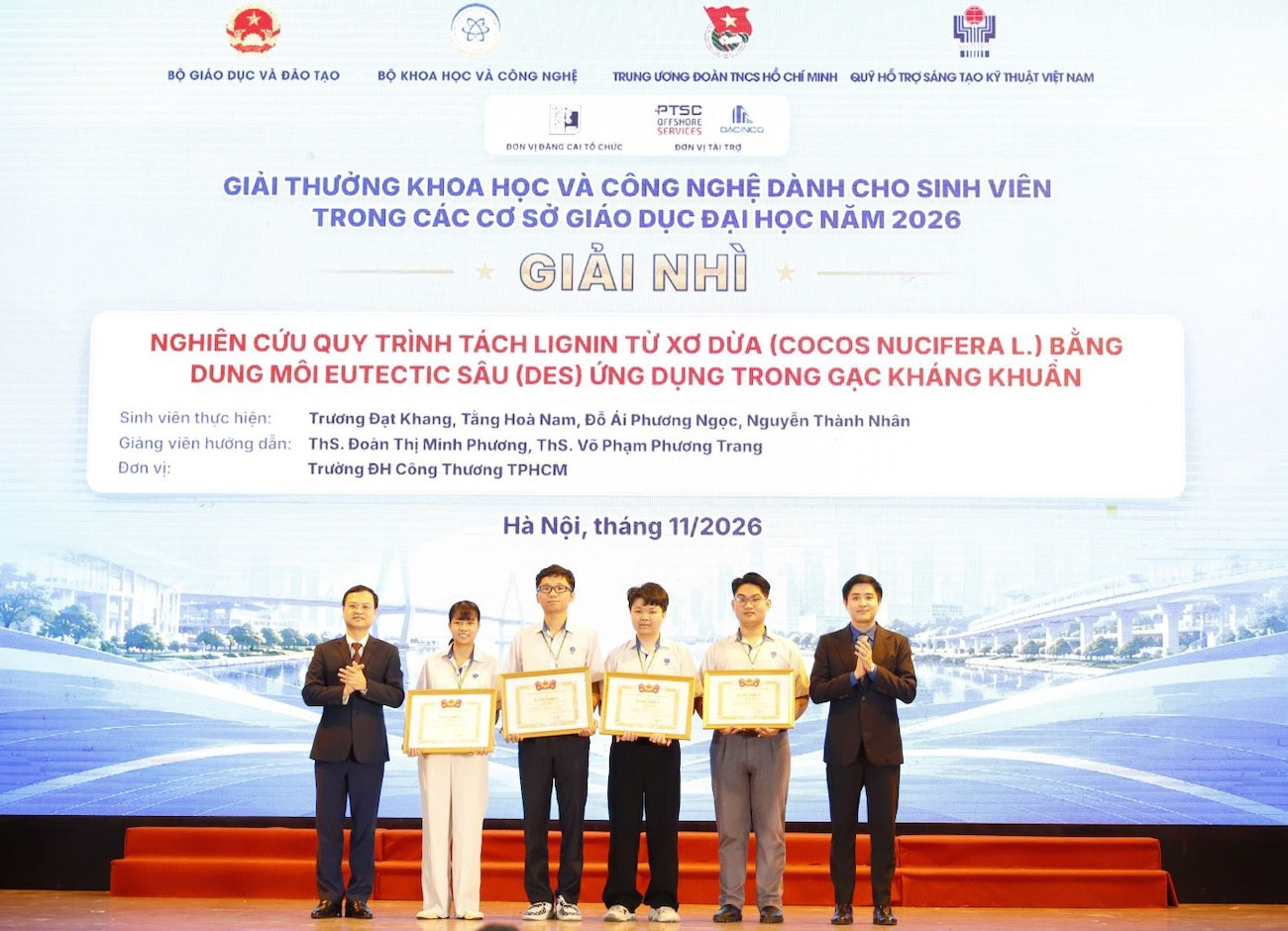
For Khang, the award recognizes the team's efforts, but the research remains a work in progress.
The students hope to refine the process of extracting lignin from coconut fibers and conduct further investigations into the safety, antibacterial effectiveness and durability of the lignin-based coating on gauze fabric.
The team acknowledges that additional time, research resources and scientific collaboration are needed to assess the material's practical potential.
Its immediate objective is to further validate the feasibility of using coconut fiber-derived lignin to produce antibacterial gauze.
Rather than expecting the material to immediately replace conventional medical gauze, the researchers recognize the need for further experimental evidence before it can be considered for practical healthcare applications.
Reflecting on his experience, Khang said students do not necessarily need a groundbreaking idea to begin scientific research.
What matters, he believes, is the willingness to pursue questions that interest them, persevere through experiments and embrace setbacks as opportunities to learn.
Le Huyen

