 Vietnamnet.vn

 Podcast



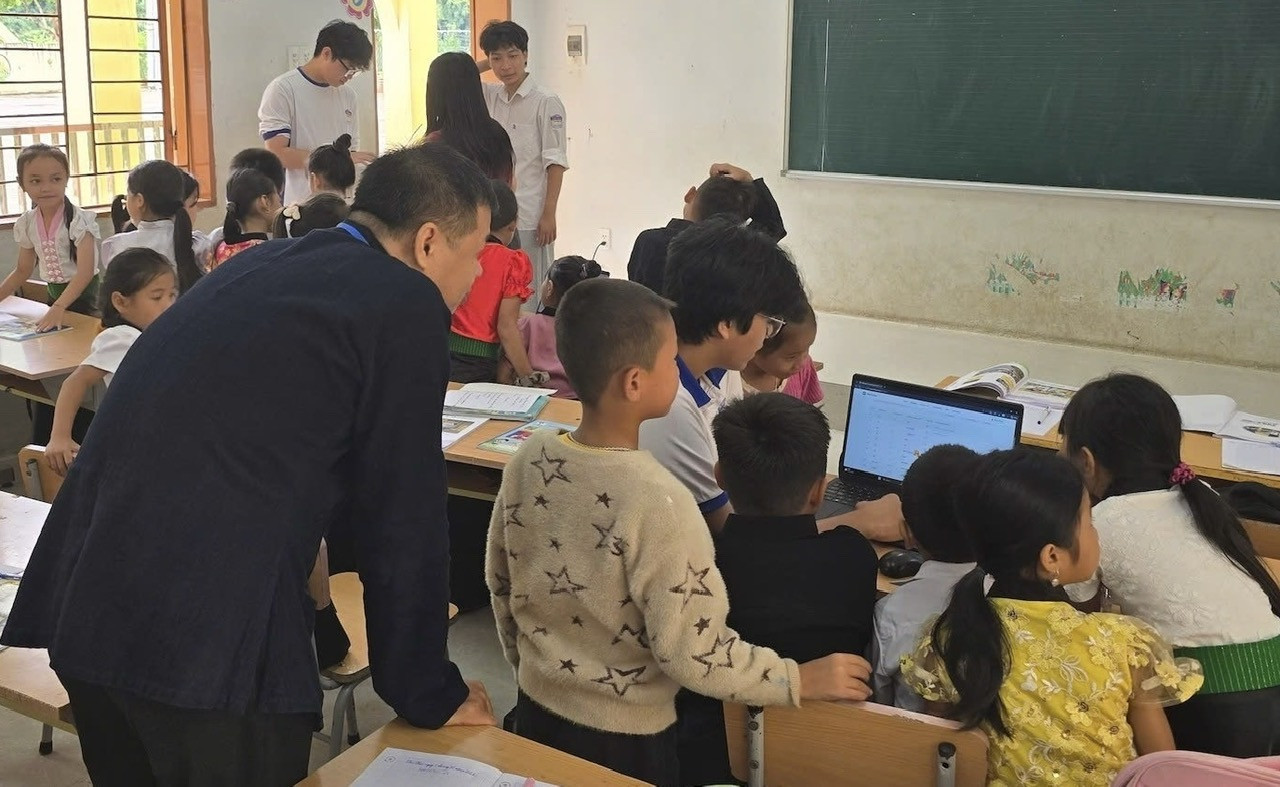
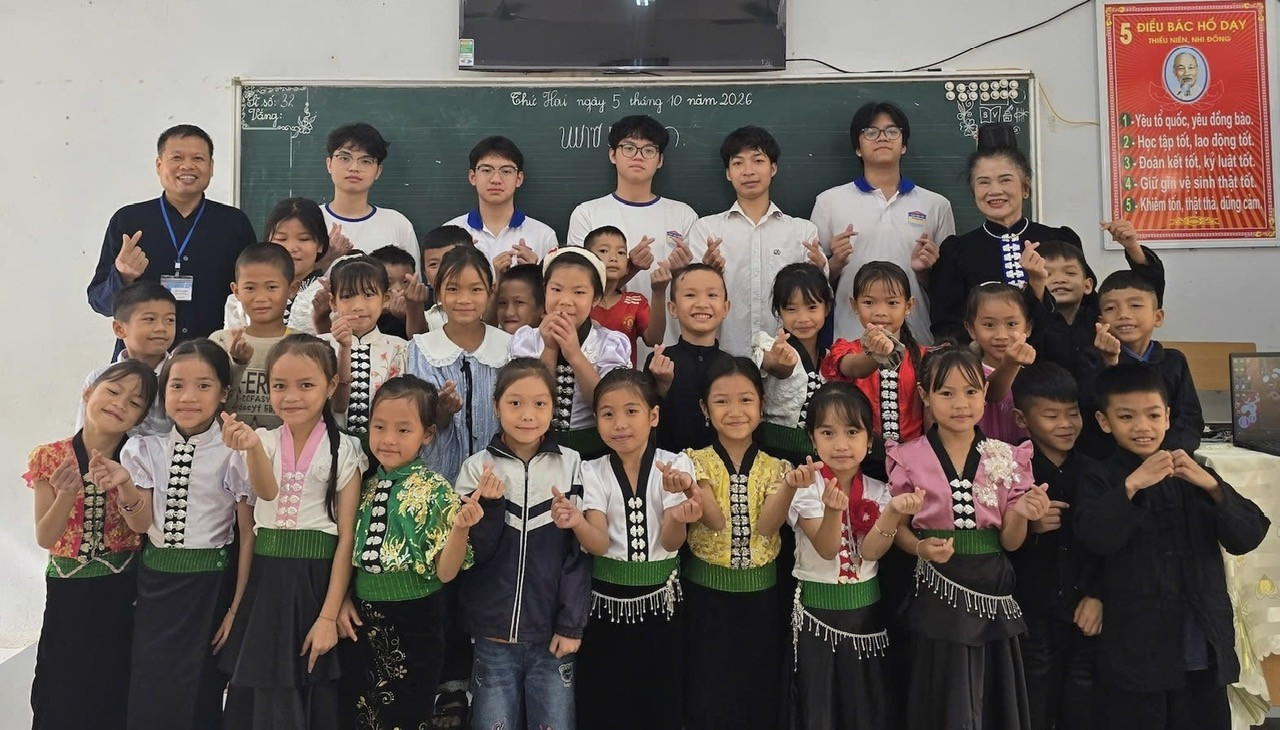
At Nam Pam School in the northern province of Son La, local students are learning not only to read and write their ethnic community's traditional script but also to bring those characters onto smartphones and computers.
Helping them are Ngo Hoang Long, Pham Manh Phong, Nguyen Tri Minh, Le Minh Son and Tran Gia Bao, five 11th-grade students specializing in computer science at Chu Van An High School for the Gifted in Hanoi.
The group has developed VietTrans, a technology platform designed to recognize ancient Thai script from images, convert written materials into digital text, look up words and translate between Black Thai and Vietnamese.
But their ambition goes beyond creating another technology product. They are trying to answer a larger question: How can a traditional writing system remain part of everyday life when younger generations are increasingly immersed in the digital world?
Preserving an ancient script means keeping it in use
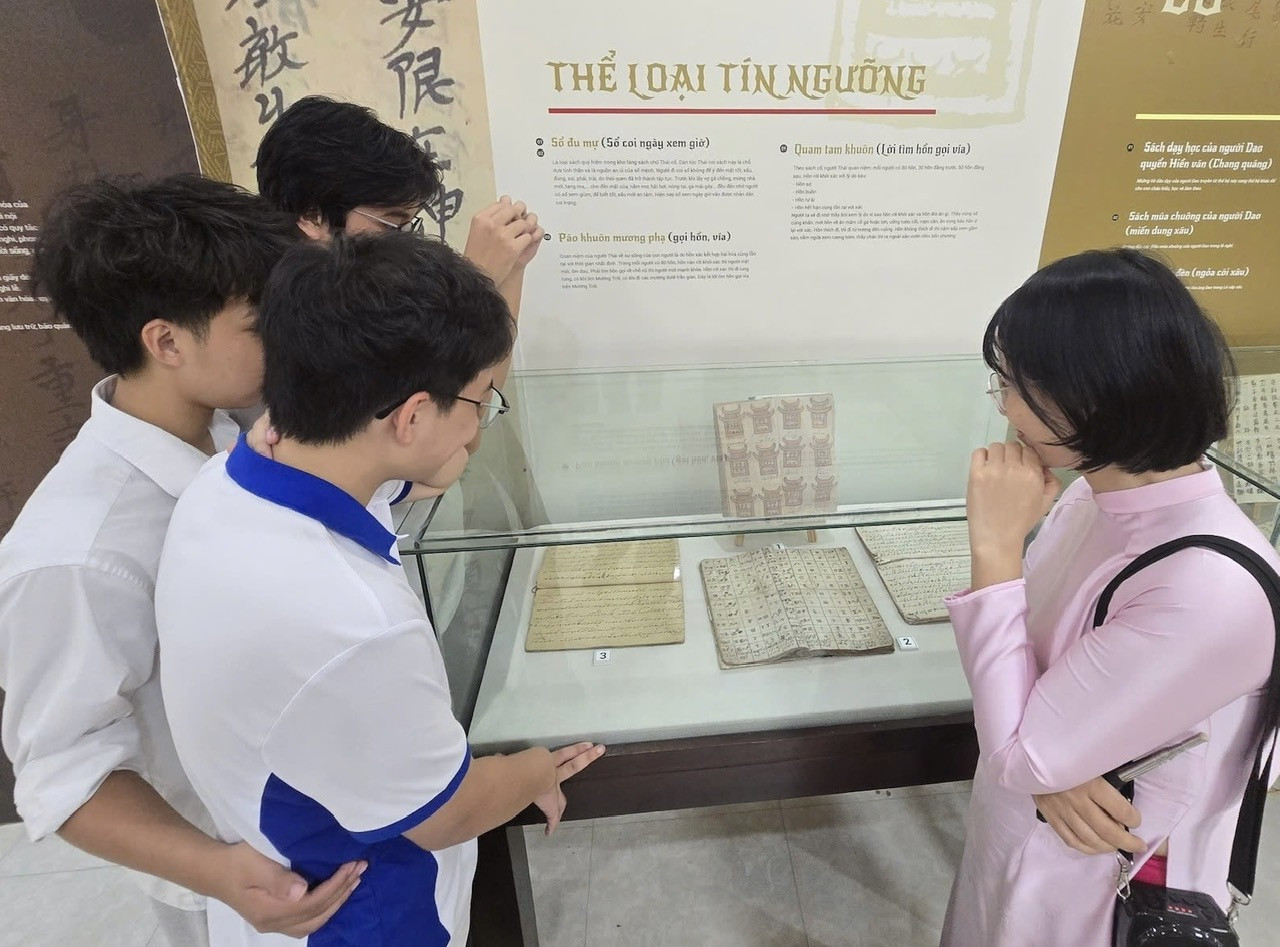
In many ethnic Thai families, books written in the traditional script have been passed down through generations. These manuscripts contain narrative poems, epics, records of customs and rituals, folk knowledge and stories inherited from ancestors.
Museums and libraries have been collecting, preserving and gradually digitizing many of these materials. Yet safeguarding the documents themselves is only part of cultural preservation.
A writing system can truly remain alive only when people continue to learn, read and use it.
Ngo Hoang Long, the project's team leader, believes that if the Thai script remains confined to ancient books and archives while becoming increasingly unfamiliar to younger people, the distance between cultural heritage and the community will only grow.
"We don't want Thai writing to exist only in museums. For a language to survive, people need to use it every day. Technology can make learning, reading and using the script much easier," Long said.
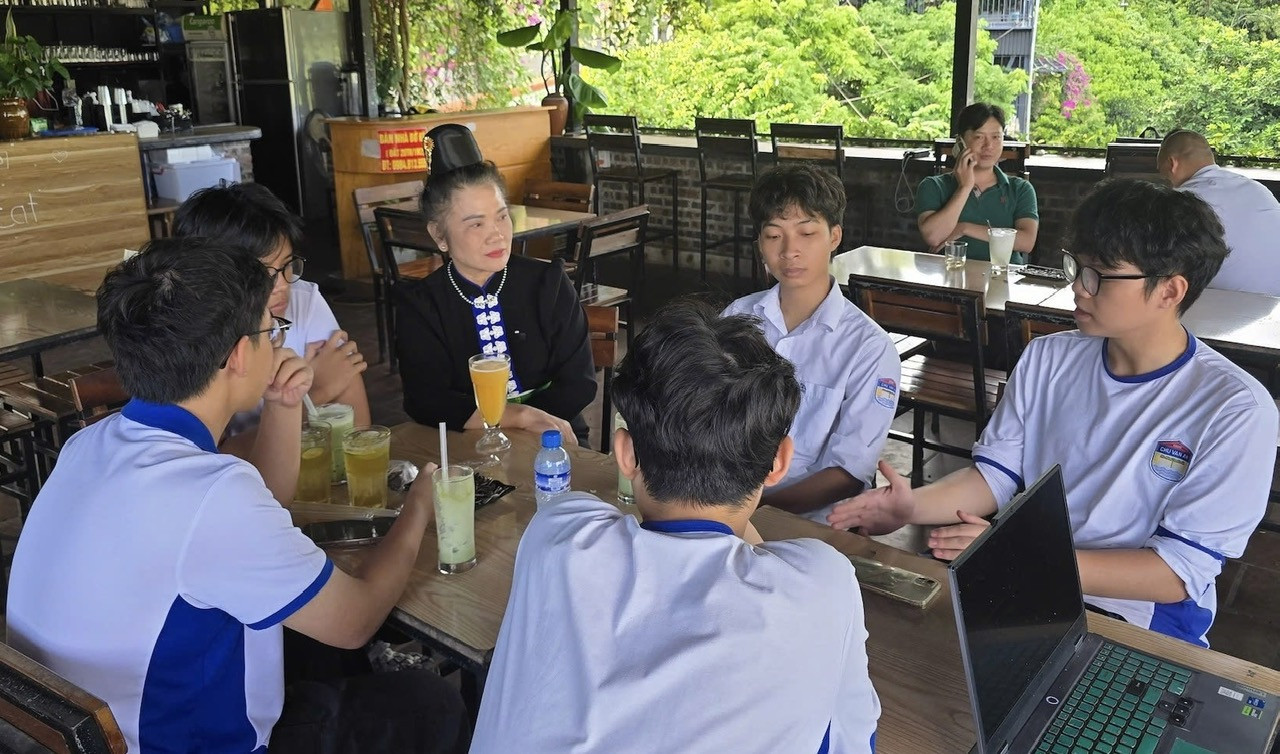
With that in mind, the five Hanoi students visited the Son La Museum to learn how ancient manuscripts are preserved and digitized. They also met people knowledgeable about the Thai script and joined local classes to test their software.
These experiences helped them understand that a language preservation tool has real value only when the community finds it useful and can incorporate it into everyday life.
As young people increasingly rely on smartphones and computers for learning and communication, digital resources for the traditional Thai script remain limited. Tools for typing, character recognition and word searches are also far from widespread.
To address these gaps, the team developed an application featuring a keyboard input tool, dictionary, font conversion, image-based character recognition and translation between Black Thai and Vietnamese.
For example, when students encounter a passage written in Thai script in an old book, they can photograph it and upload the image to the system. The software converts the characters into digital text, allowing users to look up unfamiliar words or compare the passage with a Vietnamese translation.
Teachers can use the platform to prepare bilingual learning materials, while researchers can save time processing historical documents. Young ethnic Thai people living far from their hometowns also gain another way to reconnect with their community's writing system.
According to the team, technology is not intended to replace those who teach the Thai script. Instead, it serves as a bridge, making the traditional writing system easier to learn, access and use.
Teaching AI to read Thai script, one manuscript at a time
The project's greatest challenge has not been writing software but finding reliable data and bringing it into a consistent format.
While widely spoken languages have enormous datasets available for training artificial intelligence, online resources for Black Thai remain scarce.
Existing materials are scattered across museums, academic research, local publications and family collections of ancient manuscripts.
Many documents use different, incompatible fonts. Others exist only as handwritten texts, aging printed books or photographs.
The students have therefore had to search for source materials, convert fonts, verify characters, clean datasets and carefully match Thai sentences with their Vietnamese equivalents.
"The hardest part for our team wasn't writing code. It was finding and cleaning the data, page by page," Long said.
Through the process, they realized that building a reliable, standardized collection of language data is a fundamental step toward ensuring that a traditional writing system can survive in the digital era.
The project also includes a space where users can contribute, review and correct data, rather than leaving the entire task to a small group of developers.
To create the translation tool, the students are using and fine-tuning NLLB, a multilingual artificial intelligence model, with the aim of enabling translation between Black Thai and Vietnamese.
Alongside it, they are developing an optical character recognition (OCR) system that converts characters on old manuscript pages into digital text, making historical documents easier to search, edit and store.
The team also hopes to develop speech recognition and text-to-speech technology for Black Thai.
If successful, these features could allow older people unfamiliar with keyboards to enter text using their voices. Language learners could also listen to the software read passages aloud to practice pronunciation.
However, artificial intelligence cannot independently learn accurate pronunciation or understand regional linguistic differences without input from native speakers.
Teaching AI to understand Black Thai is therefore also a process of gathering knowledge directly from the community.
People who can read the traditional script and understand the language and culture remain essential to reviewing and correcting the system's output.
Lo Mai Cuong, a specialist involved in compiling Thai-language teaching materials, believes that using technology to support reading and learning the script is a practical and meaningful approach.
She explained that people wishing to study ancient manuscripts or research Thai writing often still need assistance from traditional knowledge holders or language specialists.
If character recognition, dictionary and translation tools can be refined to a high level of accuracy, students, researchers and people interested in Thai culture will have more opportunities to explore this heritage independently.
Nevertheless, machines can only provide assistance. Those with deep knowledge of the local language and culture must still determine whether a character has been read correctly or whether a sentence's meaning has been accurately conveyed.
VietTrans is now available online, allowing users to experiment with its character recognition, text conversion, dictionary and translation features.
Since its launch, the platform has received tens of thousands of bilingual translation requests.
The students hope to gradually expand VietTrans into a broader digital ecosystem for Black Thai, encompassing language datasets, dictionaries, keyboard input, character recognition, machine translation and speech technologies.
Viet Ha
.svg)
