 Vietnamnet.vn

 Podcast


Finding peace through online temple visits
Diem P., 30, from Vinh Long Province in the Mekong Delta, has practiced Buddhism for 15 years.
Previously, when she had more free time, she regularly attended Buddhist retreats or visited temples to offer incense, chant sutras and pray.
However, since getting married a few years ago, she has only been able to visit temples on the first and 15th days of each lunar month.
Sometimes, she longs to visit a temple, enjoy its peaceful surroundings and find a moment of tranquility, but her schedule does not allow it.
Recently, while browsing TikTok, P. came across the concept of "online temple visits."
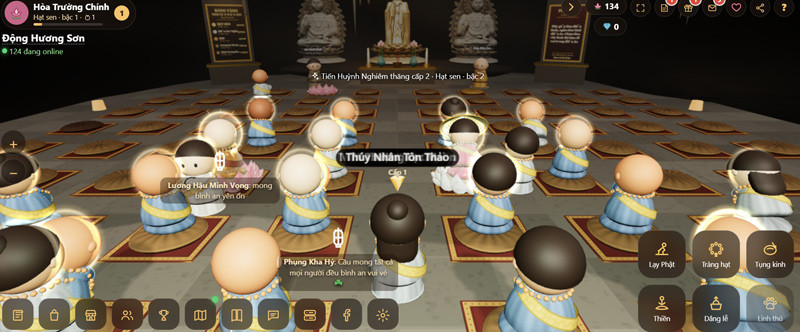
Curious, she decided to try a Vietnamese-developed virtual temple application and was surprised to find herself genuinely interested.
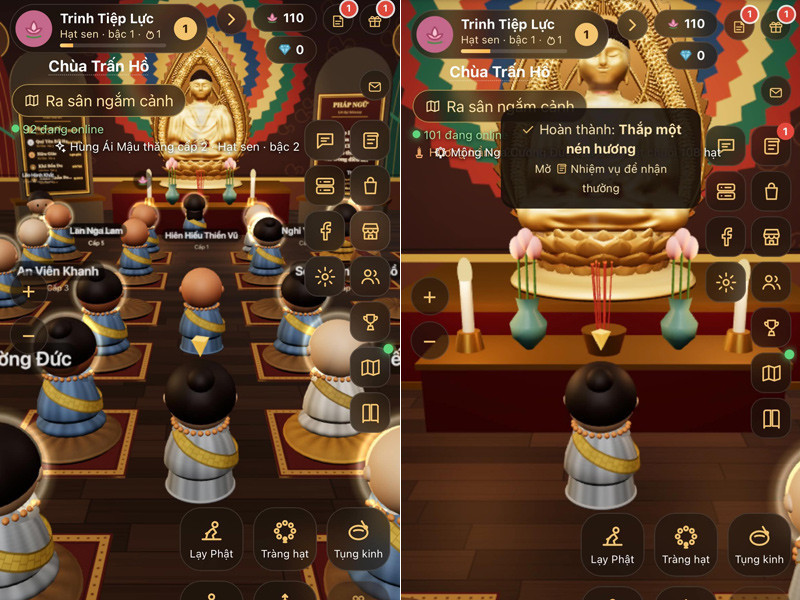
She registered for a free account, created and named an avatar, and entered a simulated temple complex featuring a traditional three-entrance gate, a main worship hall, lotus ponds and gardens.
"When I log into the app, the first thing I usually do is draw a fortune stick and seek blessings. Then I complete the suggested activities, such as meditating, striking a wooden fish instrument, chanting four Buddhist sutras and counting prayer beads," P. said. "These activities take about five or six minutes. Afterward, I can explore the temple grounds or simply log out. Some people use the app to play games or connect with virtual spirit animals."
Over the past few days, visiting the virtual temple has become an essential part of her daily routine.
Every morning, P. logs into the application to calm her mind before starting work.
Whenever she has free time during the day, she reaches for her phone to visit the virtual temple rather than scroll through TikTok or browse online shopping platforms as she previously did.
"I spend more than two hours a day doing this. One interesting feature is that the app records how many sutras I have chanted and how many prayer beads I have counted each day," she said. "I can also invite friends to visit the temple with me and chat with other Buddhist practitioners, which makes the experience more enjoyable."
Occasionally, P. encounters overcrowding on the platform because of the large number of users.
She sometimes has to wait before entering the main worship hall to offer incense and chant Buddhist scriptures.
However, because her main purpose is spiritual practice and inner peace, she avoids becoming absorbed in the app's gaming features, such as offering virtual incense, upgrading prayer beads or purchasing virtual gems.
Using technology to explore real-world temples

Cam Van, 45, from Hanoi, works as the chief accountant of a real estate company.
She discovered the online temple trend through TikTok and, after trying it out of curiosity, gradually incorporated it into her daily routine.
Van said her job is demanding, with constant pressure from deadlines and financial figures, particularly toward the end of the year when tax settlements approach.
On some days, she works until 10pm or 11pm, leaving little time to visit temples despite her strong religious beliefs.
"Fortunately, I discovered the online temple application and found a source of spiritual comfort," she said.
Every morning, Van logs into the app to offer incense, chant Buddhist prayers and meditate.
She said these moments help her feel calmer and more peaceful, allowing her to begin the day with a lighter and more positive mindset.
She also visits the virtual temple during other breaks throughout the day and spends more time on the platform at weekends.
"When I feel stressed, I can express my thoughts and wishes during these online temple visits. That gives me more motivation to overcome difficulties in life," she said.
Initially, her family was concerned when they learned that she was using a virtual temple application, fearing she might become a victim of online scams.
After listening to her explanation, they became more reassured, although they continued to remind her to remain cautious.
Van believes that religious practice begins with sincerity, so whether someone practices in person or online is not the deciding factor.
However, she emphasized that participants should maintain a respectful attitude and avoid turning spiritual spaces into places for joking, inappropriate comments or excessive requests for blessings.
For Nguyen Thi Hoai Linh, 20, from Nghe An Province, online temple visits serve a different purpose.
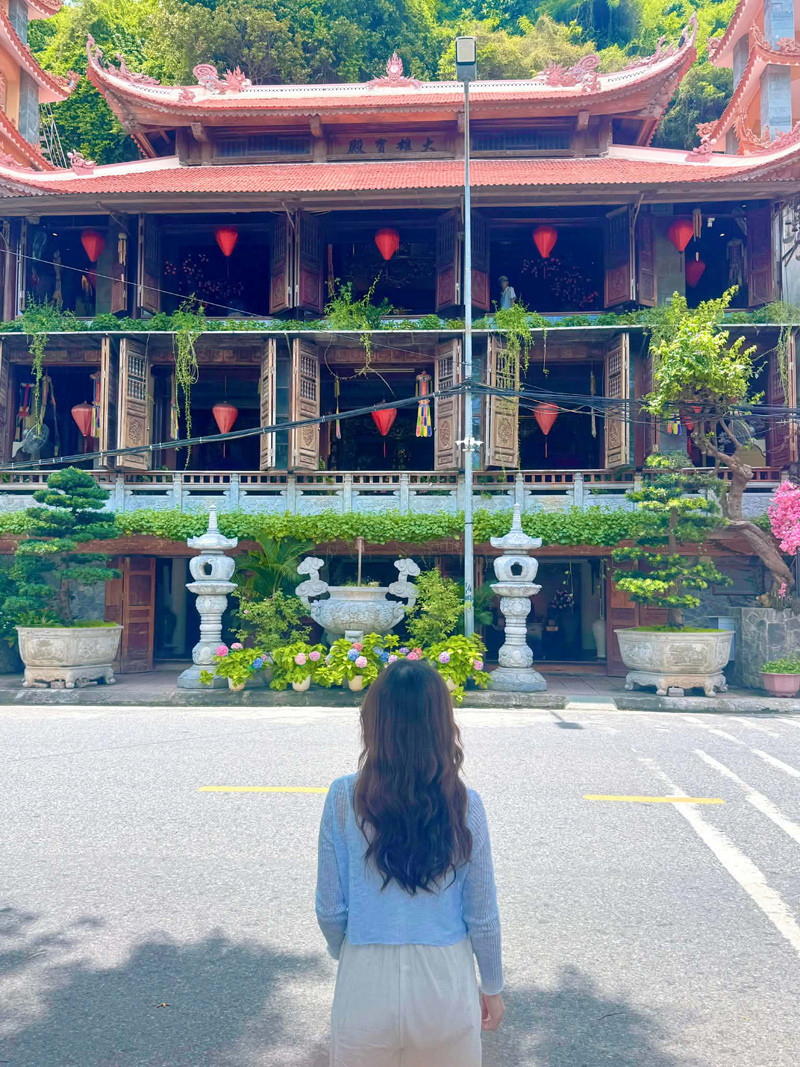
Interested in culture, history and religious beliefs, Linh sees virtual temple applications as tools for discovering real-world Buddhist temples.
She initially used the application to search for information about temples near her home.
Later, she began visiting these sites in person, using the app's navigation and check-in features.
"Each temple has its own unique digital stamp on the app. When I visit a temple, I can check in and collect stamps to preserve a record of my journey," Linh explained.
In addition to her physical temple visits, Linh spends approximately 20 to 30 minutes each day using the application to chant Buddhist prayers, read sutras or listen to meditation music.
Instead of scrolling through social media, she prefers activities that help her relax and find peace of mind.
After two months of using the app, Linh has noticed changes in her outlook.
She said she has learned to slow down, remain calmer when things do not go as planned and pay greater attention to her spiritual well-being.
In her view, technology makes cultural and religious values more accessible to young people, but it cannot fully replace the experience of visiting temples in person.
"Visiting temples, chanting sutras and meditating must all come from the heart," Linh said. "I disagree with platforms that require users to donate money before accessing certain features because that can easily distort the original meaning of spiritual practice."
Cultural folklore researcher Nguyen Hung Vi, a former lecturer at the Faculty of Literature, University of Social Sciences and Humanities under Vietnam National University, Hanoi, said online temple visits and game-based virtual Buddhist practice have become increasingly popular thanks to the development of the internet.
These platforms allow practitioners to choose the timing, content and methods that best suit their personal circumstances, while reducing travel expenses and effort.
He believes this form of religious engagement offers benefits worth recognizing and reflects the diverse choices available to individuals in modern society.
However, from the perspective of Buddhist practice, its effectiveness depends heavily on participants' self-awareness, discipline, faith and determination.
Practicing exclusively online, without direct interaction with spiritual teachers or fellow practitioners, may limit opportunities for discussion and affect the quality of religious learning and practice.
According to Vi, temple-based practice, home practice and online practice are likely to coexist for the foreseeable future.
Nevertheless, he cautioned that the ease and convenience of virtual religious activities could weaken people's sense of sacredness and reverence if they approach them without sufficient seriousness and respect.
Over time, excessive familiarity and casual participation may lead people to undervalue traditions and spiritual principles that have long been held in high regard.
Thanh Minh - Thu Hien

